Residents of Yealmpton have expressed deep unease about plans for the village to come under the governance of Plymouth City Council from 2028, when local government reorganisation in Devon will replace district and county councils with larger unitary authorities.
Rural needs versus city administration
The village, about seven miles from Plymouth and home to roughly 2,400 people, is currently served by South Hams District Council and Devon County Council. Under the restructure, Yealmpton and 12 other parishes on Plymouth’s boundary will transfer to the expanded city authority.
Locals fear the change will mean higher costs and a loss of services tailored to rural life. Concerns raised include:
- potential rises in council tax and charges such as parking;
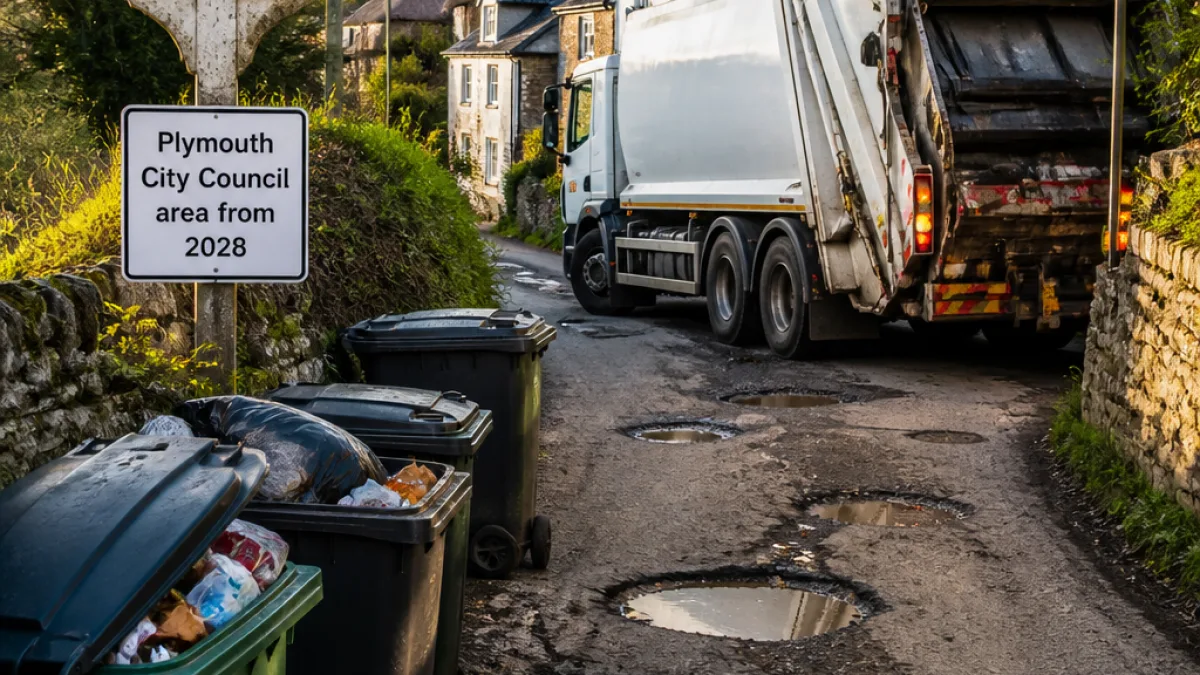
- refuse collection logistics on narrow lanes and steep hills;
- worsening road maintenance and potholes;
- increased development pressure on countryside and green spaces.
“People here don’t want to be part of Plymouth – that’s why they live here and the city council has no experience in how rural communities work,”
The comment, from Keith Baldry, chair of Yealmpton Parish Council, reflects survey results he says show little appetite locally for the change. Councillors and residents worry that urban-style services and vehicles may not be appropriate for very rural routes and that electric refuse vehicles, for example, currently cannot cope with the terrain in parts of the South Hams.
Financial anxieties
Another prominent concern is financial. The parish council chair highlighted Plymouth’s reported level of debt — which has been widely discussed locally — and fears that the new parishes will become liable for a share of that burden when they transfer to the city authority.
At present, the precise details of how services will be delivered, whether charges will change, and how transitional costs will be managed remain matters for the implementing bodies and central government guidance. Residents say uncertainty is compounding anxieties about losing local control and the informal support networks that sustain village life.
What this means for residents
For Yealmpton households, the practical implications to monitor in the coming months include:
- changes to bin collection arrangements and schedules;
- any new parking regulations or charges introduced by Plymouth City Council;
- potential differences in planning policy affecting local development;
- how council tax levels and distribution of services will be harmonised.
| Now (pre-2028) | From 2028 |
|---|---|
| South Hams District Council & Devon County Council | Expanded Plymouth City Council |
| Local, rural service arrangements | City-run services and administration |
With reorganisation affecting 11 councils across Devon and replacing them with four unitary authorities, many communities face similar questions about identity, service fit and finance. Yealmpton’s response underlines the need for clear, localised plans from councils and central government so residents know how daily services and costs will be affected.
As the transition approaches, parish representatives and residents say they will continue to press for reassurances and detailed proposals on how rural needs will be accommodated within a city-led structure.