Rising demand on revamped rural routes
North Lincolnshire’s enhanced rural bus network has recorded a steep rise in usage, with more than 3,700 journeys completed since the services began earlier this year and a month-on-month increase of over 40% in June. The council-funded upgrade blends demand-responsive technology with flexible booking and a local call centre, aiming to make public transport more reliable and accessible for villages and market towns.
According to figures released by North Lincolnshire Council, the network carried 1,440 passengers in May and 2,048 in June, bringing the cumulative total to 3,728. The authority says the strengthened offer is designed to help residents reach work, education, healthcare, shopping and leisure destinations without relying on a private car.
“Good bus services are a lifeline for rural communities, and it’s encouraging to see more people choosing to use these services each month,” said Cllr Rob Waltham, the council leader. “For many residents, they’re about far more than getting from A to B. They help older people remain independent, get to medical appointments and do their shopping, while giving younger people the freedom to meet friends, access education and discover leisure opportunities across North Lincolnshire.”
What has changed on the network
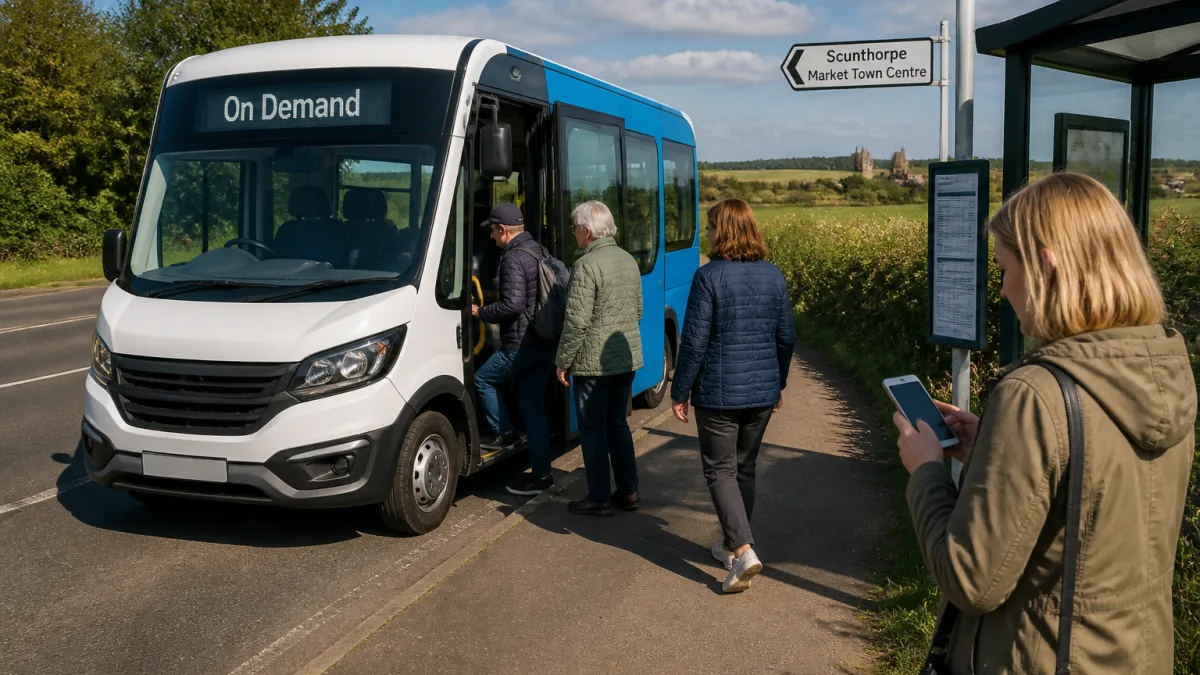
The council has put investment behind a package of improvements intended to make services both easier to use and better matched to real-world demand. In practice, that includes using software to dynamically plan routes, offering booking via an app for those comfortable with digital tools, and maintaining an in-house customer call centre for people who prefer to arrange trips by phone.
- Demand-responsive routing: journeys adjusted to passenger requests rather than fixed timetables alone.
- Flexible booking: reservations available through an app or by speaking with the council’s customer team.
- New vehicles: a refreshed fleet to support reliability and comfort.
- Concessionary travel: eligible concessionary bus passes accepted on the service.
Presenting the upgrades as a living service that will continue to evolve, the cabinet member for children, families and young people, Cllr Julie Reed, underlined that user feedback is shaping the offer as more residents try it for the first time.
“We’re continuing to invest in making the service even better,” she said. “Alongside a new fleet of buses, we’re using smart technology to make journeys easier to plan and book, while our in-house customer team is on hand to help anyone who prefers to speak to someone. Whether you book through the app or over the phone, we want the service to be as simple and accessible as possible. We’ll continue listening to residents, using feedback to shape the service as more people get on board – the more people who use this, the better it will get.”
By the numbers
The latest figures illustrate the early trajectory of demand as word spreads and the upgraded arrangements bed in:
| Month | Journeys | Change vs. May |
|---|---|---|
| May | 1,440 | — |
| June | 2,048 | +42% |
| Total since launch | 3,728 | — |
While the network launched only earlier this year, the uptick from May to June suggests growing confidence among residents that the buses will get them where they need to be. For people living in smaller communities, infrequent services and long waits have long been barriers to using public transport. The combination of pre-booking and flexible routing is intended to address those gaps without removing the support available to those unable or unwilling to use a smartphone.
Local impact and how to use the service
For older and disabled residents, the ability to book by phone and travel on concessionary passes is especially significant, helping sustain independence and access to health appointments. For younger people, the service offers a route to training and leisure opportunities across North Lincolnshire where lifts aren’t always available. Employers in market towns also stand to benefit as reach into rural labour markets improves.
Residents can plan trips in two ways: through the booking app or by contacting the council’s customer call centre. The council is encouraging people to try the enhanced offer and feed back on timings, pick-up points and connections so further refinements can be made. Officials argue that the more people choose to travel this way, the more responsive the network can become.
Demand-responsive transport is not a cure-all, but it is an increasingly common tool used by local authorities to connect low-density areas cost-effectively. The North Lincolnshire model seeks to balance flexibility with familiarity by keeping human support at the heart of bookings while still gaining efficiency from software-led scheduling. With summer underway and journey figures trending upward, the next few months will test whether this formula can convert first-time users into regular passengers.