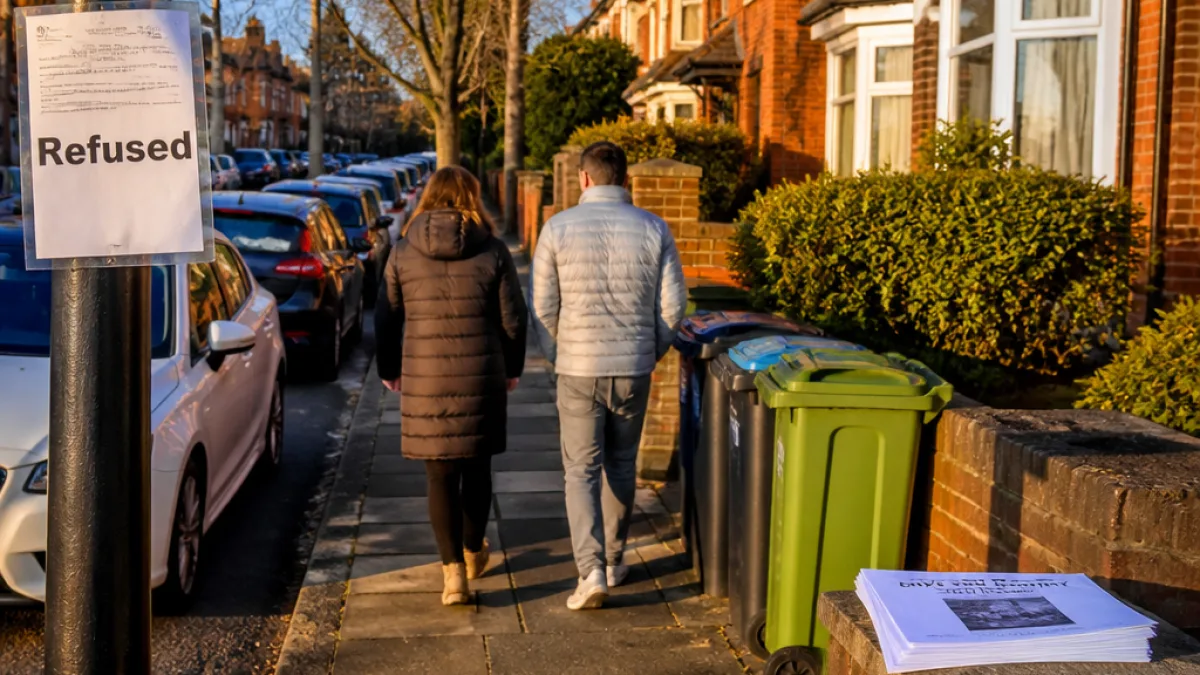
Plan refused after strong local response
Sandwell Council has refused a proposal to convert a detached house on Queen’s Road, Smethwick into a nine-bedroom house in multiple occupation (HMO), following a sizeable community backlash and concerns raised by planning officers. The council recorded 64 written objections during consultation, received a 100-signature paper petition, and noted an online petition with more than 700 signatories.
Objectors argued that intensifying the use of a single dwelling in a residential street would undermine the area’s character, bring higher levels of noise and comings-and-goings, and increase the risk of anti-social behaviour. Traffic and parking pressures were also highlighted by residents living nearby.
Planning reasons: noise, comings-and-goings and parking
In its decision report, the council’s planning team contrasted the typical activity of a single-family home with the independent living patterns of multiple occupants in an HMO. Officers concluded that a nine-room layout would materially raise the number and frequency of movements, visitors and deliveries, to the detriment of neighbouring amenity.
“Occupants of an HMO are likely to live largely independently of one another, resulting in an increase in the number and frequency of comings and goings,” the report noted, adding that this would be harmful to the living conditions of nearby residents.
Highways comments also drew attention to parking provision, stating the scheme was short of one off‑street parking space against the council’s expectations for a development of this scale.
Petitions warn of road safety and neighbourhood impact
Alongside formal objections, petitioners urged the council to prevent over-intensification on the street. The online campaign stated the change could put pressure on local roads and contribute to behaviour that unsettles long-standing residents.
One petition argued the change would “disrupt the harmony and safety” the community has valued for years, warning of more traffic and road safety risks for children walking to school.
Signatories also questioned whether a high-occupancy property on a quiet street would be compatible with the area’s established family housing, saying it risked altering the character of the neighbourhood.
What could still happen at the property
While the nine-bed scheme has been refused, the council’s report indicates the building could still be converted into a six-bedroom HMO without requiring fresh planning permission. Small HMOs of this scale can, in some cases, proceed under permitted development rules. The council has not granted consent for the nine-room layout, and any larger arrangement remains restricted by the refusal.
The applicant retains normal options available within the planning system, including revising the proposal to address amenity and parking issues, or pursuing routes provided by national planning procedures. Residents who engaged with the consultation will be alert to any future changes at the address, given the level of interest already shown.
Local context and what residents raised
The council’s assessment turned on the balance between housing needs and the protection of residential amenity. Officers emphasised that the proposed intensity of use would likely generate significantly more movements than a typical household and that the scale of occupation risked sustained noise and disturbance to immediate neighbours.
- Neighbour amenity: risk of increased noise, late-night activity and deliveries.
- Highways and parking: identified shortfall of off‑street parking spaces for the proposed capacity.
- Character of area: concerns a large HMO would not sit comfortably on a family street.
The strength of the local response suggests residents remain wary of high-intensity conversions on established residential roads. Planning officers’ findings align with those concerns, focusing on the cumulative impacts from additional occupants, visitors and vehicles.
What the numbers show
| Consultation input | Count |
|---|---|
| Formal objections to council | 64 |
| Paper petition signatures | 100 |
| Online petition signatories | 700+ |
| Parking shortfall (off‑street) | 1 space |
Residents can continue to monitor planning activity in their area through the council’s planning portal and make representations during consultation windows on any new or revised proposals. In this case, the refusal means a nine-bed HMO cannot proceed as submitted. Any lawful changes under smaller HMO allowances would still need to comply with housing standards and management requirements.