Wide-reaching rental licensing plan put to public
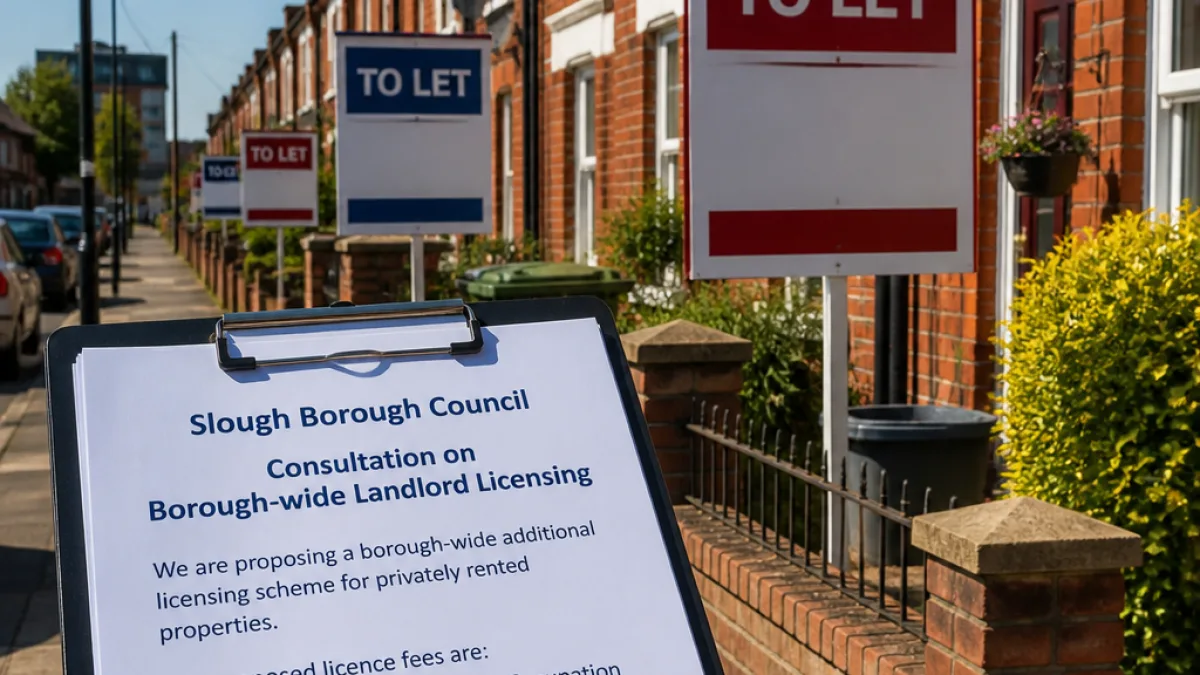
Slough Borough Council has begun a formal consultation on proposals to introduce comprehensive landlord licensing across the town, potentially covering about 17,000 privately rented properties. The draft scheme would mark a major expansion from current rules, extending beyond larger houses in multiple occupation (HMOs) to include smaller HMOs and non-HMO rentals.
Under the plans, landlords would pay £950 for a five-year HMO licence and £750 for a selective licence applying to other rented homes. If approved, the programme would run for five years. A start date has not been set. The council has launched a 10-week consultation running until 23 September, after which findings are due to be presented to the Cabinet to decide whether to proceed with one or both schemes.
What is changing compared with the current position?
At present, only larger HMOs in Slough require licensing. The council’s proposal would widen regulation to include smaller HMOs as well as all other privately rented properties through a borough-wide selective licensing scheme. Officials say the shift reflects approaches adopted by a growing number of local authorities in England and Scotland, with the intention of improving standards and management across the private rented sector.
| Licence type | Fee | Duration |
|---|---|---|
| HMO licence | £950 per property | Five years |
| Selective licence (non-HMO) | £750 per property | Five years |
Stated aims and expected outcomes
The council says licensing would give it stronger tools to raise conditions and management standards across rented homes, complementing existing enforcement activity. It argues that licensing would be more effective than relying on enforcement and landlord accreditation alone, particularly for HMOs.
- Improve housing conditions and property management
- Reduce overcrowding and anti-social behaviour
- Increase professionalism among landlords and agents
- Better inform tenants about their rights
Councillor Zafar Satti, lead member for public protection and regulatory services, said the proposals were intended to protect residents and stabilise communities:
“Toughening the rules for the private rented and HMO sectors will only be a good thing, as it puts in place measures to protect residents and communities. It will help to make sure properties are of a higher standard, make them more desirable to live in and offer more stability.”
Consultation timetable and next steps
The consultation is scheduled to run until 23 September. The council has indicated that feedback will be compiled and reported to the Cabinet before a decision is taken on adopting the HMO licensing scheme, the selective licensing scheme, or both. If either is approved, the council expects the programmes to operate for a five-year period, though the implementation date has not been confirmed.
What this could mean for landlords and tenants
For landlords, the most immediate impact would be the licence fees and the need to comply with licence conditions aimed at ensuring safe management and decent standards. For tenants, the council’s case is that licensing would support better-maintained homes, clearer accountability, and reduced nuisance linked to poor management practices and overcrowding.
The proposals would, in effect, bring the majority of Slough’s private rented stock under a licensing framework. The authority contends this would enable more consistent oversight, making earlier intervention possible where standards fall short. The scope of the schemes and their exact requirements will depend on the outcome of the public consultation and any changes made before a final decision.
Residents, landlords and letting agents are encouraged to review the proposals and provide feedback during the consultation window. The council says the evidence gathered will inform whether either or both licensing schemes should proceed and how they would be implemented.