
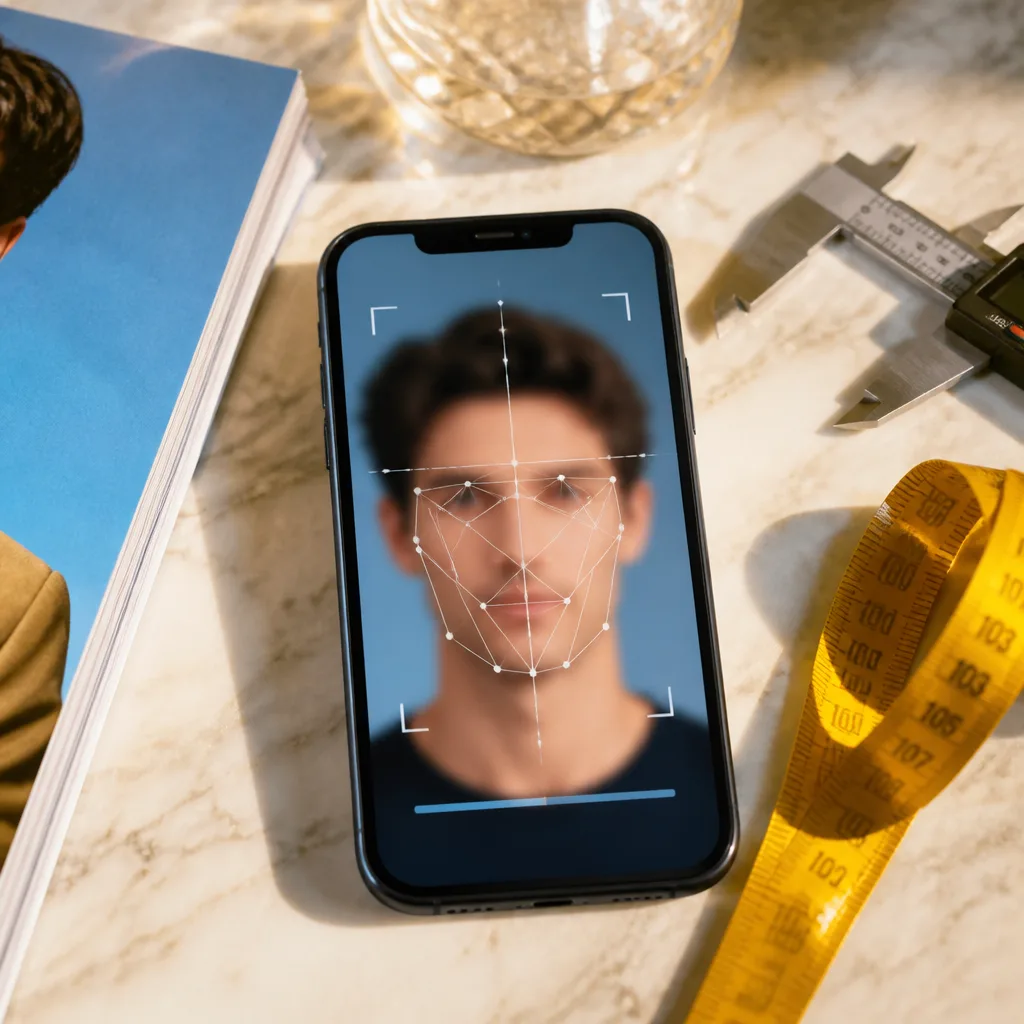
Matt Bomer has been placed at the summit of a new ranking built around a viral facial-proportion trend known as “looksmaxxing”, with a fresh feature from The Hollywood Reporter casting a bright light on a movement that treats attractiveness as a numbers game — and prompting questions about what we value in our screen idols.
From internet niche to headline fodder
The feature subjects some of the film industry's most recognisable men to a system that claims to quantify allure through symmetry, jawlines, eye spacing, cheekbones and dozens of other measurements. The rankings draw inspiration from an online community popularised by streamer Clavicular, whose followers approach beauty, as the outlet notes,
“like an engineering problem”— assigning numerical values to physical ratios and distilling them into an overall score out of ten.
Who scored what
While Bomer is cited as most closely tracking the movement’s idealised template, several household names also registered high marks. The feature highlights both the fascination and the reductiveness of scoring faces by spreadsheet.
| Star | Score | Notes |
|---|---|---|
| Matt Bomer | Top ranking | Closest to looksmaxxing ideals |
| Brad Pitt | 9.5 | In his prime |
| Henry Cavill | 9.5 | |
| Michael B. Jordan | 9.5 | |
| George Clooney | 8.75 | |
| Austin Butler | 8.5 | |
| Timothée Chalamet | 7.5 |
The limits of a formula
The report is careful to probe the constraints of this kind of neat arithmetic. Though looksmaxxing has moved beyond a fringe phenomenon into a broader self-improvement ethos encompassing grooming, fitness and skincare, its modern vocabulary is rooted in incel and wider “manosphere” forums. Critics argue the approach can harden narrow, particularly Eurocentric, ideals and compress the spectrum of human appeal into a ruler-and-calipers exercise. As the feature underscores, Hollywood’s alchemy cannot be fully codified by ratios and renderings.
Charisma still resists the spreadsheet
While the numerical model makes for tidy tables and viral fodder, the feature points to qualities that cut through even when geometry does not. It notes the industry’s enduring reward for presence that cannot be reverse-engineered by an equation — the intangible magnetism that has elevated stars whose features diverge from any templated ideal. In essence, there is a gulf between a face that fits a formula and a performance that fills a screen.
Why it resonates now
The current fixation is telling. Social platforms have propelled the language of optimisation into daily life, and with it the appeal of definitive rankings. Yet the article’s framing — celebrating standouts while interrogating the scaffolding beneath the scores — lands on a balanced note. It recognises the entertainment value of the exercise, but also the pitfalls when a culture of measurement brushes against identity, aesthetics and the messy reality of celebrity allure.
- Bomer leads a list derived from facial-proportion metrics popular online.
- The system assigns scores out of 10 based on symmetry and other ratios.
- The trend’s origins and criticisms — including Eurocentric biases — are foregrounded.
Ultimately, the piece leans on a simple truth dressed in Hollywood finery: a face may chart beautifully on a graph, but stardom lives in dimensions a formula cannot quite reach.