
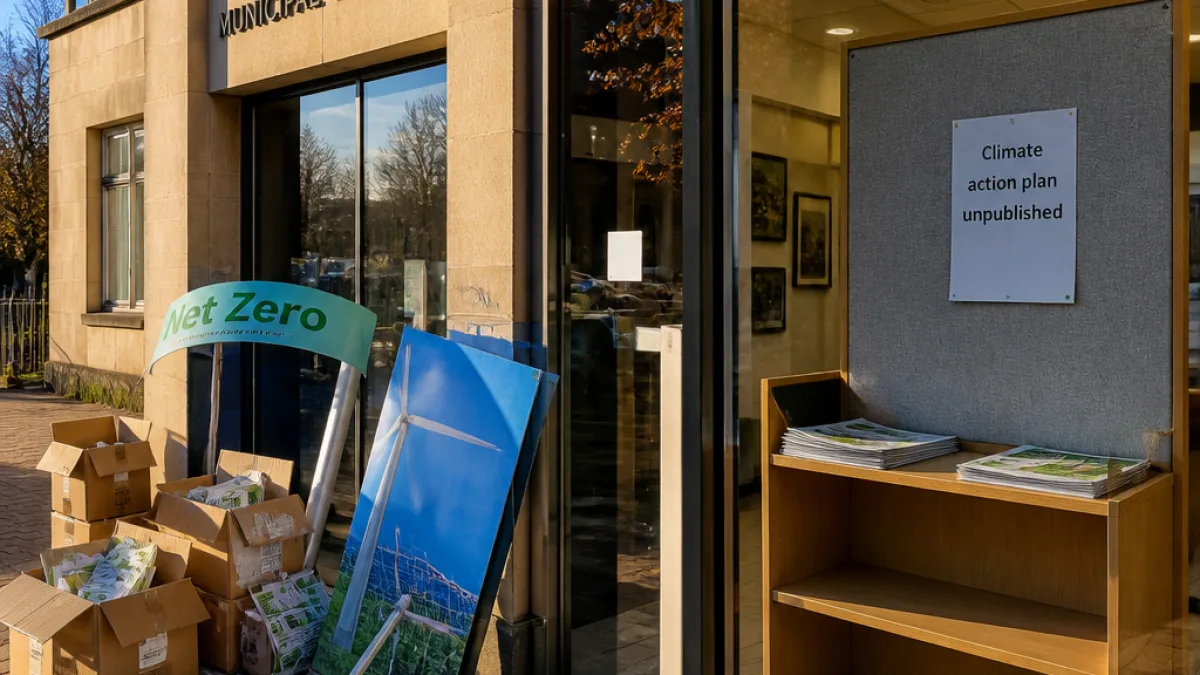
Wakefield Council has voted to scrap the authority’s commitment to be carbon-neutral by 2030 and reduce dedicated climate-change spending by £170,000, a move that will reshape local climate action and the council’s engagement with community groups and regional networks.
What the cabinet decided
Members of the Reform-led cabinet agreed to overturn the climate and biodiversity declarations adopted in 2019. The package of changes includes:
- removing the target for the council to be carbon-neutral by 2030;
- ending the council’s support for the Wakefield Net Zero Partnership;
- withdrawing from the Yorkshire and Humber Climate Commission’s climate action pledge;
- unpublishing the council’s climate change action plan and retiring the climate newsletter and social channels;
- scrapping the elected member role of "climate change champion".
Council leader sets out the rationale
"It is not about denying the science of climate change. It is about focusing council resources on practical actions that can be delivered locally and benefit residents,"
Chief executive and councillors were told the revised approach aims to concentrate on measurable local actions such as improving energy efficiency in the council’s property portfolio and boosting recycling rates.
Scale and likely consequences
The council report highlighted that the authority manages a large property estate. Cabinet members were told changes could have "workforce implications" and any resulting staffing matters would be subject to formal trade union consultation. Campaigners and environmental groups have warned that rolling back public commitments risks signalling a retreat from local climate leadership and could limit coordination with businesses and community groups.
| Item | Detail |
|---|---|
| Carbon-neutral target | 2030 (scrapped) |
| Net-zero district pledge | 2038 (previous Labour commitment) |
| Budget reduction | £170,000 cut from climate work |
Council officers will now be required to align activity to the revised policy, focusing on property efficiency and local measures intended to deliver tangible benefits for residents. The cabinet also decided to stop active support for certain regional and partnership initiatives that previously helped connect local organisations and businesses on sustainability best practice.
Opponents of the decision argue that withdrawing from partnerships and removing public targets will make it harder for the district to coordinate action and share expertise. Supporters within the cabinet say the changes free up resources for practical, locally delivered work.
Residents and local groups can expect further detail as officer reports and consultations are carried out on the workforce and the implementation of the new policy.