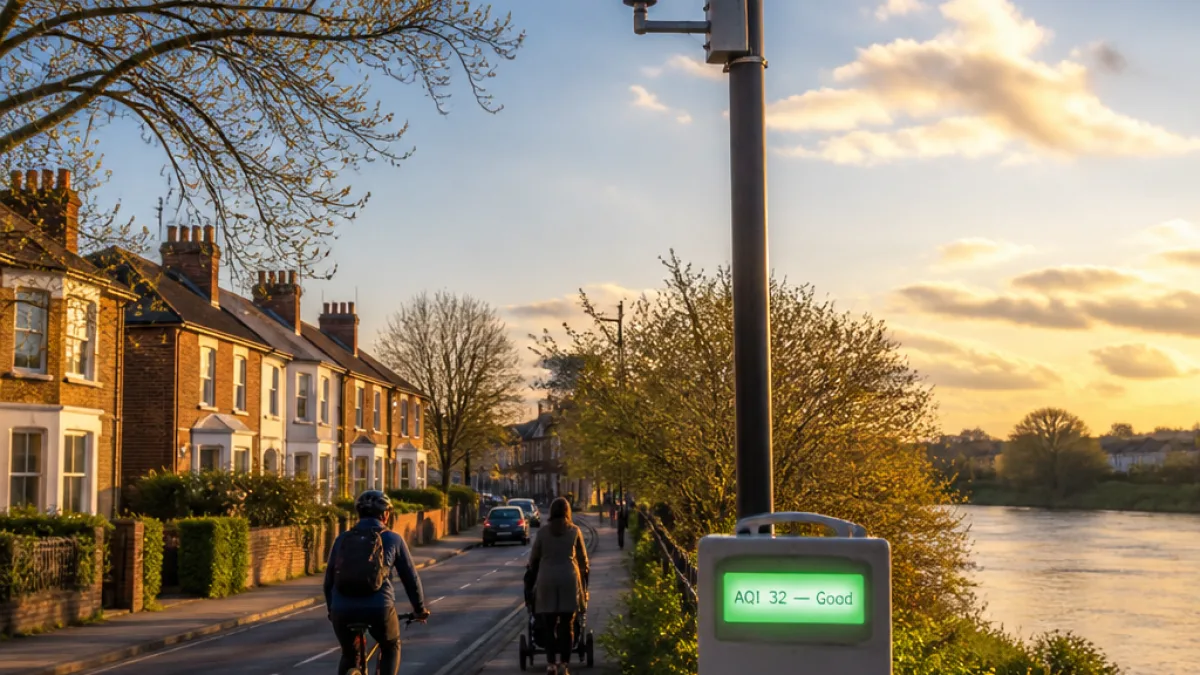
Latest readings and short‑range forecasts show Bexley’s air quality remaining generally favourable. The local Air Quality Index (AQI⁺) is currently in the low 30s, and recorded data indicate that the PM2.5 concentration in the borough currently meets the World Health Organization (WHO) annual guideline.
Current readings and short-range outlook
According to the most recent hourly and daily forecast data, Bexley’s AQI values and accompanying weather conditions are:
- Today: AQI 32; relative humidity 70%; temperature range 16°–13°; wind 22 km/h; 90% (condition indicator)
- Saturday: AQI 37; relative humidity 60%; temperature range 18°–13°; wind 20 km/h; 76%
- Sunday: AQI 32; relative humidity 18%; temperature range 18°–13°; wind 17 km/h; 74%
Historic hourly data referenced show hourly readings in the 20s during early evening on the latest recorded day, with one instance marked as "Good" for 19:00–20:00 on July 17.
What this means for residents
An AQI figure in the low 30s is typically considered to represent good air quality for the general population. The confirmation that PM2.5 concentrations meet the WHO annual guideline is particularly relevant, since fine particulate matter (PM2.5) is associated with most of the long‑term health risks attributed to air pollution. Local residents who are concerned about respiratory or cardiovascular conditions should continue to follow any guidance from their healthcare providers, but there is no immediate indication from these figures of elevated pollution risk.
Practical information and monitoring
Residents can monitor changes in local air quality by consulting routine hourly updates and short‑term forecasts. The available data provide:
| Metric | Current / Forecast |
|---|---|
| Air Quality Index (AQI⁺) | 32–37 (short range) |
| PM2.5 | Meets WHO annual guideline (current) |
| Noted historic category | Good (19:00–20:00, Jul 17) |
For people who spend time outdoors — whether exercising, commuting or working — these readings suggest normal activity can continue without additional precautions. Those with specific medical concerns should consult health professionals for tailored advice.
Local authorities and environmental health teams routinely use this type of monitoring to direct any necessary interventions and to inform the public. Continued review of hourly data is advisable, as AQI and pollutant concentrations can change with shifting weather, traffic patterns and other sources.
InfoRadar will continue to report significant changes in local air quality as fresh data become available.