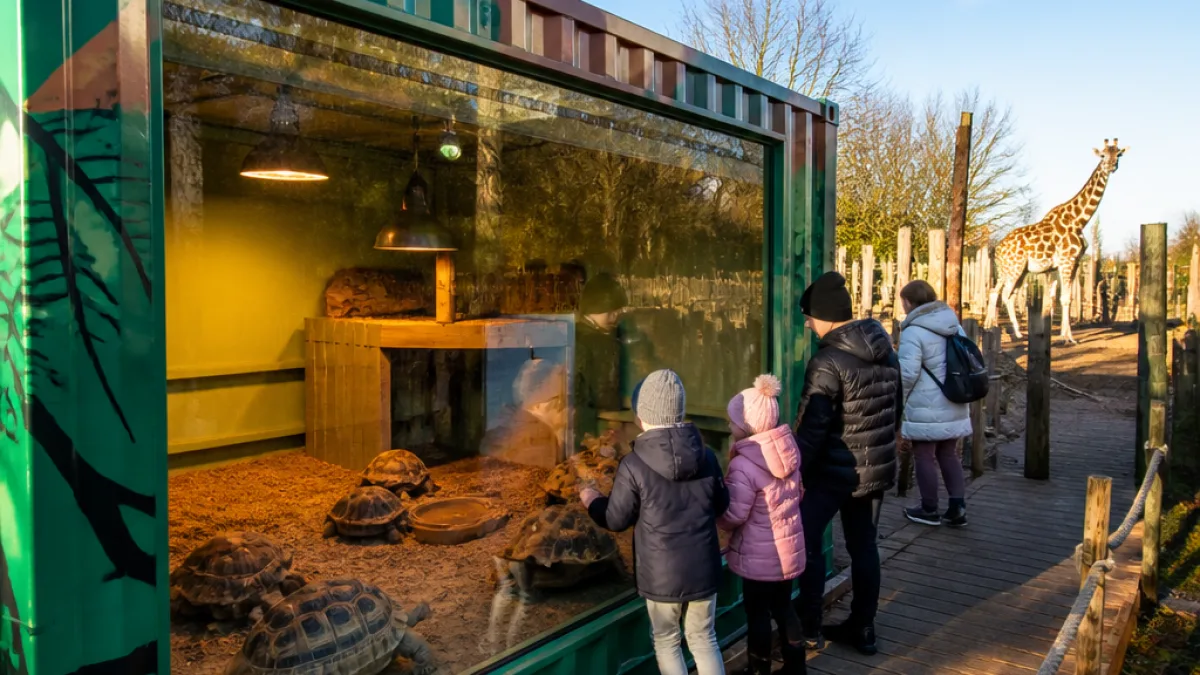
Blackpool Zoo has moved a long‑term group of rescued tortoises into a purpose‑built living space fashioned from a shipping container, bringing the animals into a new, permanent position on the zoo’s Kidepo Trail.
From seizure to sanctuary
The tortoises were wild‑caught in Africa and smuggled into the UK without paperwork before being seized by customs. They have been in the zoo’s care for more than 20 years, previously housed in a wooden enclosure near the main reception, away from the principal visitor route.
Why a container?
Blackpool Zoo commissioned a specialist Greater Manchester firm, Universal Containers, to adapt a steel cargo unit into an enclosure capable of meeting the animals’ needs for the rest of their lives on site. This is the zoo’s fourth container installation, and the organisation describes it as the most technically demanding to date.
"a habitat engineered to last the tortoises’ 70 to 100 year lifespan"
The container now sits next to the giraffes on the Kidepo Trail and has been adapted to replicate the tortoises’ natural, semi‑arid environment.
- Infrared lamps and heaters to imitate the long‑wave radiation of direct sun
- Sealed wet‑room floor with drainage to maintain hygiene and manage moisture
- Sand bedding layer suitable for a semi‑arid species
- Glass viewing panel to let visitors observe the animals without disturbance
Local impact
By relocating the tortoises into a durable, purpose‑designed unit close to the main visitor trail, the zoo has made the animals more accessible to the public while improving husbandry conditions. The specification aims to provide a stable environment for species that can live for many decades, avoiding frequent rebuilding or refurbishment.
| Item | Detail |
|---|---|
| Provider | Universal Containers (Greater Manchester) |
| Current location | Kidepo Trail, next to the giraffes |
| Expected lifespan of build | Designed for the tortoises' remaining 70–100 years |
The project mixes animal welfare considerations with visitor experience, reflecting the zoo’s role as both a conservation institution and a local attraction. The conversion also underlines the practical reuse of a steel container—an ironic echo of the animals’ original treatment as cargo.