Oil shock pushes prices higher and FTSE lower
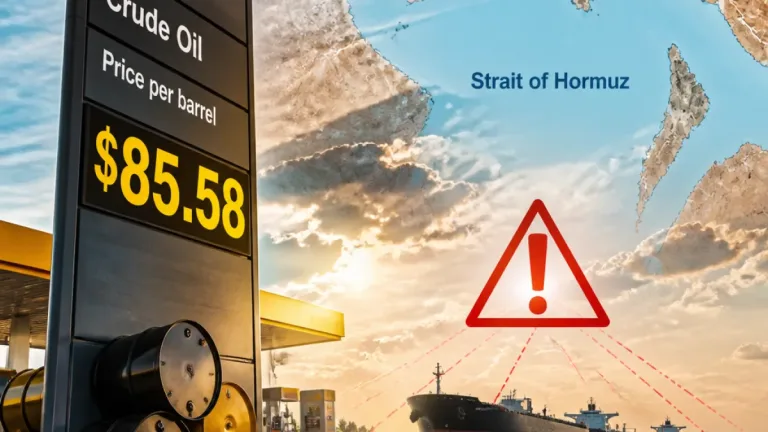
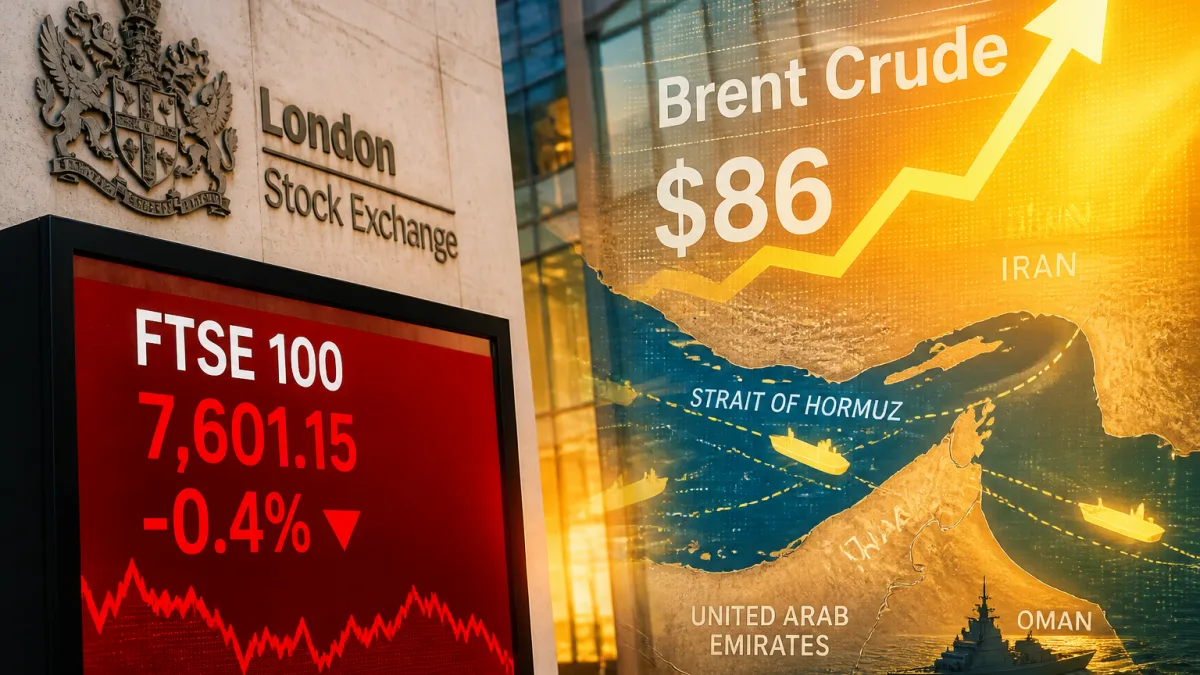
London equities opened lower on Tuesday after a fresh escalation in the Gulf sent energy prices sharply higher, fuelling concerns over inflation and operating costs. The internationally traded oil benchmark, Brent crude, leapt after the United States confirmed additional strikes on targets in Iran and signalled a renewed hard line on shipping through the Strait of Hormuz, a key corridor for global energy flows.
By 08:35 BST, the FTSE 100 was down around 0.4% at 10,453.85. Brent crude was quoted up roughly 3% to $85.80 a barrel, with US benchmark West Texas Intermediate (WTI) around $80.26, an increase of approximately 2.7%. A separate market snapshot cited Brent at $87.51 and WTI at $81.21 shortly afterwards, underscoring rapid intraday moves as traders reacted to developments.
| Market/Benchmark | Latest move | Level |
|---|---|---|
| FTSE 100 (08:35 BST) | -0.4% | 10,453.85 |
| Brent crude | +3% to +5.1% | $85.80 – $87.51 |
| WTI crude | +2.7% to +3.9% | $80.26 – $81.21 |
US stance on Hormuz heightens market anxiety
In a statement posted on social media, the US President said the Strait of Hormuz would remain open for global shipping while declaring targeted restrictions on Iran-linked traffic and announcing a charge on cargoes using the route. The waterway is estimated to carry close to a fifth of worldwide oil shipments.
"The Hormuz Strait is OPEN, and will remain OPEN, with or without Iran. We are reinstating the IRANIAN BLOCKADE, so named because it is only stopping Iran’s ships or customers from entering or leaving... The U.S.A. will be, from this point forward, known as ‘THE GUARDIAN OF THE HORMUZ STRAIT,’ but as such, and as a matter of FAIRNESS, will be reimbursed, at the rate of 20% on all cargo shipped, for any and all costs necessary to do the job of providing safety and security to this very volatile section of the World."
The US Central Command confirmed a multi-hour operation striking sites across several Iranian locations including Bushehr, Chah Bahar, Jask, Konarak, Abu Musa and Bandar Abbas. The latest action has re-focused attention on supply security in a region central to the movement of crude and refined products.
Analysts: oil moves overshadow other macro events
Traders were otherwise preparing for a busy day of US corporate earnings and testimony from the Federal Reserve’s new chair, alongside the latest inflation reading. Market commentary suggested the energy spike had overtaken those events in importance for the immediate outlook. As one strategist put it,
"Markets came in looking for CPI. They got Hormuz... Brent’s spike above $85/bbl... has bulldozed last week’s stabilisation story and dragged the tape back into inflation-shock territory."
The prospect of higher oil costs tends to push up transport and production expenses, which can complicate central banks’ efforts to tame price growth. That dynamic was visible across European equities at the open, with energy shares supported but broader indices softer.
What this means for Brent residents and businesses
While crude trades in dollars on global exchanges, movements in Brent crude often work through to wholesale fuel and heating costs in the UK. Any sustained increase can affect household budgets and the running costs of small firms reliant on deliveries and road transport. Local hospitality, retail and trades that depend on frequent van usage may feel pressure on margins if input and distribution costs rise.
Residents and business owners in the borough should keep an eye on pump prices and energy statements over the coming days. Although pricing at forecourts and for utilities does not shift instantly with every market tick, a prolonged period of higher crude typically filters through. Households already planning summer travel by car may wish to compare forecourt rates and consider timing top-ups, while businesses could review delivery schedules and supplier arrangements to contain costs.
- Forecourt prices can lag global crude moves but tend to reflect persistent trends.
- Higher fuel costs can raise expenses for deliveries, maintenance visits and commuting.
- Public transport fares are set administratively; fuel inputs are just one factor in operator budgets.
Next catalysts to watch
Investors are monitoring the pace of US corporate earnings releases from major banks and indications from the Federal Reserve on interest rates. In addition, the US inflation print for June is due, which may shape expectations for monetary policy if energy’s latest jump feeds into headline readings. Further clarity on shipping arrangements in the Strait of Hormuz will also be watched closely by energy markets.
For Brent’s residents, the picture remains fluid. If crude stabilises, recent increases might ease; if tensions persist, the borough could face a renewed squeeze on everyday costs just as households look to manage summer spending. Local businesses with exposure to transport and logistics will be assessing contingencies to maintain service levels while limiting price pressures for customers.