Urgent appeal for new crews on Cornwall’s north coast
Surfboat rowing, a tradition born from sea rescue and long woven into Cornwall’s coastal identity, is facing a critical shortage of participants. Members of the Perranporth surfboat community and national organisers have warned that, without fresh recruits, the sport risks fading from beaches where it once thrived. The call comes with taster sessions now being offered through Perranporth Surf Lifesaving Club to attract newcomers.
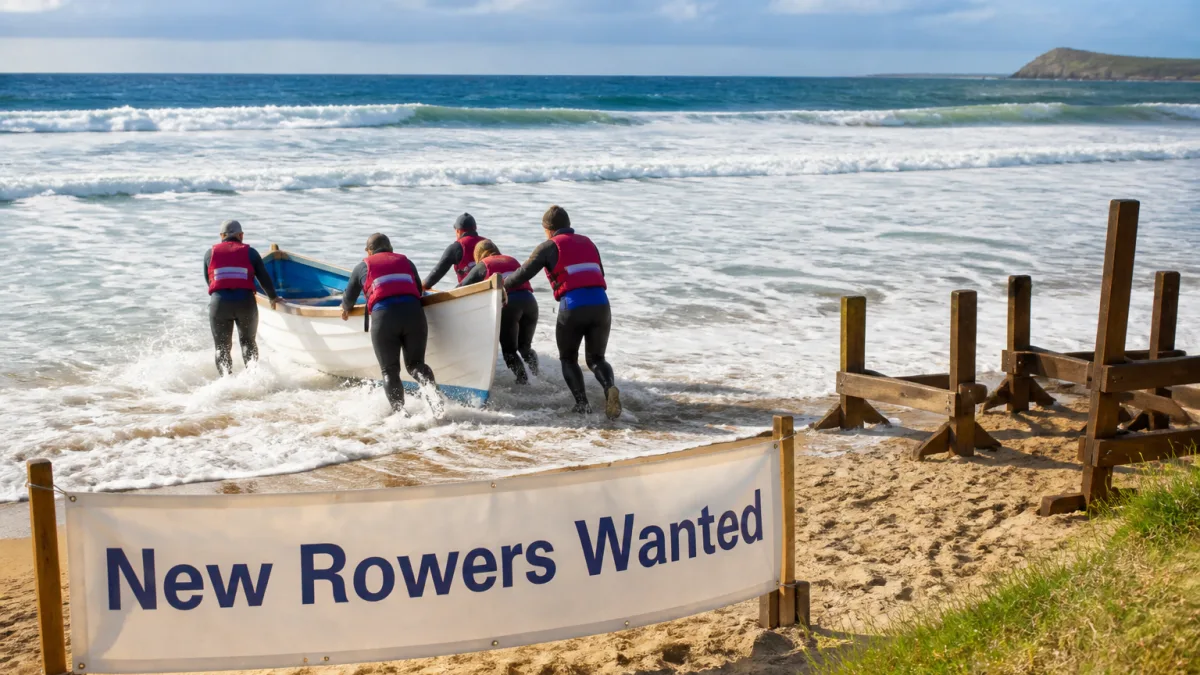
Originally developed to reach people in difficulty before modern rescue craft were commonplace, surfboat rowing blends endurance and surf skills. Crews of four rowers work a heavy boat through breaking waves before turning to ride a swell back to shore. While the discipline remains strong in Australia, those involved say numbers in Cornwall have thinned considerably in recent years.
‘Critical point’ for a once-busy scene
Kim Marie Jackson, chair of the UK Surf Rowers League, said the sport has reached a pivotal moment and needs people to step forward.
"It's kind of got to a critical point where if we don't build the numbers now and recruit more people it's going to die as a sport. That would be an awful shame because it's the most exciting adrenaline sport ever."
Jackson recalled a time when regattas saw healthy line-ups across men’s and women’s events, contrasting that with a steadily shrinking field today. The concern is not only for competition; organisers fear the loss of a pathway that has historically supported surf-lifesaving fitness, seamanship and coastal confidence across Cornwall’s beach towns.
What the sport involves
- Purpose: Developed alongside surf lifesaving as a way to reach people in the water before the advent of jet skis and RIBs.
- Crew: Four rowers power a traditional surfboat through the break before turning to catch a wave back in.
- Training: Taster sessions are being run via Perranporth Surf Lifesaving Club for anyone keen to try.
The discipline demands teamwork, timing and respect for the sea. Participants say the reward comes when the crew turns onto a wave and surfs the boat towards the beach after the hard effort of rowing out through white water.
Experiences from the beach
Newer rowers say the sport offers an immediate sense of camaraderie and a steep but satisfying learning curve. One Perranporth team member, Sian Kirby, described the mix of effort and exhilaration.
"This is my first season in the waves but I've already managed to compete in my first competition. I've still got a long way to go. I am still learning. But everybody's been so welcoming. When you're catching a wave back in all the hard work to get out there is worth it."
Organisers also emphasise that conditions can be matched to experience. While the image of booming surf is part of the sport’s appeal, calmer days and smaller swells are used for training and induction.
From rescue roots to today’s challenge
For decades, surfboat rowing sat alongside surf lifesaving as a way for volunteers to stay sea-ready. Before powered craft became standard, crews rowed to incidents beyond the shore break. That heritage remains an important part of club culture on beaches like Perranporth, where volunteer lifeguards and lifesavers train and compete through the seasons.
Ken Croft, who heads the National League of Surf Rowers, believes Cornwall’s coastline gives the sport every chance to rebuild, provided people are encouraged to give it a try.
"In Cornwall we are so gifted with the beaches we have got and the accessibility that we've got and the surf locations that we've got. This sport is underused. We can get so many more people and clubs out enjoying it. It doesn't have to be big surf every time."
Participation then and now
Organisers say entries have fallen markedly since the mid-2000s. While precise current figures were not provided, the direction of travel is clear.
| Period | Participation |
|---|---|
| Circa 2006 | On average, around 15 men’s crews and 12 women’s crews at events, according to the UK Surf Rowers League. |
| Now | Numbers have diminished, prompting a county-wide push for new recruits. |
How to get involved
The immediate priority is to bring newcomers into the boats and rebuild crews. Taster sessions for beginners and returners are being offered through Perranporth Surf Lifesaving Club. Organisers say no prior surf experience is necessary to start; instruction covers boat handling, safety and the fundamentals of rowing in the break. The sport is open to adults of varying fitness levels, with training scaled to conditions.
Local advocates argue that sustaining surfboat rowing brings benefits beyond competition. Keeping crews active helps maintain a reservoir of ocean awareness and practical skills that have long supported Cornwall’s volunteer coastal culture. With beaches and surf on the doorstep, those behind the recruitment drive say the foundations are in place for a revival—provided enough people pick up an oar.