Kent county council has moved to include part of Oaken Wood in its mineral sites plan, a decision that campaigners fear could lead to the removal of long-established woodland to access stone beneath.
What the council has done
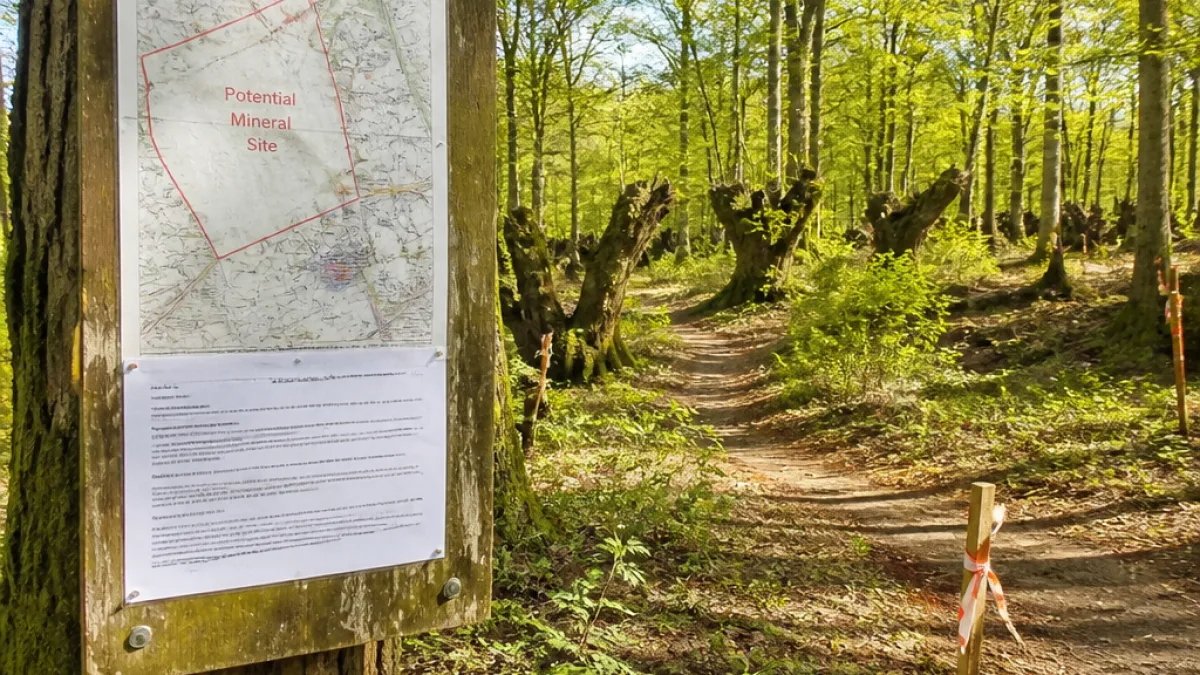
The council, currently led by the Reform group, voted this month to identify ground under Oaken Wood as a potential mineral resource. The decision does not itself grant planning permission for quarrying; it places the area on the council’s list of sites that could be pursued for future extraction, subject to the mineral plan receiving government approval.
Why local people are concerned
Oaken Wood includes areas known locally as Seven Wents, a junction of forest paths used for centuries. The wood is described as a plantation on an ancient woodland site (PAWS), with parts managed historically as sweet chestnut coppice. Campaigners and local councillors argue the site has continuous woodland cover since at least 1600 and plays a cultural and ecological role in the landscape.
“This is what they call Seven Wents,”
Visitors and campaigners say the coppice system underpins local ecology and traditional woodland management. One local councillor noted the rotational coppicing cycle: it takes about seven years before a coppiced area is ready to be cut again, during which time it provides habitat and other environmental benefits.
Practical implications and next steps
- The council’s designation makes Oaken Wood a candidate for future expansion of the neighbouring quarry.
- Inclusion in the mineral sites plan is a preliminary step; any actual quarrying would require project-level planning applications and, ultimately, government sign-off.
- Campaigners have begun mobilisation and legal advocacy to oppose the change and to press for protection of the woodland.
Local campaigners named in reporting include Allison Sweetman and Rachel Rodwell, both Green party councillors, alongside activists such as Julie Read and Brontie Ansell of Lawyers for Nature. They have been documenting the wood and highlighting its history and management practices.
| Feature | Detail |
|---|---|
| Woodland name | Oaken Wood (including Seven Wents) |
| Area referenced | 40 hectares (100 acres) reported as at risk |
| Decision | Included in Kent county council mineral sites plan |
| Authority | Kent county council (Reform-led) |
The council stresses that listing a site in the mineral plan is not equivalent to granting permission to extract. Nevertheless, local residents and conservation groups view the council’s move as the first, and a significant, step towards potential industrial development that would alter the character of the wood.
As the plan progresses, those interested in the outcome should look for the council’s formal consultation documents and any forthcoming planning applications relating to the adjoining quarry. Community groups and representatives have indicated they will continue to campaign and seek legal and political avenues to protect the woodland.
Further reporting will follow as the mineral plan proceeds through its statutory stages and as campaigners outline their next actions.