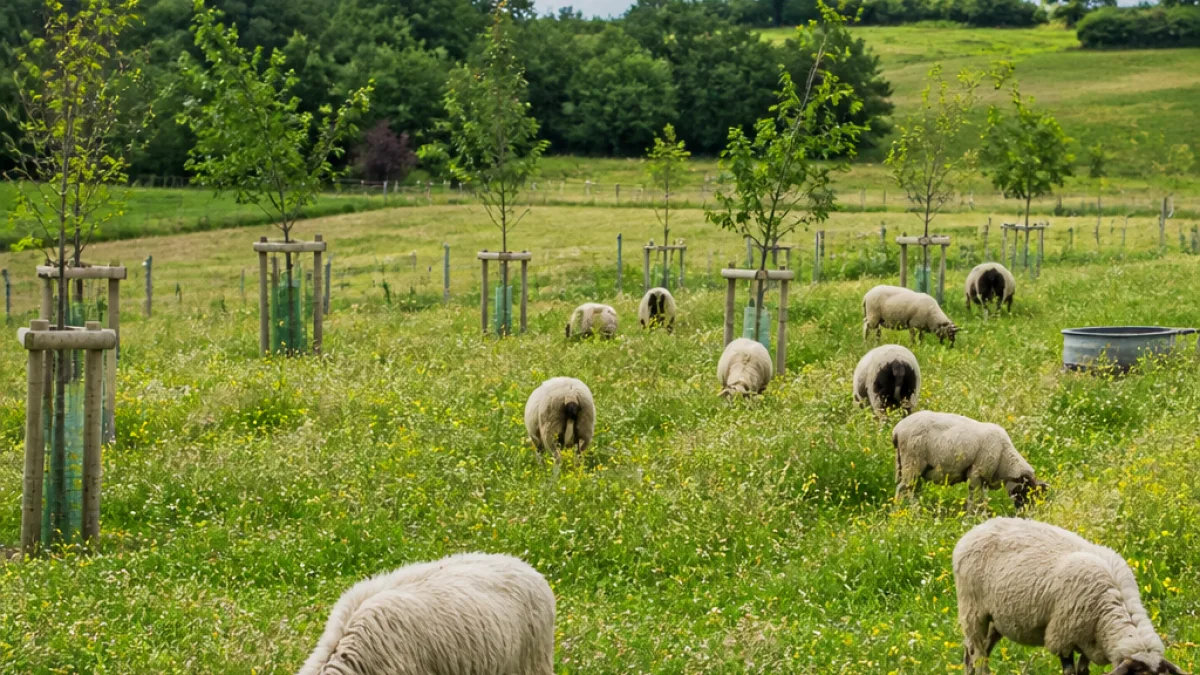
A pioneering conservation grazing trial in Sutton Valence has shown that a small number of native sheep can manage a local meadow naturally, reducing machinery use and supporting wildlife. The project, run by Maidstone Borough Council in partnership with Sutton Valence Parish Council and a local shepherd, grazed 10 Portland sheep on a 2.5 acre site that had previously been planted with more than 2,000 native trees.
What happened on the meadow
The sheep spent several months on the meadow, grazing the vegetation and helping to control coarser grasses while leaving a varied sward that benefits wildflowers, insects and birds. The herd required no supplementary feed and only routine welfare checks and access to fresh water during the trial.
- Species used: Portland sheep, one of Britain’s older rare native breeds.
- Site size: 2.5 acres.
- Complementary habitat work: > 2,000 native trees previously planted on the site.
Why it matters for Maidstone
Conservation grazing is promoted as a low-cost, low-maintenance alternative to mechanical mowing. According to council materials, the approach can:
- create a more varied habitat structure that supports invertebrates, birds and wildflowers;
- reduce fuel use, labour requirements and associated carbon emissions;
- encourage healthier soil communities through dung and natural grazing processes.
"This trial has shown how simple, nature-based solutions can deliver multiple benefits for communities, wildlife and the environment,"
The comment came from Councillor Rachel Rodwell, Maidstone Borough Council's Cabinet Member for Nature and Climate Transition, who suggested the model could be replicated by other parish councils, community groups and landowners across the borough who are seeking practical ways to manage land and support nature recovery.
Local implications and next steps
The trial’s reported success points to several potential local consequences. Landowners with verges, meadowland or sites undergoing habitat restoration may consider conservation grazing as an alternative to continued mechanical maintenance. Parish councils looking to reduce maintenance costs and carbon footprints could adopt similar schemes, provided they have access to suitable livestock and arrangements for welfare oversight.
Practical considerations that will determine wider uptake include the availability of shepherding expertise, animal welfare checks, fencing and water supply, and the need to match stocking density to site conditions. The council has not announced specific new sites for replication but has framed the Sutton Valence trial as a model for future nature-based management across Maidstone borough.
| Metric | Figure |
|---|---|
| Sheep used | 10 Portland sheep |
| Site area | 2.5 acres |
| Trees planted previously | 2,000+ |
The trial offers a locally tested example of how nature-based solutions can be applied at parish and borough level. For Maidstone residents and town and parish councillors, the Sutton Valence scheme is now a practical case study of conservation grazing in action.