
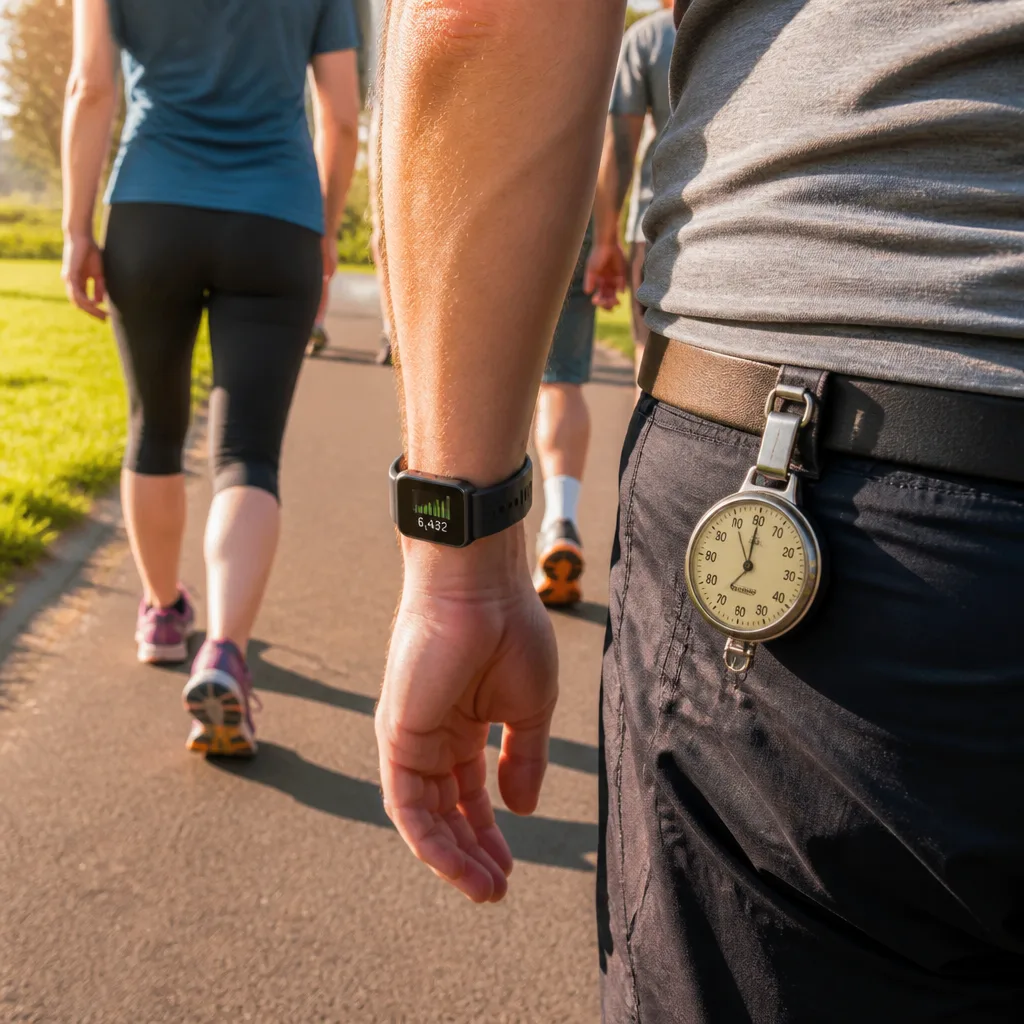
The figure of 10,000 steps a day — ubiquitous on watches and in fitness advice — originated not in clinical research but from a 1965 Japanese pedometer called the Manpo-kei, which literally means a “ten-thousand step meter”. At the time, the number was memorable, culturally resonant and suited to a new consumer device, not the product of trials testing its health effects.
What the evidence actually shows
Since that marketing stroke of luck, researchers have repeatedly examined the relationship between step counts and health outcomes. A landmark cohort analysis by Harvard epidemiologist I‑Min Lee tracked 16,741 older women who wore accelerometers and found that women averaging about 4,400 steps daily had a substantially lower risk of death than the least active group (about 2,700 steps). The mortality benefit continued as steps rose but levelled off near 7,500 steps.
“No studies had examined 10,000 steps at the time,”
— a blunt assessment attributed to I‑Min Lee about the origin of the 10,000 figure.
More recently, a pooled review led by Ding Ding at the University of Sydney combined results from 57 studies across 35 cohorts. Analysing outcomes such as all-cause mortality, cardiovascular disease, cancer, diabetes, dementia, depression and falls, the review found large improvements compared with very low activity. For example, compared with roughly 2,000 steps a day, reaching 7,000 steps was associated with:
- 47% lower risk of death from any cause
- 38% lower risk of dementia
- 28% lower risk of falls
Where the curve bends
The pooled evidence shows the steepest reductions in risk occur between very low activity and roughly 5,000–7,000 steps. Above that range the benefit curve flattens, meaning the incremental advantage of moving from, say, 7,500 to 10,000 steps is modest for many outcomes.
Independent physiologists asked to comment noted the headline conclusions are broadly supported by the data, while urging caution about generalising across populations. The strongest single-cohort early study involved older American women with about four years of follow-up; the pooled review covers more people and outcomes but observational limitations remain.
Implications for public advice
The evidence does not render 10,000 steps useless: it remains a practical and motivating goal for many. But the science suggests public-health messaging could be more inclusive and less intimidating by emphasising that substantial benefits begin well below that number. For people who are sedentary, moving from 2,000 to 4,000–5,000 steps daily may confer disproportionate gains.
| Approximate daily steps | Reported change vs ~2,000 steps |
|---|---|
| ~2,000 (very low) | Baseline |
| ~4,400 | Marked reduction in mortality (cohort study) |
| ~5,000–7,000 | Largest marginal gains; mortality and disease risks fall steeply |
| ~7,500–10,000 | Benefits continue but curve flattens |
Policymakers, clinicians and device makers may need to adjust how they present goals so that targets are evidence-aligned and achievable. For individuals, the key message is practical: meaningful health improvements can begin with modest increases in daily activity — and that may be a more effective message than an intimidating, arbitrary number.