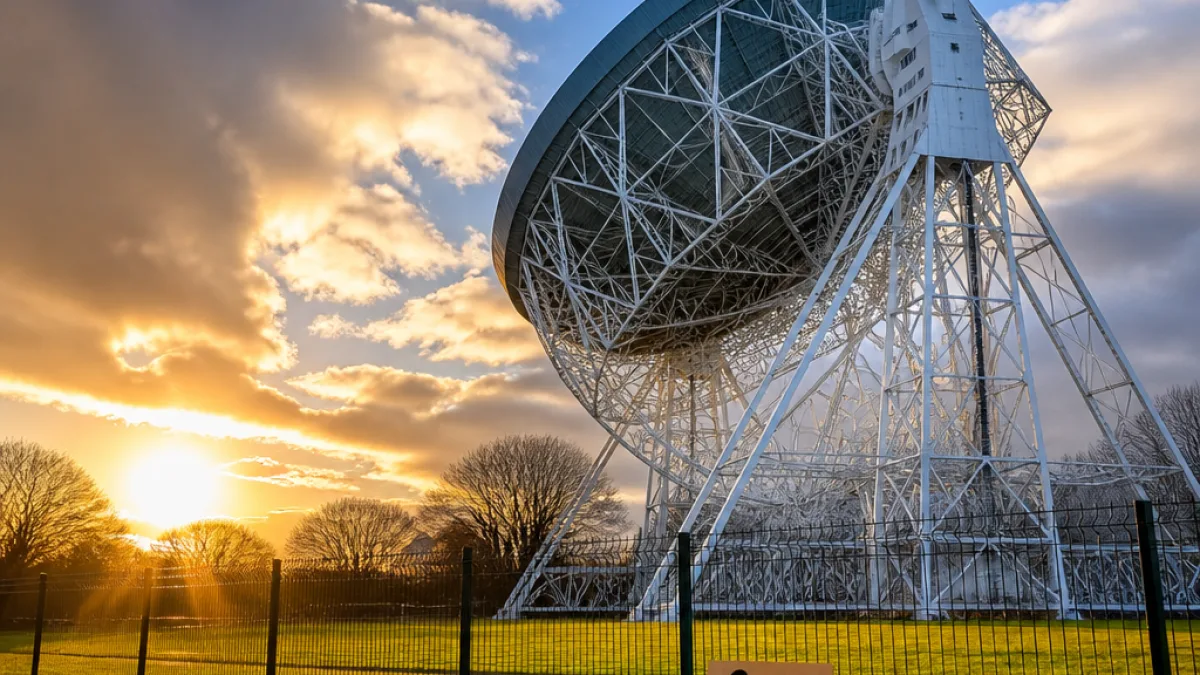
Esther McVey, the Member of Parliament for Tatton whose constituency includes parts of Warrington, has criticised the government after a reported £2.8 million cut to funding for the telescope at Jodrell Bank. The MP said the reduction threatens ongoing scientific activity at the observatory and could damage the UK’s reputation in astronomy.
What the MP says
“Jodrell Bank has been at the forefront of radio astronomy research worldwide for nearly 70 years, supporting many hundreds of scientists to further their work in that time. It also is a very visible sign of the UK’s commitment to world-leading research.”
Ms McVey described the move as “scientific vandalism” and has written to Business Secretary Jonathan Reynolds asking for clarification of the assessments that informed the decision. She warned that, while the figure involved is small in the context of government spending, the consequences for scientific credibility and the local economy could be substantial.
Immediate implications for Jodrell Bank
According to the information released, UK Research and Innovation (UKRI) says the reduction became unavoidable because costs in physics research and laboratory work have risen. The organisation has indicated that without replacement funding, scientific operations at the observatory and the associated telescope network are expected to cease on 1 April 2028.
- Funding cut: £2.8 million
- Organisation affected: Jodrell Bank observatory
- Deadline for operations to end (if no funding found): 1 April 2028
Why this matters to Warrington and the region
Jodrell Bank has been a centre for radio astronomy since it was established in 1945. Beyond its scientific role, the observatory contributes to local employment, draws visitors and plays a part in the north-west’s research profile. Local political concern focuses on three linked issues:
- the future of staff and specialist roles based at the site;
- the broader economic effect on supply chains and visitor-related spending in the area;
- national standing in radio astronomy and the ability to retain international collaborations.
| Item | Detail |
|---|---|
| Funding reduction | £2.8 million (reported) |
| At risk | All scientific work at the observatory and telescope network unless alternative funding found |
| Potential cessation date | 1 April 2028 |
UKRI has framed the decision as a response to rising costs in research areas, stating that it had “no option” but to make the cut. The exact internal assessments and the scope for alternative financing have been called into question by Ms McVey, who says she will press ministers for answers.
For residents in Warrington and neighbouring communities, the development raises practical concerns about jobs and the presence of a high-profile research institution in the north-west. It also feeds into wider debates about government priorities for science spending and regional investment.
InfoRadar will continue to monitor responses from government departments, UKRI and the observatory itself, and will report on any developments regarding emergency funding, local impacts and formal assessments requested by Ms McVey.