
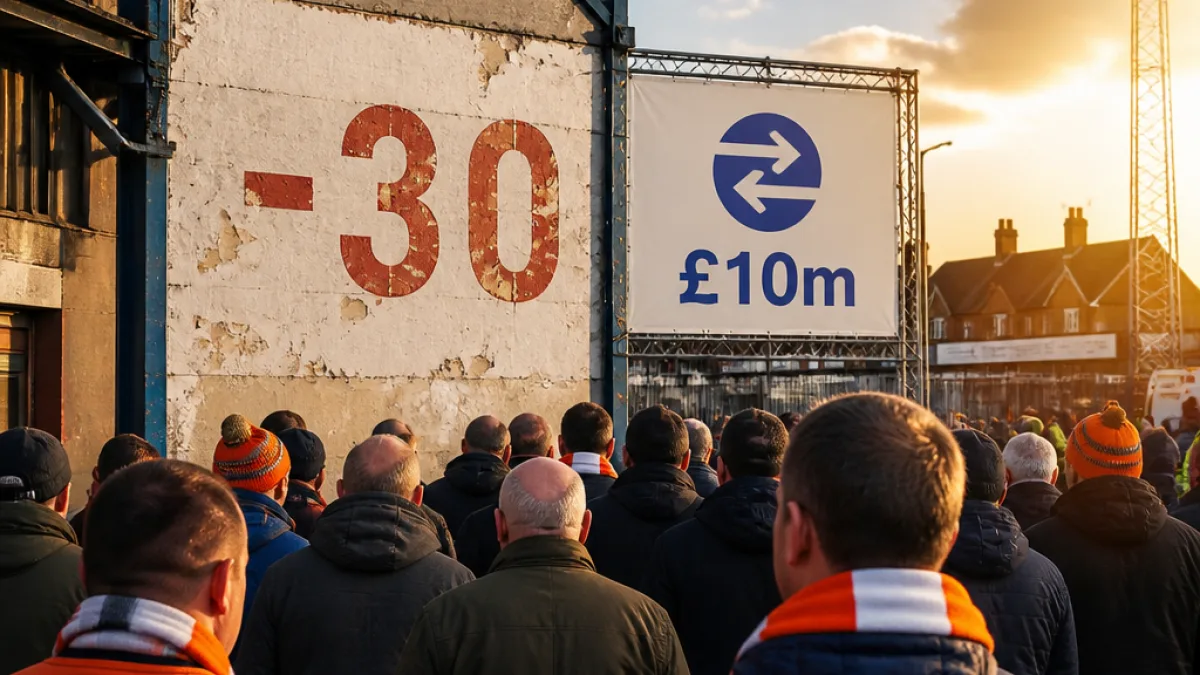
Recent action taken against Chelsea has prompted renewed scrutiny of how football authorities mete out punishment, a debate that carries particular resonance in Luton because of the club's severe sanction in 2008.
What happened at Chelsea and why it matters locally
The West London club was found to have breached rules around agent payments during an ownership transition. The Football Association imposed a fine of £10m and initially handed a suspended six-point deduction. Following an appeal, the fine was upheld and the suspended points penalty replaced with a suspended ban covering two transfer windows.
Supporters and observers have interpreted the decision in different ways. Some point to the fact Chelsea self-reported issues after a change in ownership; others question the proportionality of the sanction given the number of alleged irregularities. For many in Luton, the case reopens memories of a landmark and painful moment for the town's club.
Luton's 2008 punishment and the perception of double standards
In 2008 Luton Town were hit with a deduction of 30 points, a sanction that remains a raw subject among supporters and local officials. That penalty effectively derailed the club's season and, critics say, was imposed with exceptional severity. Comparisons between Luton's punishment and more recent decisions at larger clubs have fuelled accusations that the disciplinary system treats teams unevenly.
"Are we watching on as football becomes two-tier when it comes to punishments?"
The question has resurfaced in light of other, recent cases: Southampton faced exclusion from the EFL Championship play-offs after admitting to limited breaches; Everton and Nottingham Forest have also been cited for rule infringements; and Manchester City have been linked with a substantial number of alleged offences. Those examples, coupled with Chelsea's outcome, contribute to a sense among some fans that sanctions vary according to a club's profile.
- Fans in Luton recall the long-term consequences of the 2008 points deduction.
- Calls for consistency in disciplinary decisions have grown louder across supporter groups.
- Local clubs and their followers are watching to see whether governing bodies apply rules uniformly.
How the recent sanctions compare
| Club | Sanction / Issue |
|---|---|
| Chelsea | £10m fine; suspended six-point deduction replaced by suspended two-window transfer ban |
| Southampton | Excluded from EFL Championship play-offs after admitting selective breaches |
| Everton | Found to have broken rules (details not specified here) |
| Nottingham Forest | Fallen foul of regulations (details not specified here) |
| Manchester City | Associated with a reputed 100+ alleged offences |
| Luton Town (2008) | 30-point deduction |
Those entries reflect reported outcomes or allegations; they do not provide a comprehensive legal or regulatory account of each case. Nonetheless, for readers in Luton the contrast is stark: the scale and consequences of Luton's sanction remain a reference point in debates about fairness.
What this means for supporters and the game
Consistency in discipline is central to the integrity of competition. Perceived disparities can erode trust among fans, particularly in towns where the local club suffered heavily under past rulings. For Luton Town supporters the memory of 2008 still informs how they view later decisions.
Until governing bodies set out clearer criteria for how sanctions are determined and applied — and demonstrate their use consistently across clubs of different sizes — questions about double standards are likely to persist. The Chelsea case will keep that conversation alive locally and nationally.