Fire crews tackle harvest-time blaze close to county border
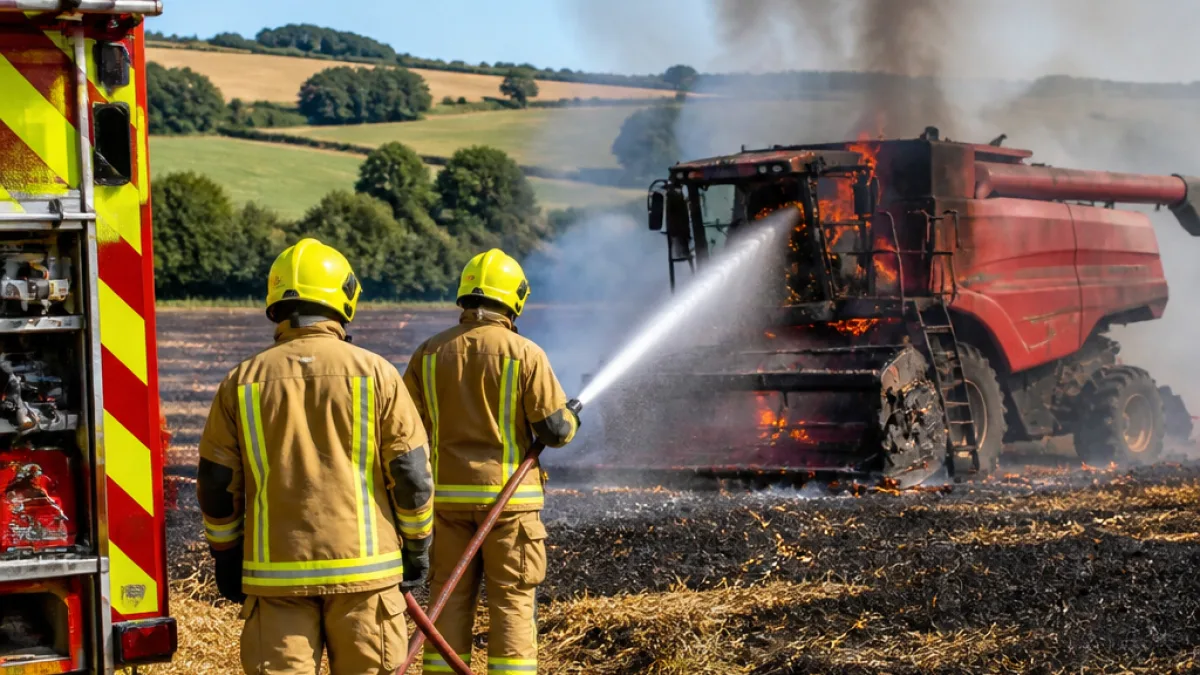
A combine harvester and roughly three acres of straw went up in flames in a field at Newcastle‑on‑Clun, near Craven Arms, prompting a callout to the fire service at around 12.50pm on Saturday 18 July. The incident, on Shropshire’s southern fringes, unfolded at a time when farms across the county are gathering crops and fields are at their driest.
Details released by the fire service confirm that both the agricultural machine and a sizeable area of straw caught light. The location, just over the hill country near the Welsh border, is typical mixed-farming terrain where summer field work is in full swing. No further information about injuries, the cause of the fire, or the length of the response had been provided at the time of writing.
Quick response contained a risky rural fire
Harvest-time machinery fires can escalate quickly because dry straw and stubble act as ready fuel. In this case, the early-afternoon alert ensured firefighters could reach the scene while the burn area was still limited to about three acres. While investigators will determine what happened, it underlines how fast field fires can spread under typical July conditions in upland South Shropshire.
Newcastle‑on‑Clun and the surrounding parishes are no strangers to seasonal fire risk. Long, sloping fields, hedgerows, and narrow lanes can complicate access for appliances, and the mix of pasture and arable ground means baled straw is often stacked close to working kit. Even without strong winds, embers can travel across a field edge in seconds.
Where and when
| Location | Newcastle‑on‑Clun, near Craven Arms (south Shropshire border) |
|---|---|
| Time of call | Approximately 12.50pm, Saturday 18 July |
| Involved | Combine harvester; around three acres of straw |
Farming community urged to keep precautions front of mind
Across Shropshire, farmers are acutely aware that a single spark from hot machinery, a bearing failure, or a build‑up of crop dust can turn into a field‑scale incident. Fire services routinely encourage simple, practical steps during the busy combining window to reduce the chance of a callout. Locally, that advice resonates with contractors and farm businesses keen to keep people safe and the harvest on track.
- Keep machinery clean and well‑maintained; remove dust and chaff build‑up during the day.
- Carry suitable extinguishers on combines, tractors and support vehicles, and know how to use them.
- Have water sources or bowsers accessible where possible when working in remote fields.
- Call 999 immediately if a fire starts; do not put yourself at risk attempting to tackle a spreading blaze.
Rural fires can tie up crews for hours and divert resources from other emergencies. For local residents, smoke drifting across lanes and minor roads can reduce visibility, especially on narrow stretches around Clun Forest and the routes towards Knighton and Craven Arms. Drivers encountering smoke should slow down, put headlights on, and be prepared for fire appliances and farm traffic moving unpredictably between gateways.
Local impact and what to expect next
With the harvest season progressing, more machinery will be operating across south Shropshire throughout the day and into the evening. That brings a corresponding rise in calls to minor incidents — from smouldering bales to small stubble fires — many of which are dealt with swiftly thanks to the vigilance of farm workers and neighbours. Residents may notice an increased presence of emergency vehicles on rural roads at short notice when reports like Saturday’s come in.
Authorities have not yet published the outcome of any inspection of the burned combine or given an assessment of crop losses. Farmers in the area will now be checking belts, bearings and electrics, clearing debris and ensuring extinguishers are in date — the sort of quiet, steady prevention work that keeps the season moving without drama.
Anyone with immediate safety concerns should contact the fire service via 999 in an emergency. General fire safety guidance for farms and rural businesses is available from official fire service channels, which are updated through the summer months with reminders tailored to field conditions.