Thousands without normal supply after treatment works shutdown
Thousands of households in Tunbridge Wells and Pembury have been left with low pressure or no running water after a fault at a local treatment works, South East Water has confirmed. The company estimates about 7,000 properties are affected, with the disruption most acute on higher ground where reduced storage levels mean water cannot be pumped effectively.
South East Water said an equipment problem at its site serving the area forced a shutdown earlier on Saturday, which in turn depleted nearby drinking water storage tanks. Although the plant is back in operation, the firm says the system needs time to recover and that tankers are being used to bolster supplies while levels are restored.
Company warns of extended disruption
In an evening update, the utility cautioned that customers should prepare for continued disruption while the network stabilises.
"until tomorrow evening at the earliest"
Residents have reported a mixture of low pressure, intermittent flow and total loss of supply. South East Water’s incident team has apologised and said bottled water is being delivered to those on its Priority Services Register.
Bottled water stations and support in place
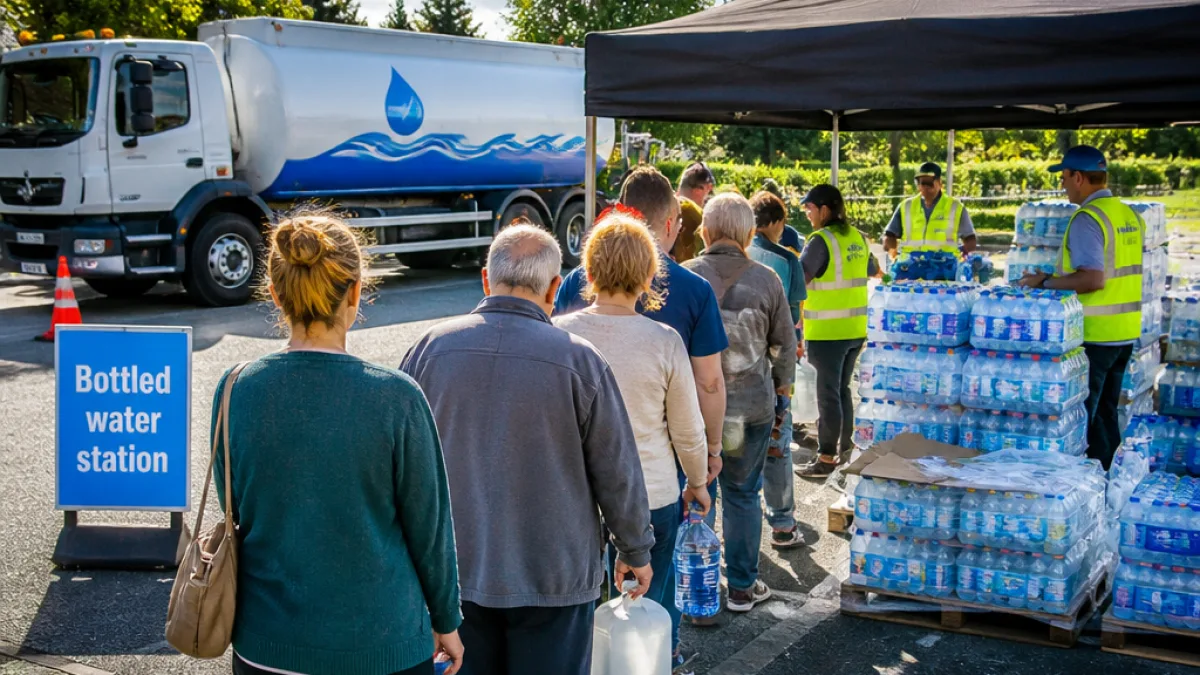
To assist affected communities, the company has set up temporary distribution points in Tunbridge Wells. These reopened at 07:00 on Sunday, after operating until 22:00 on Saturday.
| Location | Opening hours (latest advised) |
|---|---|
| Tesco Superstore, Pembury Road, Tunbridge Wells | Until 22:00 Saturday; from 07:00 Sunday |
| Tunbridge Wells Rugby Football Club | Until 22:00 Saturday; from 07:00 Sunday |
South East Water said deliveries are being made to vulnerable customers, and that mobile tankers are supporting the network to raise storage levels. Customers are urged to check the company’s channels for updates before travelling, and to collect only what they need so supplies can be shared fairly.
Who is impacted and why
The disruption is concentrated in south Tunbridge Wells and parts of Pembury, especially properties at higher elevation where pumping is most challenging when reservoir levels are low. The company explained that while the treatment site is running again, the combination of depleted tanks and sustained summer demand is preventing normal service from resuming immediately.
- Approximately 7,000 properties facing low pressure, intermittent supply or no water.
- Areas on higher ground are worst affected due to reduced pumping capability.
- Bottled water stations operating in Tunbridge Wells to support residents.
Recent history of supply issues
Households across Kent and neighbouring Sussex have experienced repeated supply interruptions in recent months, drawing criticism from regulators and politicians. During the winter, parts of Tunbridge Wells and wider areas in the region suffered multiple outages linked to leaks, bursts and severe weather, with tens of thousands seeing reduced or lost service over prolonged periods. Saturday’s incident adds to that difficult run, with residents once again relying on emergency distribution points while the network is stabilised.
What customers should do now
South East Water is advising residents to conserve water where possible to help the system recover, and to look out for neighbours who may need assistance. Priority customers should expect deliveries to continue. Those planning to visit bottled water stations should bring containers if practical and check for any changes to opening times as operations are reviewed through the day.
Anyone who experiences discoloured water upon return of supply is normally advised by water companies to run the cold kitchen tap until it clears; however, customers should follow the latest guidance on South East Water’s official update channels. Households with no water for extended periods may wish to document their outage times for any future support or compensation that may be announced by the company under its service guarantee policies.
InfoRadar will continue to monitor the situation and provide updates as further information emerges from the utility and local authorities.