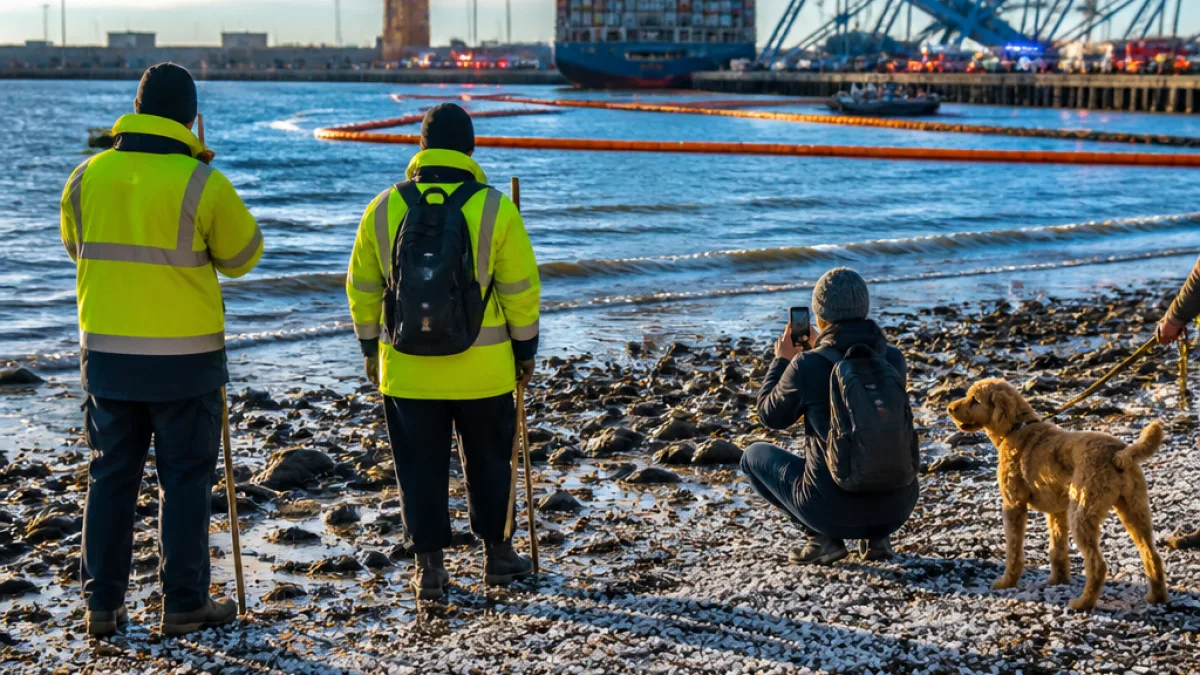
Local teams in South Tyneside have been mobilised after a collision at the Port of Tyne led to tiny plastic pellets, known as nurdles, washing up along the borough's coastline. The incident involved the vessel Wind Orca and the berthed container ship BG Orange; a gantry crane on the quayside also collapsed during the collision.
Extent of spill and immediate response
The council estimates that up to 25 tonnes of nurdles may have entered the water. South Tyneside Council says its teams are monitoring affected beaches while the Port of Tyne and partner agencies have begun containment and clearance work.
- Council teams are surveying impacted shoreline locations.
- The Port of Tyne has placed a floating boom around the BG Orange to limit further dispersal.
- Specialist contractors, the Environment Agency and the Maritime and Coastguard Agency are involved in the response.
Public safety and wildlife risk
Council statements stress that the pellets are not toxic and the immediate danger to human health on shore is assessed as very low. However, authorities warn that the small beads can be mistaken for food by birds and other wildlife and can cause harm if ingested.
"South Tyneside Council takes its responsibility to protect the borough's coastline, wildlife and natural environment seriously. We will continue to work with partners to assess any impact and support efforts to protect coastal habitats and wildlife while the response continues."
Residents are being asked not to touch or collect the pellets and to keep dogs on leads in affected areas to reduce the risk of animals ingesting them. The council has also requested that members of the public report any sightings of nurdles on beaches so that response teams can prioritise clearance work.
Who is involved in the clean-up
Multiple agencies are coordinating to contain and remove the pellets and to limit further environmental impact.
| Agency | Role |
|---|---|
| South Tyneside Council | Monitoring shoreline, public advice, local coordination |
| Port of Tyne | Containment (boom) and on-water clean-up |
| Environment Agency & MCA | Incident response support and regulatory oversight |
| Specialist contractors | Physical removal of pellets where practical |
Charities and conservation groups are tracking the spread of pellets along neighbouring coasts; previous reports indicate nurdles can travel substantial distances once in open water. Local residents who spot accumulations on Littlehaven and other beaches are asked to notify the council so teams can map the affected locations and plan clean-up activity.
The council's guidance — not to handle pellets and to keep dogs on leads — is intended to protect both people and wildlife while the multi-agency response continues.