Family shares a landmark recovery rooted in Fife’s neonatal care
A Fife family has described the “day‑by‑day” journey of their daughter, Hope, who was delivered at just 22 weeks and weighed 511 grams — close to half a kilogram — surviving what NHS Fife has called the very limits of modern medicine. After 142 days in specialist care, she is now back home in the Kingdom, making steady progress alongside her parents, Shannon Fernie and Gary Goldie, and her older brothers, Rome and Remy.
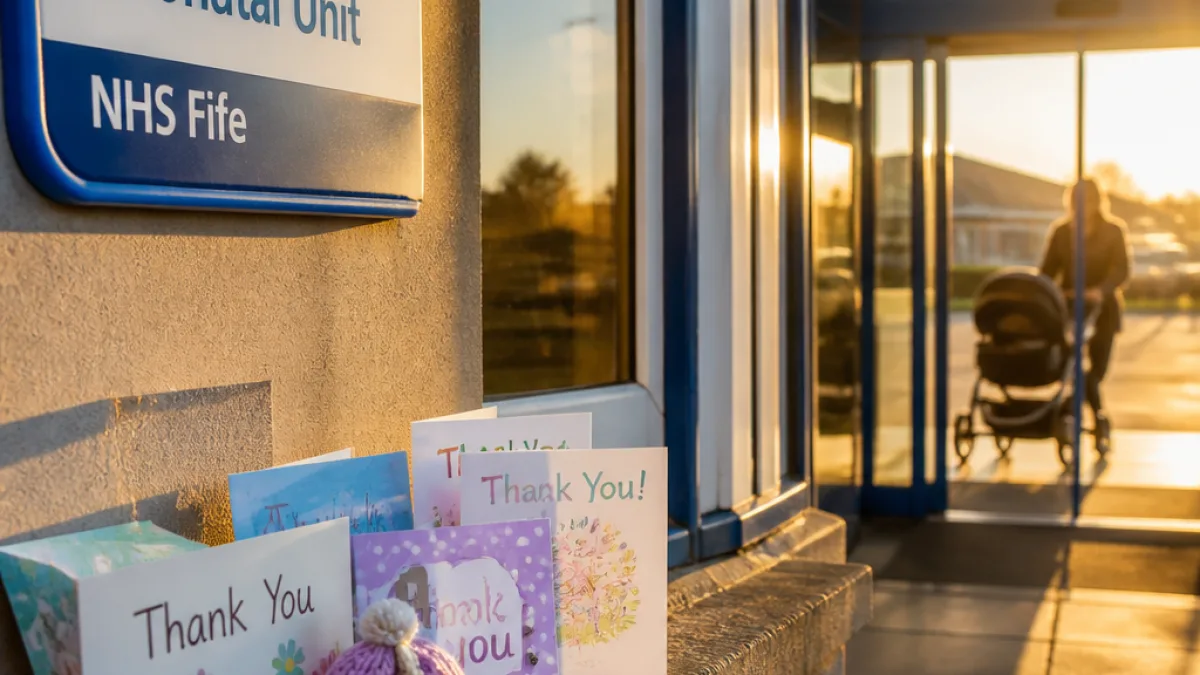
Hope’s first weeks were spent in a specialist unit in Glasgow, before she was transferred to the Neonatal Unit at Victoria Hospital, Kirkcaldy, where staff continued her care and prepared the family for life beyond the ward. Clinicians involved in her treatment emphasised the complexity of supporting infants born so early and the collaborative nature of neonatal work across services.
“Hope’s journey has been nothing short of remarkable. Babies born this early face enormous challenges, and every milestone she reached was a testament to her determination, the love and dedication of her family, and the expert care provided by the neonatal teams in both Glasgow and in Fife,” said Amy Moran, senior charge nurse at Victoria Hospital. “We are delighted for Shannon, Gary, Rome, Remy and, of course, Hope herself. Seeing Hope thrive at home with her family is exactly why we do what we do.”
From uncertainty to homecoming
For the family, the months in hospital brought a succession of tests and slow, incremental wins. They recall a routine shaped by careful monitoring, specialist support and long travelling days before being able to continue Hope’s rehabilitation closer to home in Kirkcaldy. Each small improvement brought them closer to discharge and the reality of family life together.
“When Hope was born, we didn’t know what the future would hold. Every day felt like a milestone and every small step forward was a reason to celebrate. The support we received from neonatal teams in Glasgow and at Victoria Hospital was incredible, and we’ll always be grateful for everything they did for Hope and our family,” said Shannon.
Milestones on a complex path
Hope’s progress is defined by a series of key waypoints that underline both her resilience and the role of multi‑site neonatal care:
- Extremely preterm birth: Delivered at 22 weeks’ gestation, at the cusp of viability for clinical intervention.
- Tiny birthweight: 511g, requiring intensive respiratory and nutritional support.
- Long hospital stay: A total of 142 days in neonatal care across two units.
- Transfer to Fife: Continued treatment and parental training at Victoria Hospital, preparing for discharge and home‑based care.
| Stage | Location | Duration/Detail |
|---|---|---|
| Initial intensive care | Specialist unit, Glasgow | 85 days |
| Ongoing neonatal support | Victoria Hospital, Kirkcaldy | Part of total 142 days in care |
| Home | Fife | Family reunified, continuing progress |
Community response and giving back
Back home, Hope’s continued growth has spurred her parents to support the services that helped them. Shannon and Gary have launched Hope’s Tiny Tapes, a small venture creating oxygen tapes for babies and young children who need medical support. Proceeds are intended to help raise funds for NHS Fife’s Neonatal Unit, reflecting the family’s determination to back the teams who guided them through the most uncertain weeks.
For families across Fife, the case highlights the pivotal role of regional and national collaboration in neonatal care. While each situation is unique, the local pathway typically involves an initial period in a higher‑acuity centre when extremely early support is needed, followed by transfer to the nearest appropriate unit — in this case Kirkcaldy — to continue treatment and prepare for life at home. The aim is to combine specialist expertise with family‑centred care, keeping parents involved throughout and easing the transition once a child is ready to leave hospital.
Why this matters for Fife
Stories like Hope’s underscore the breadth of work carried out within Fife’s health services and the importance of close links with larger centres when a higher level of intervention is required. They also show how families, once through the most challenging period, can become advocates for the services that sustained them. For residents, it is a reminder of the capability within NHS Fife to manage complex neonatal journeys and the value of continued community support for local units.
Those inspired by the family’s example often choose to back neonatal care through recognised charitable routes and unit‑led appeals, which help provide comforts and enhancements around the core clinical offer. In the meantime, Hope’s homecoming stands as a marker of what coordinated care and family resolve can achieve, one milestone at a time.