Flintshire County Council’s Planning Committee has granted permission for the initial preparatory works on a 17.68-hectare parcel of land at Shotton Steelworks that could allow a proposed £200m rock wool manufacturing plant to be built by Knauf. The approval covers site remediation and enabling work but not construction of the factory itself.
What was approved and why it matters
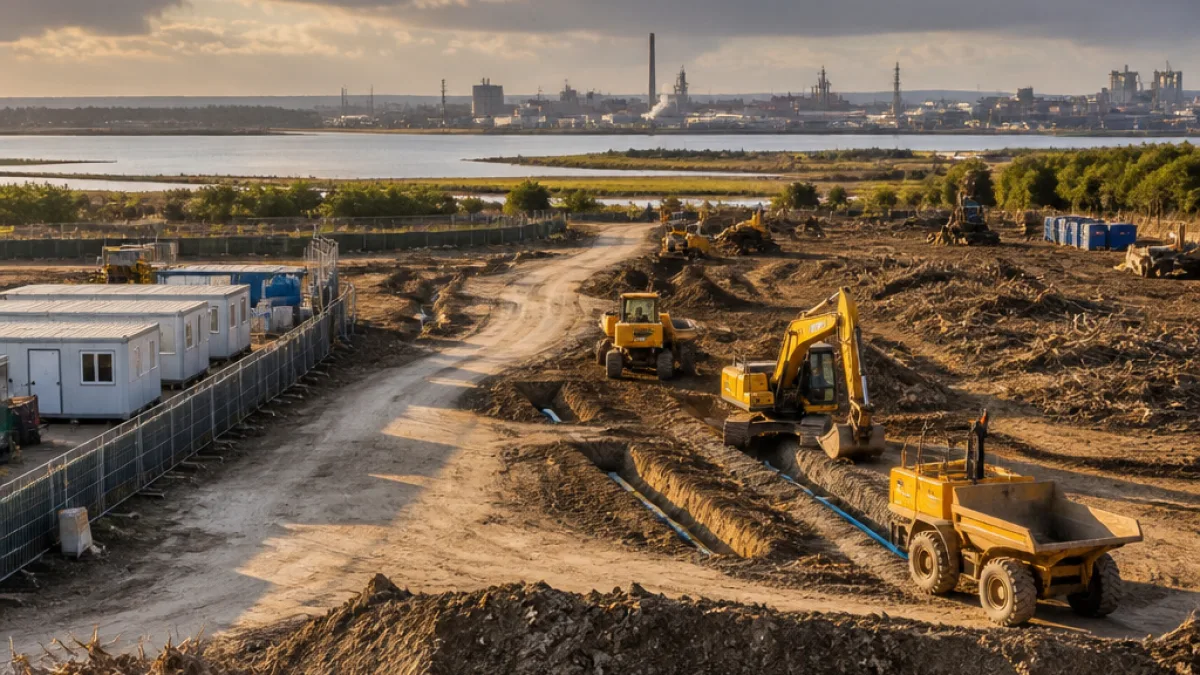
The permission allows a series of practical steps to ready the ground where the new manufacturing facility may be located. Those measures include:
- erecting site boundary fencing and welfare facilities for construction staff;
- building a temporary haul road for construction traffic;
- diverting a private sewer that served the former Tata site and terminating redundant utilities;
- removal of topsoil to a depth of about 100mm and clearing obstructions such as old foundations.
Two existing structures on the site — a 43m building to the west and a 58m stack — will be retained under the plans. The land in question covers roughly the area of 25 football pitches and represents the first practical step towards delivering what proponents say could bring new jobs and investment to the area.
Jobs, investment and the next steps
The proposed manufacturing plant is expected, at full development, to support around 137 jobs locally. Planning permission for the remediation does not yet allow the factory to be built; further approvals will be required before construction of the plant can begin. The remediation consent does, however, permit immediate preparatory activity that will be necessary if the project proceeds.
Environmental safeguards and consultee views
Natural Resources Wales has already granted approval for environmental and pollution mitigation measures in the plan. Those protections are intended to safeguard sensitive nearby sites, including the River Dee and Bala Lake Special Area of Conservation (SAC), the Dee Estuary Special Protection Area (SPA) and RAMSAR site, plus local Sites of Special Scientific Interest such as the River Dee and Shotton Lagoon and Reedbeds.
“This land has been in industrial use since 1896... Our proposals progressed through public consultation earlier this year with no concerns raised by local residents,”
The quotation above was offered to the committee by Knauf’s Project Director, who told councillors the company had worked closely with officers and consultees ahead of the decision.
Local context and implications
The Shotton site has a long industrial history and the remediation permission recognises that background while allowing modern construction activity to be phased in. For residents and local businesses, the immediate impacts will be visible in the short term as site works, haul roads and fencing appear. Over the medium term, proponents point to potential employment and supply-chain opportunities for Flintshire companies.
| Item | Detail |
|---|---|
| Site area | 17.68 hectares |
| Estimated jobs (if built) | 137 |
| Preserved structures | 43m building; 58m stack |
Councillors approved the remediation having been satisfied by officers that ecological impacts had been considered. The next stage will be the formal submission of planning permission for the factory construction itself, which will be assessed on its own planning merits and environmental safeguards.
For Flintshire residents, the decision starts a practical process that could lead to large-scale industrial redevelopment of part of Shotton Steelworks — a prospect that carries both economic opportunity and the need for careful environmental oversight.