Flintshire’s position improves relative to neighbours
Fresh analysis of local authority borrowing indicates Flintshire Council’s debt has grown only slightly over the past 12 months, even as neighbouring Wrexham once again tops the Welsh table for debt per resident. Figures published by the TaxPayers’ Alliance show Flintshire remains seventh in Wales by debt per head, suggesting the county has largely kept a lid on borrowing despite persistent pressures on council finances.
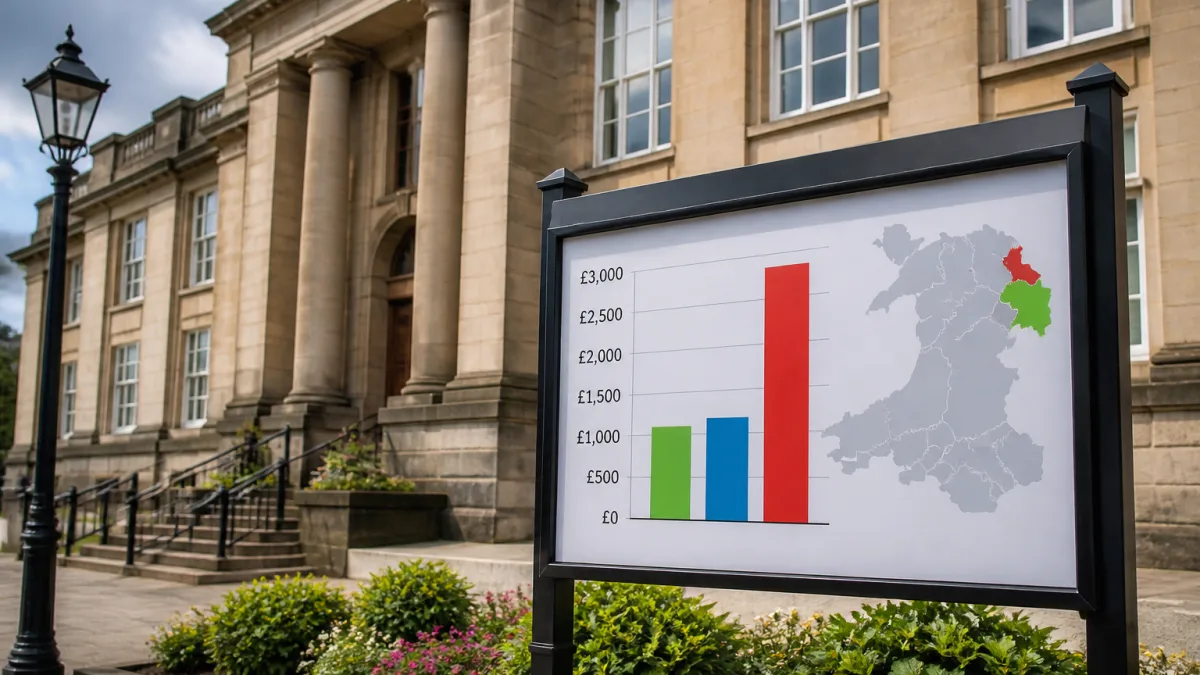
According to the data, Flintshire’s total debt stands at £362,332,000, up by £540,000 year on year — equivalent to a rise of just £3 per resident. The report places Flintshire’s debt per head at £2,325, a level that has scarcely shifted over the period assessed. By contrast, Wrexham’s overall borrowing increased from £520,879,000 to £542,521,000, lifting its per‑resident figure from £3,825.80 to roughly £3,924.
Wrexham debt shaped by retained council housing
Wrexham Council attributed its higher relative borrowing to the scale of its council housing portfolio and associated investment needs. The authority highlighted that it retains one of the largest stocks of local authority homes in Wales — a factor that, unlike councils without such stock, feeds directly into borrowing requirements for upgrades and maintenance.
“The overall level of debt for Wrexham Council is proportionately higher than across Wales due to us having retained our council housing stock,” a spokesperson said, adding that without housing stock its debt per head would likely be among the lowest.
The council also set out a substantial capital programme through its Housing Revenue Account, citing £42.5 million in 2026/27 and a further £154.4 million over the following four years, much of it financed through borrowing. While these figures relate to Wrexham, they underscore a broader point: where councils retain housing, borrowing can be higher to fund improvements from, as Wrexham put it, the “chimney pot to the front gate”.
What the numbers mean for Flintshire
For Flintshire residents, the headline is one of relative stability. With only a £540,000 increase in overall borrowing across the year and a near‑flat rise of £3 per person, the county’s position suggests limited additional pressure from debt servicing compared with councils facing steeper year‑on‑year rises. The TaxPayers’ Alliance ranking places Flintshire mid‑table in Wales, well below the highest levels seen just over the border.
It is important to note that councils borrow chiefly to finance capital projects — long‑term investments in assets and infrastructure — rather than day‑to‑day running costs. In areas where social housing remains under local authority ownership, capital works related to those homes tend to be funded through dedicated housing accounts which are ring‑fenced from general services. That structural difference helps explain why some authorities carry higher debt than others without necessarily indicating weaker financial management.
At a glance: Flintshire and Wrexham
| Council | Total debt | Debt per resident | Change (12 months) |
|---|---|---|---|
| Flintshire | £362,332,000 | £2,325 | +£540,000 total; +£3 per head |
| Wrexham | £542,521,000 | ~£3,924 | +£21,642,000 total; +£100 per head |
Context for residents and service users
While the report benchmarks councils by borrowing per resident, direct comparisons can be misleading where housing stock policies diverge. Wrexham argues the metric should be adjusted for retained housing, noting it has a significantly higher proportion of council homes than most Welsh authorities. Flintshire’s steadier trajectory over the past year suggests borrowing is being contained, but as with all councils, future capital spending plans — on schools, roads, property maintenance or housing where applicable — will influence debt levels.
Residents who wish to scrutinise borrowing and capital plans can look to council budget papers and annual accounts, which set out debt servicing costs and planned investments. Public meetings and committee papers typically explain how projects will be financed and over what timelines, giving a sense of how borrowing translates into local priorities and tangible works on the ground.
Why it matters locally
- Stability in Flintshire: A minimal rise in borrowing eases concerns about sudden increases in debt servicing pressures.
- Neighbouring contrast: Wrexham’s higher debt per head reflects housing stock commitments, offering a useful comparator for how different policy choices shape council balance sheets.
- Capital focus: Borrowing funds long‑term assets; understanding where that money goes helps residents track delivery against local needs.
As councils finalise spending plans for the coming years, the balance between keeping borrowing in check and investing in essential infrastructure will remain at the heart of local decision‑making. For now, Flintshire’s figures point to a steady hand on the tiller.