The Government has given formal backing to plans to overhaul local government in Lancashire, endorsing a proposal to replace the county’s existing 15 councils with four new unitary authorities.
What the decision means locally
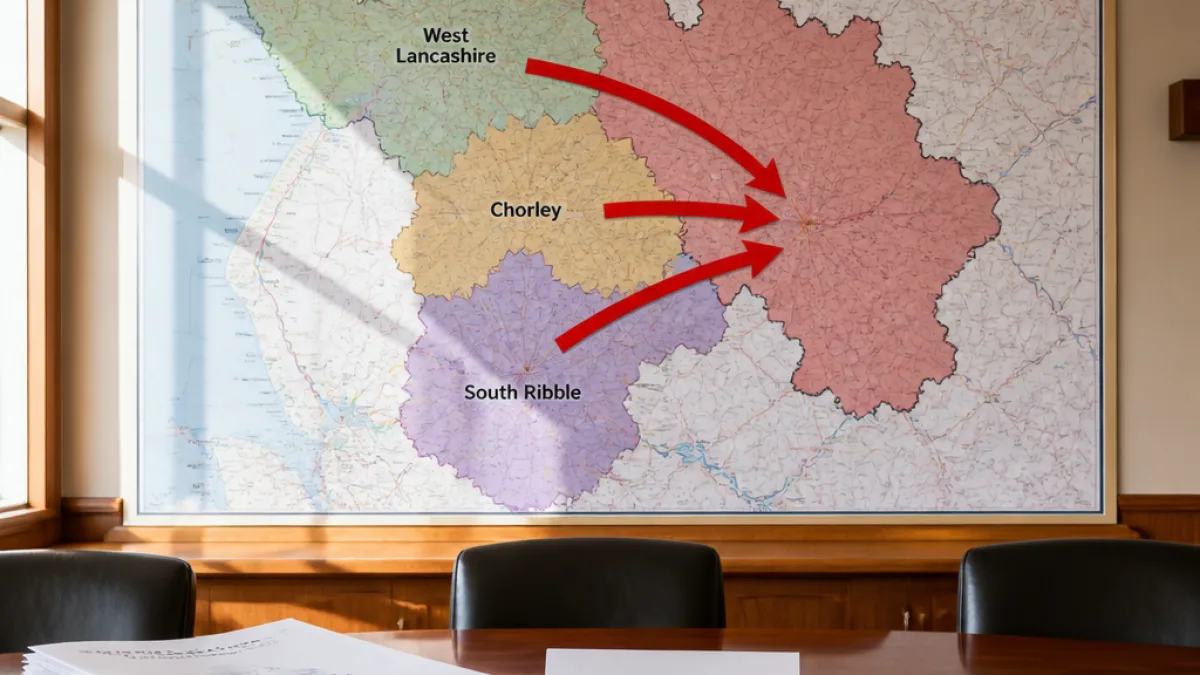
Under the preferred model, West Lancashire will be combined with Chorley and South Ribble to form one of the new unitary councils. The new authorities will take on responsibilities currently split between district and county councils, consolidating local services under a single elected body for each area.
Councillors in West Lancashire welcomed the announcement, describing the change as a significant milestone following years of work to secure the preferred option.
"I'm delighted that our preferred model for Local Government Reorganisation has been agreed by Government and that our efforts over the past couple of years to champion this option have come to fruition,"
The borough’s deputy leader also suggested the reorganisation has the potential to improve efficiency and decision-making for residents and businesses.
Local leaders’ arguments and immediate implications
Supporters say the new structure will simplify the management of services and make it easier for local people to see who is responsible for things such as planning, waste collection and social care. They argue a single-tier system will reduce duplication and allow public resources to be used more effectively.
Labour group leaders in the borough also welcomed the move. Council chiefs emphasised that the plan reflects perceived cultural and geographic affinities between neighbouring districts and said it presents a "once-in-a-generation opportunity" to increase local influence over decisions.
- Scope: Current map of 15 councils to be replaced by four unitary authorities.
- Local grouping confirmed: West Lancashire, Chorley and South Ribble to form one unitary.
- Responsibility shift: Services presently split between district and county councils to be centralised.
Timetable and next steps
The announcement marks the Government’s acceptance of the preferred model; the article’s source does not provide a detailed implementation timetable or confirm when the new councils will take effect. Further statutory steps and transition arrangements will be required before the new authorities become operational.
| Current structure | Proposed structure |
|---|---|
| 15 local councils (districts and county) | 4 unitary authorities |
For residents, the reorganisation could change where and how they access a range of local services. Until detailed plans and timetables are published, householders and businesses should expect continuity of core services while transition planning proceeds under local and central government oversight.
As the proposals move forward, scrutiny will focus on the promised benefits: whether administrative savings materialise, how service standards are maintained during the change and how local accountability is preserved across larger authorities. The reshaping of local government in Lancashire will have consequences for representation, council taxation and service delivery that will unfold over the coming months and years.