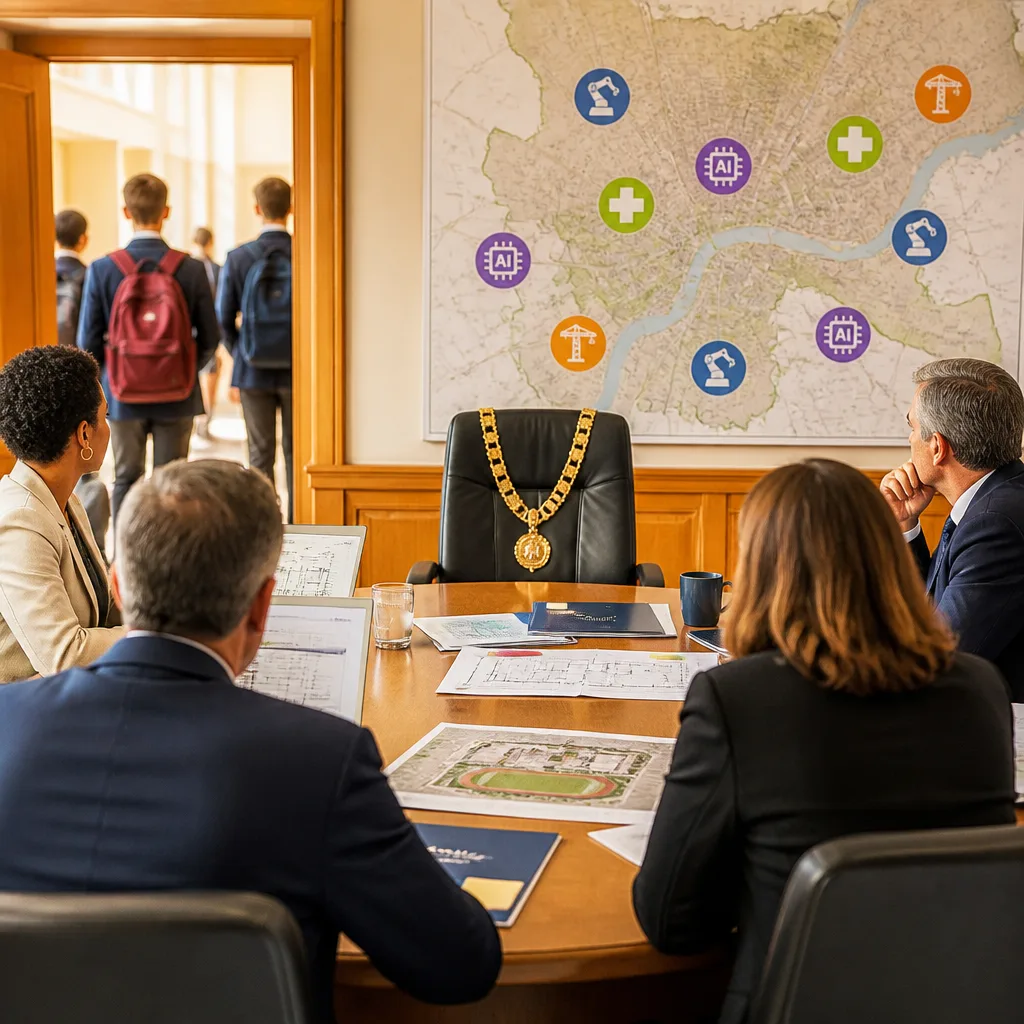
Mayors and other local leaders will be given a formal role in designing new technical education routes for 14‑ to 16‑year‑olds, the Government has announced, with a national roll‑out planned from September 2028. Pupils are to continue studying core subjects such as English and maths while accessing technical training, employer set projects and work placements linked to local labour markets.
What the reforms will do
The proposals set out that strategic authorities, councils, schools, colleges and employers will work together to shape local pathways aimed at the industries and jobs available in each area. Pathways could focus on sectors such as advanced manufacturing, artificial intelligence, clean energy, life sciences, construction, health and care, or the creative industries.
- From Year 10, pupils can combine academic study with practical, local employer‑linked activities.
- Local strategic authorities will be expected to convene schools, colleges and employers to design provision.
- Work experience, employer projects and technical skills training will form part of the routes.
Government rationale and political context
The Prime Minister framed the reforms as an effort to place technical and academic routes on an equal footing and to give young people clearer, job‑linked trajectories. Downing Street described the move as part of a wider devolution programme that will give local leaders "greater influence" over education for 14‑ to 16‑year‑olds.
“From today, Britain will value the hard hat every bit as much as the graduation cap.”
The announcement comes amid concern about the number of young people not in education, employment or training (NEET), which ministers say exceeds one million. The Government presented the changes as a way to reduce youth unemployment by creating clearer pathways into local employment.
Money, qualifications and unanswered questions
Ministers have not pledged a new ring‑fenced funding stream specifically for the pathways. Instead the Department for Education will consider how existing budgets might be reoriented to support the reforms. The announcement references previously published spending commitments rather than new cash.
| Referenced funding | Amount |
|---|---|
| Additional college places | £570 million |
| Schools funding uplift by 2028‑29 | £4.7 billion |
| SEND places in mainstream settings | £3.7 billion |
Key implementation details were not set out in the announcement. It remains unclear which formal qualifications pupils will take within these pathways, whether colleges will deliver the technical elements directly, and how accountability and school performance measures will be adjusted to reflect blended academic and technical programmes.
Build on local initiatives
The Government says the new routes will build on local schemes such as the Greater Manchester Baccalaureate, which was developed while the Prime Minister was mayor of that region. Local areas will have the flexibility to design pathways that reflect their economic strengths and employer needs.
For parents and students, the proposed approach means that from Year 10 there should be options to pursue hands‑on, job‑relevant learning alongside continuing core academic study. For schools and colleges, the plans signal a push to deepen employer partnerships and coordinate provision across institutions at local level.
Officials have indicated the changes will begin to be introduced from September 2028, giving local leaders and education providers time to plan. In the meantime, questions about detailed funding arrangements, qualification routes and accountability frameworks will need to be resolved to clarify how the reforms will operate in practice.
What to watch next:
- Department for Education guidance on how existing budgets will be reprioritised to support the pathways.
- Details on the qualifications framework and whether new certificates or recognised technical qualifications will be specified.
- How school accountability measures will change to reflect combined academic and technical provision for 14‑ to 16‑year‑olds.