Public asked to shape five-year strategy for long‑term vacant properties
Residents across Rhondda Cynon Taf are being invited to help shape a fresh drive to reduce the number of empty properties in the county borough. The Council has launched a six‑week consultation on its proposed Empty Homes Strategy 2026–2031, setting out how it plans to bring more long‑vacant houses back into use and support communities affected by problem properties.
The draft strategy builds on recent progress. Since 2017, the Council reports that the tally of private sector homes left unoccupied for six months or more has fallen from 3,556 to 2,687 — a reduction of 869 properties now back in use. Officials say empty homes can drag down streets by blighting the look of neighbourhoods and attracting anti‑social behaviour. Restoring them to use, they argue, boosts local housing supply and can help create more affordable options.
“Bring empty homes back into use as safe, good quality housing that meets local need, supports thriving communities and makes the best use of our existing stock across Rhondda Cynon Taf.”
That is the strategy’s stated vision. To get there, the Council has set four priorities aimed at turning policy intent into practical action on the ground.
What the Council plans to focus on
- Strengthening partnerships to coordinate work with funders, landlords and community stakeholders.
- Providing advice, assistance and financial support to help owners bring properties back into use.
- Delivering proportionate and effective enforcement where voluntary action fails.
- Supporting regeneration and community wellbeing so that brought‑back homes align with wider neighbourhood improvement.
A recent report to the Cabinet highlights a mix of loans, grants and programmes already used to shift empty homes into occupation, and the funding leveraged alongside them.
Funding and outcomes to date
| Programme | Outcome | Public funding | Private/other leverage |
|---|---|---|---|
| Houses into Homes loan | Financing support for bringing properties back into use | £1.85m | £2.21m private investment |
| Valleys Taskforce Empty Homes Grant | 263 homes returned to use | £4.6m | — |
| National Empty Homes Grant Scheme | 121 homes returned to use | £2.8m | — |
| Transitional Accommodation Capital Programme | Support to help reduce homelessness | £7m | — |
| Homestep Plus | 24 first‑time buyers supported | — | — |
| Social Lettings Agency | Managing 54 previously empty private rented homes | — | — |
These figures show a stepped approach: using incentives first, then backing them with enforcement where needed. The Council says that by combining loans and grants with clear standards and follow‑up action, long‑term empty addresses can be turned into decent homes more quickly, with benefits felt street by street.
Why this matters locally
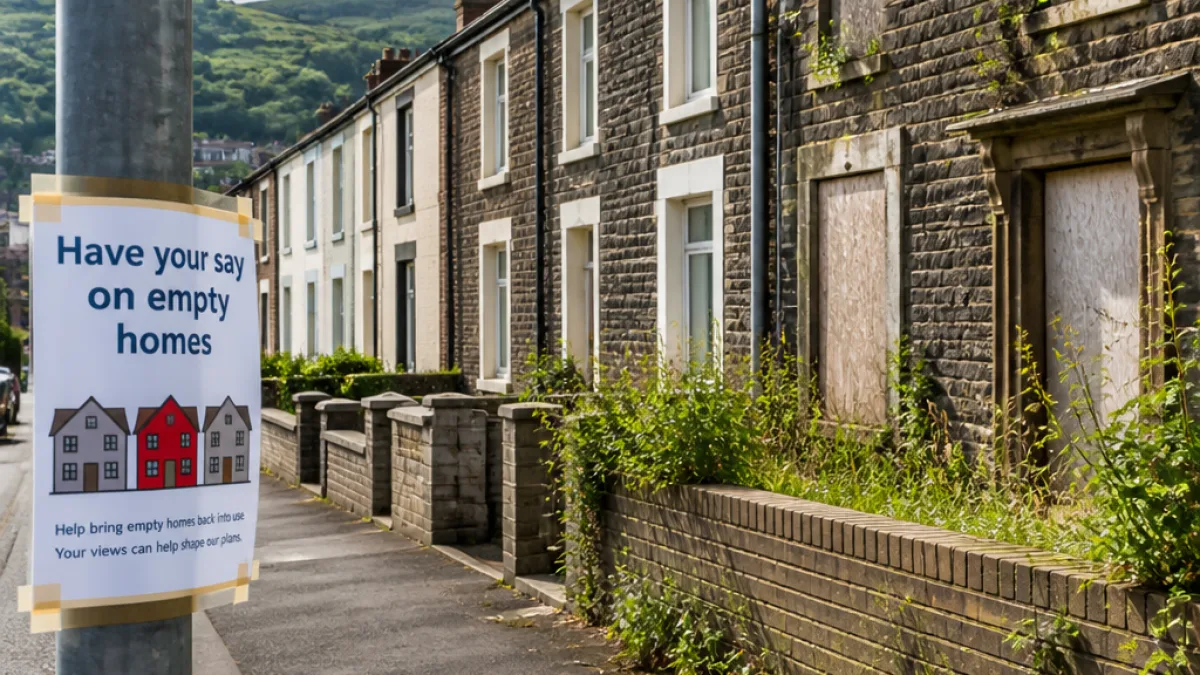
Empty properties are a familiar sight in some parts of the valleys, often sitting between lived‑in terraces or on corners where they set the tone for the whole street. Bringing them back into occupation can make an immediate difference to neighbourhood appearance, cut the risk of fly‑tipping and vandalism, and create homes for local people who want to stay near family, work and schools. With pressure on social housing and private rents rising, unlocking existing stock is one of the fastest ways to add supply without waiting years for new‑build schemes.
The proposed strategy also ties empty‑home work into wider regeneration ambitions, so that returning a property to use supports town‑centre renewal, local services and community safety. The Council is clear that it wants to keep using every lever available — from advice to loans and, where necessary, enforcement — to move owners towards action.
Have your say
The consultation is now open for six weeks. Residents, landlords, community groups and businesses are encouraged to give views on the priorities and the balance of support and enforcement. Feedback will help shape the final Empty Homes Strategy 2026–2031 before it goes to councillors for sign‑off.
Those with experience of living near a long‑term vacant property, owners considering bringing a house back into use, and prospective tenants interested in affordable local options are among the voices the Council says it wants to hear from. The more responses it receives, the better it can target funding and actions to the streets and communities that need them most.