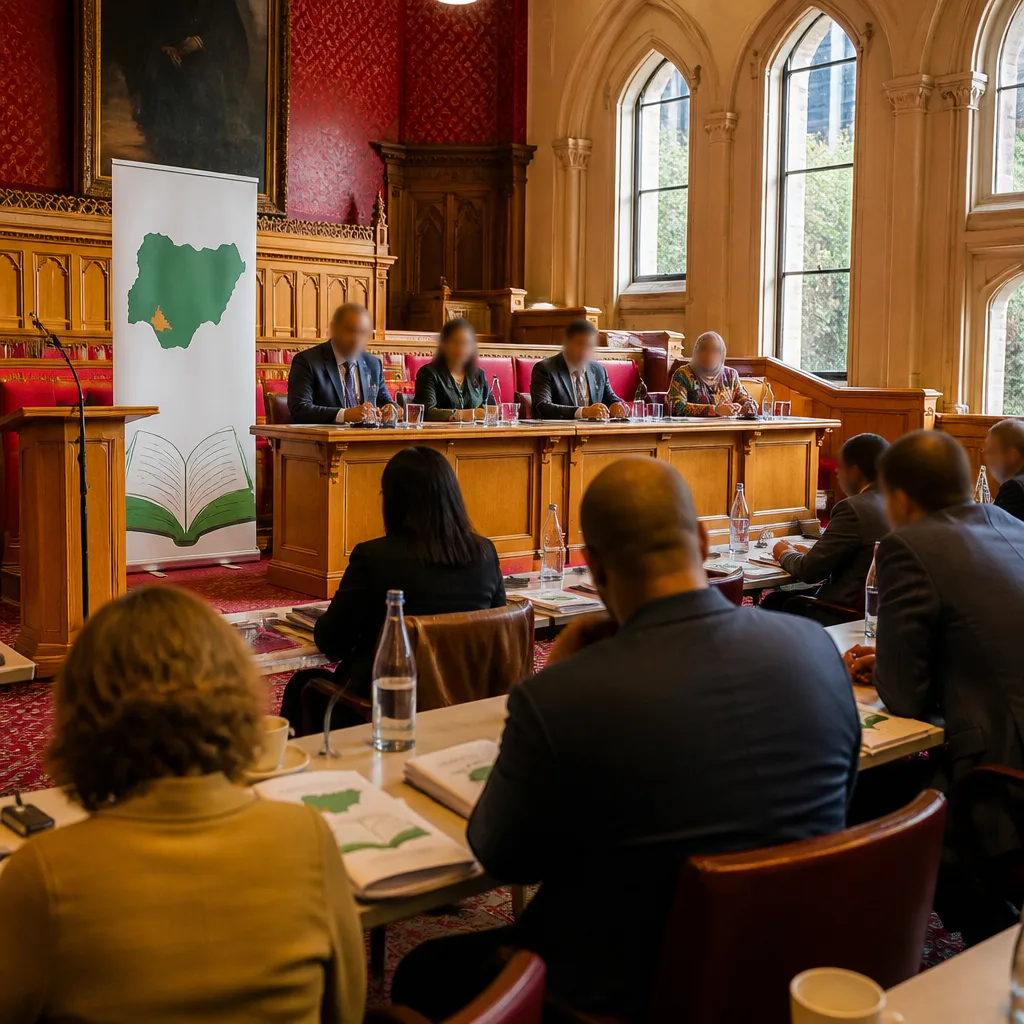
Kano State’s recent education reforms, and its use of an English reading model, received formal recognition at a forum held at the House of Lords in Westminster, London.
Recognition at an international parliamentary forum
The event, the International Parliamentary Forum on Reading Revolution, brought together education stakeholders and was supported by Universal Learning Solutions (ULS), the NGO implementing the Jolly Phonics Project in Nigeria. Speakers at the roundtable highlighted Kano’s increased investment in education and efforts to improve literacy across formal and integrated schools.
“Kano State Government has demonstrated sustained commitment to education reforms,”
The comment was attributed to Gary Foxcroft, Chief Executive Officer of Universal Learning Solutions, who praised the state for funding, policy action and steps to boost learning outcomes. The roundtable was hosted by Lord Alton of Liverpool, who noted the historical relationship between the UK and Nigeria and described Kano’s adoption of England’s reading and literacy model as a strategic move to strengthen foundational learning.
Scale, integration and remaining gaps
Representing Governor Abba Kabir Yusuf, Haladu Mohammed — the Technical Adviser on Education Reform — said education remains a top priority and that Kano continues to allocate the largest share of its annual budget to the sector. Mohammed provided figures showing the scope of the system and areas still requiring attention:
- Approximately 5 million pupils currently enrolled across the state’s education system.
- More than 8,000 formal schools and over 14,000 Qur’anic schools undergoing integration into the formal system.
- Remaining challenge of more than one million out-of-school children, and an estimated need for about 84,000 additional teachers to meet growing demand.
Former UK Minister of State for Schools, Nick Gibb, delivered a keynote in which he described Kano’s commitments as ambitious, underscoring international interest in the state’s approach to literacy development.
Implications for teachers, learners and partnerships
The endorsement at Westminster reflects growing international support for work to improve early reading in Nigeria. For parents and educators, the scale figures underline two immediate implications: the substantial classroom recruitment and training challenge facing Kano, and the large cohort of children currently outside formal schooling who may require targeted outreach if literacy gains are to be realised across the state.
| Indicator | Figure |
|---|---|
| Pupils enrolled | ~5,000,000 |
| Formal schools | 8,000+ |
| Qur'anic schools integrating | 14,000+ |
| Out-of-school children | 1,000,000+ |
| Additional teachers required | ~84,000 |
The presence of UK education figures and an international NGO at the forum signals potential for further collaboration on teacher training, curriculum adaptation and literacy materials. At the same time, the numeric gaps make clear that sizeable recruitment and integration work remains before improved classroom practice can reach every child in Kano.
For parents and guardians, the forum’s outcomes suggest continued attention from both state and international partners on early reading interventions. For teachers and school administrators, priorities are likely to include professional development in the adopted reading model and participation in integration efforts for Qur’anic schools joining the formal system.