A landmark restoration project aimed at reviving ecosystems across thousands of acres in the Northumberland uplands has been announced for the Emblehope and Burngrange Estate between Otterburn and Kielder Forest. The initiative, led by the nature restoration company RESTORE and financed by Triodos Bank UK, will focus on peatland rewetting, vegetation recovery and low‑intensity grazing across approximately 7,500 acres.
Peat, water storage and biodiversity
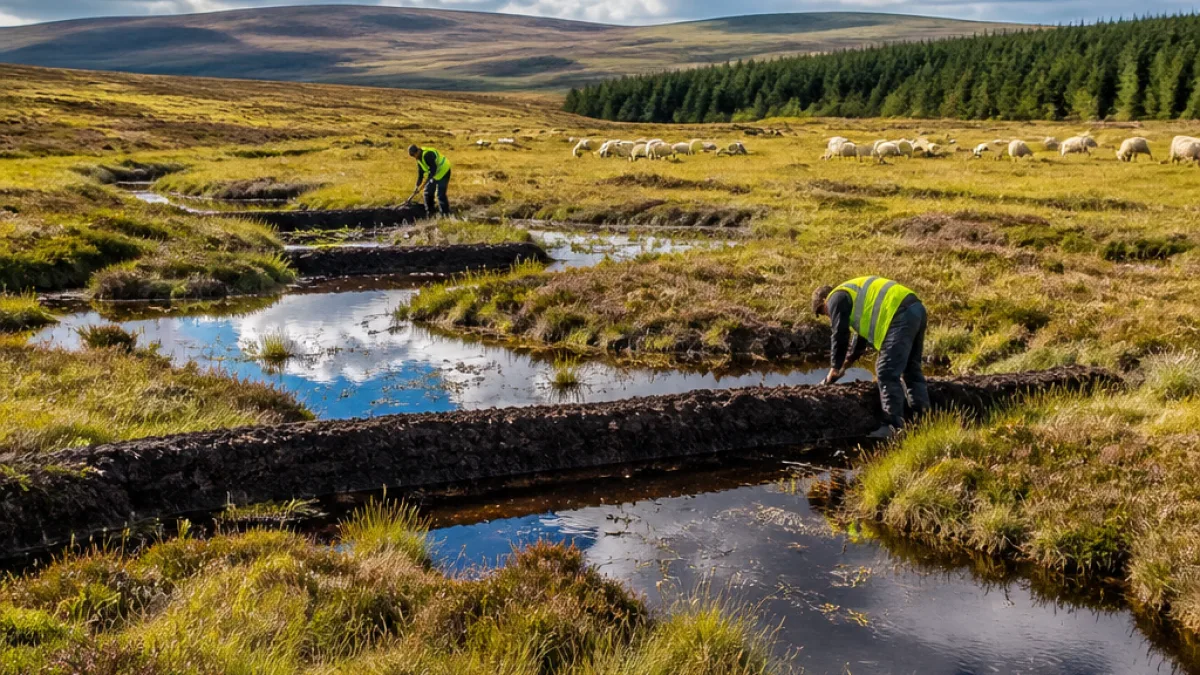
Central to the scheme is peatland rehabilitation. Work will include blocking historic drains and reinstating the land’s natural hydrology with the aim of retaining water on-site and reducing flood pressure downstream. RESTORE says modelling indicates the restored area could eventually retain some 100,000 cubic metres of water — put in familiar terms, roughly the same volume as 40 Olympic-sized swimming pools or enough to supply about 700 households for a year.
- Site: Emblehope and Burngrange Estate (between Otterburn and Kielder Forest)
- Scale: c. 7,500 acres (c. 3,035 hectares)
- Peatland to be rewetted: c. 800 hectares
- Finance: Triodos Bank UK backing
Conservation aims and species expectations
The intended outcome is a functioning mosaic of open water, bog, scrub, dwarf trees and floral glades driven by natural processes rather than intensive commercial use. RESTORE anticipates that, as habitat conditions improve, species such as curlew, golden eagle and common crane could recolonise the estate naturally. The organisation has also said it will consider, when supported by ecological evidence and necessary permissions, potential future reintroductions of species including red-backed shrike, black grouse and wildcat.
"What has long been missing from the English uplands is a large-scale site dedicated primarily to the most ambitious forms of nature restoration," said Benedict Macdonald, founder and director of RESTORE.
Simon Crichton, head of nature, food and resource at Triodos Bank UK, described the financing as a significant step toward unlocking investment at the scale needed for nature recovery.
Local benefits and next steps
Beyond ecological recovery, the project aims to deliver local economic and social benefits, including the creation of land stewardship roles and engagement with neighbouring communities and businesses. The strategy to use low-intensity grazing is intended to support biodiversity while maintaining a pastoral dimension that fits with local land use.
| Measure | Figure |
|---|---|
| Total estate area | c. 7,500 acres |
| Peatland to be rewetted | c. 800 hectares |
| Estimated water storage | 100,000 m3 (~40 Olympic pools) |
The announcement places Emblehope among a small number of very large-scale landscape restoration efforts in England where nature is the principal driver of land management. For residents and stakeholders across Northumberland, the project promises both the restoration of upland habitats and practical contributions to flood mitigation and local employment, subject to the detailed plans and permissions that will follow.