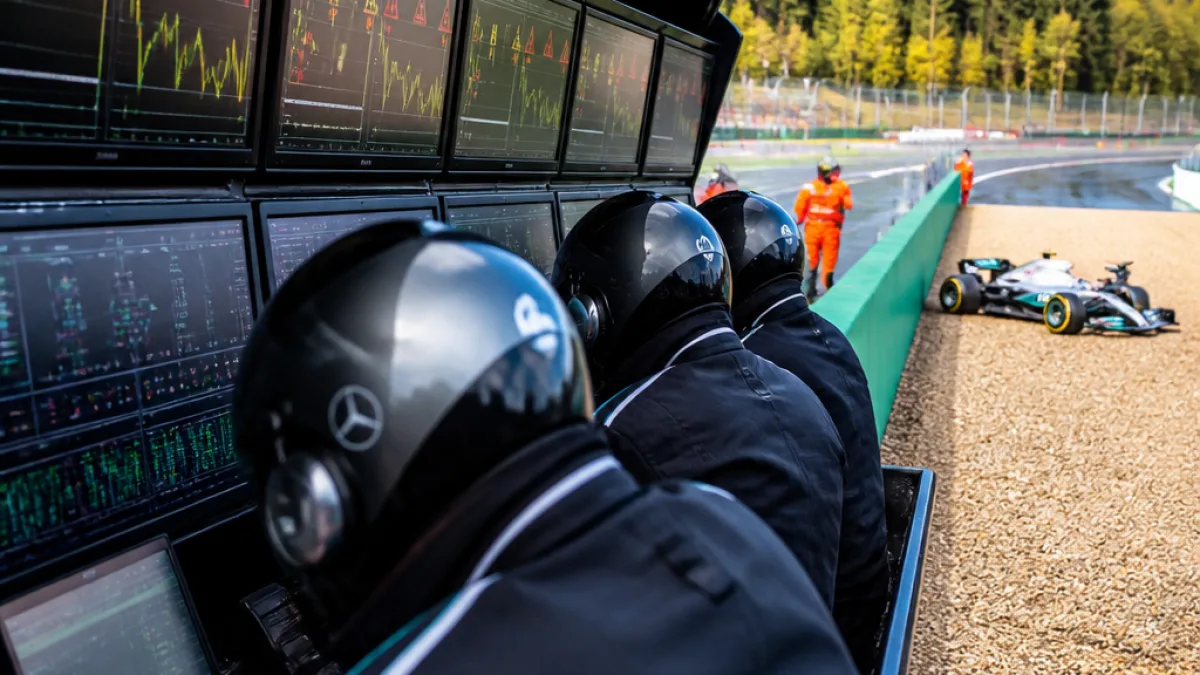
Mercedes have pledged to act swiftly after George Russell retired on the opening lap of the Belgian Grand Prix, with team principal Toto Wolff indicating a suspected software-related issue may have affected all Mercedes-powered cars. Russell reported a dramatic straight-line speed drop moments before contact that sent him into the gravel and out of the race, a blow to his title challenge.
Sudden loss of speed and first-lap exit
Russell had been shuffled from third to fifth after an unexpected reduction in pace on the Kemmel Straight. While attempting to reclaim position around the outside, his rear wheel was clipped and he spun off, ending his afternoon before it had begun in earnest. In a radio message laced with frustration, Russell criticised the car’s performance rather than apportioning blame to rivals.
“It was a new problem but it wasn’t only on George’s side. Instead, it affected all the Mercedes engines, some more, some less, and Kimi (Antonelli) too,” Wolff told Sky Sport Germany, adding that a software problem was suspected.
Wolff said the team must provide Russell with machinery he can trust over a race distance. He described the power unit as strong and the car as quick, but pointed to instability that has cost the team vital championship points.
Penalty for Hamilton; standings picture shifts
Lewis Hamilton received a five‑second penalty for causing the collision. He said he had limited front-end grip while following another car closely at the time of contact. Russell, now third in the standings, sits five points behind Hamilton. Race winner Kimi Antonelli extended his advantage, moving to 50 points clear of Russell after the Spa result.
| Driver | Championship status (as stated) |
|---|---|
| Kimi Antonelli | Lead over Russell: +50 pts |
| Lewis Hamilton | +5 pts on Russell; received 5s penalty |
| George Russell | 3rd in standings; DNF at Spa |
Confidence and reliability in focus
Wolff’s assessment underscores a twin challenge for Mercedes: maintaining outright pace while stabilising performance across different conditions and race phases. The team principal acknowledged the need to rebuild Russell’s confidence by supplying equipment that performs consistently, not just quickly.
“We just need to try to make the best possible equipment available for him. That’s not just a fast car and a good engine but something that holds up and gives him confidence in the car again,” Wolff said.
Russell has flagged concerns over straight-line speed in recent events, including qualifying at Spa, where he was outpaced on the straights. After his retirement, he kept his remarks brief on television, expressing dismay at the lost opportunity and its implications for the title fight.
Software suspicion and next steps
Mercedes are pointing to a software-related issue that affected all of their engines to varying degrees, including Antonelli’s. Despite that, Antonelli managed the race to victory, which, while highlighting the car’s outright performance ceiling, also sharpens the focus on consistency and drivability across the fleet. Resolving such an issue typically involves correlating telemetry, revalidating power unit management settings and ensuring updated calibrations are robust under race conditions.
- Wider impact: Wolff suggested the anomaly touched all Mercedes engines, not just Russell’s.
- Championship cost: The instability is, in Wolff’s words, losing valuable constructors’ points.
- Driver confidence: Restoring trust in the car is a priority as Mercedes chase reliability and stability.
What it means for the title race
Russell’s early exit, paired with Antonelli’s win, extends the gap at the top and nudges Hamilton ahead of his team-mate. While Mercedes believe the core package is competitive, the team’s immediate task is to eliminate variability that can leave their drivers vulnerable in critical race moments. With a suspected software fix on the agenda, the coming rounds will show whether Mercedes can convert raw pace into dependable results and keep both drivers in contention.