Neighbours upset as trees cleared for artificial turf project
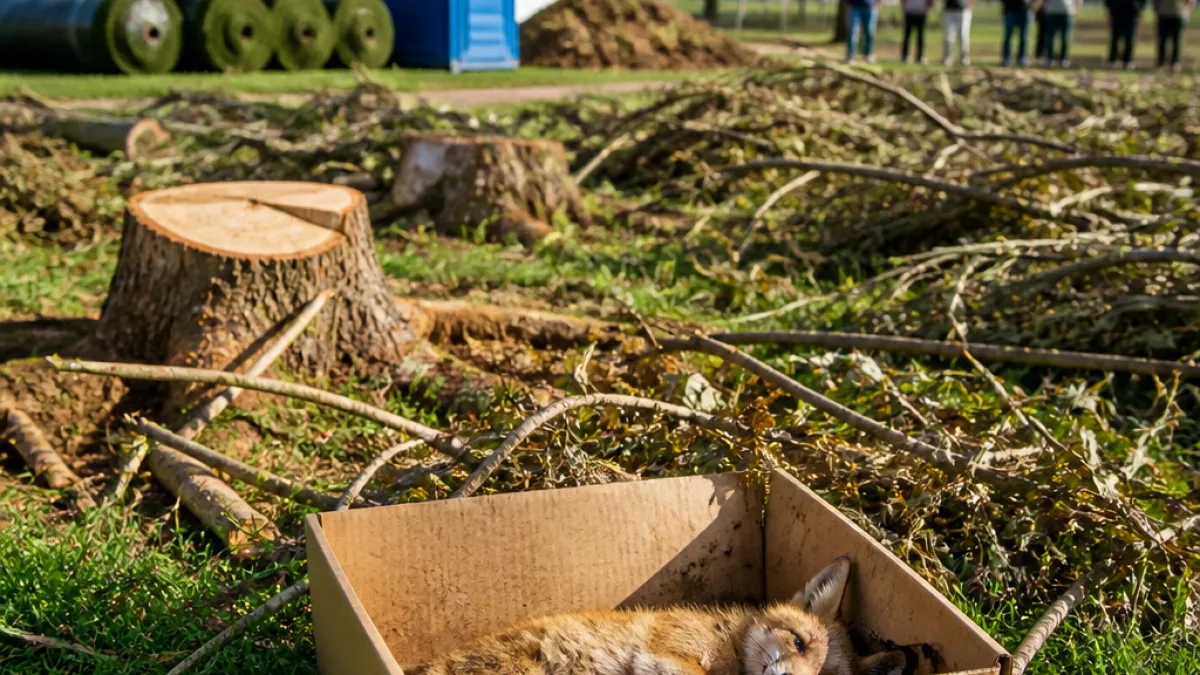
Work is under way at Rutland Recreation Park to install an artificial turf pitch, but the removal of several substantial, long‑standing trees has provoked upset among people living nearby. The concerns centre on loss of canopy, the welfare of wildlife found among the felled branches and questions about how the scheme was reworked after initial budget pressures.
Local resident Meera Malik told reporters she was surprised and upset to see one of the trees being felled and found baby squirrels on the ground that she believes had been dislodged from the branches; according to the account these animals later died. The removal has also prompted reflections on what the park trees meant to children who grew up in the area.
“Had the government actually told the residents what was going to happen, the residents would have said no,”
The project team carried out bird surveys before work began. Melanie Steppuhn, the parks planning and design manager for the City of Kelowna, said biologists checked the tree canopy to establish whether there were active nests. Steppuhn could not address whether specific measures were implemented to avoid disruption to squirrels or other species.
Budget changes and altered facilities
Originally the upgrades were budgeted at $8.5 million, but when tender prices exceeded that figure the plans were reworked. A site notice now lists the cost at $5.2 million. Residents have raised concerns that elements of the original scheme were scaled back: a permanent washroom facility was demolished and, rather than replace it, organisers will bring in a temporary changeroom and washroom unit that was used during the Memorial Cup.
- Several mature trees were removed to make way for the artificial turf installation.
- Residents reported discovering injured wildlife following the felling.
- Project budget was reduced from $8.5m to $5.2m, with some permanent facilities replaced by temporary units.
Community response and wider questions
Neighbours and some young people watching the works have expressed dismay at the loss of trees they described as decades or possibly a century old. Malik and others say the community might have taken a different view of the upgrades had they been shown the full implications for the park's trees and wildlife from the outset.
| Item | Original plan | Reworked plan |
|---|---|---|
| Budget | $8.5 million | $5.2 million |
| Washroom | Permanent facility | Temporary changeroom/washroom (Memorial Cup unit) |
The council's parks planning representative confirmed statutory bird surveys were carried out prior to the works but did not outline any species‑specific mitigation beyond those checks. The episode has highlighted tensions that can arise when park improvement schemes intersect with established green cover and wildlife, and it raises questions about how best to balance sporting provision with habitat protection and clear communication to residents.
For local communities, the case underlines the importance of transparency about both the benefits and the potential environmental impacts of public‑realm investment, and of clear engagement before work begins.