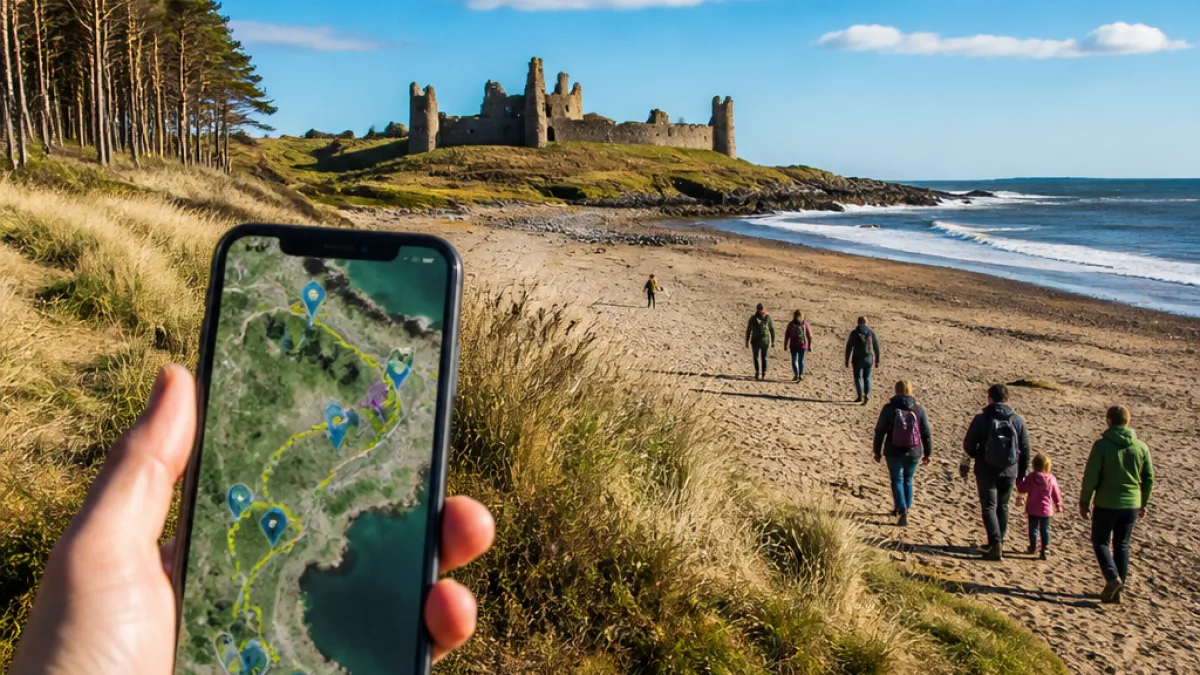
Moray’s coastal scenery has become part of a global cinematic backdrop as Christopher Nolan’s film adaptation of Homer’s The Odyssey reaches cinemas worldwide. To coincide with the release, an interactive online map has been published to help fans locate the sites in Moray and Aberdeenshire used during filming.
Local landmarks featured on screen
The production used several distinctive north-east locations to represent the ancient world. Notable sites in Moray include Culbin Forest and Culbin Sands, where the shifting dunes and pine woodlands were filmed as the landing site for Odysseus and his crew. The ruined sea-facing stronghold of Findlater Castle stood in for the mythical island of Aeaea, reportedly associated with the goddess Circe, while Sunnyside Beach features in other coastal sequences overlooking the Moray Firth.
“We’re absolutely delighted to see Moray featuring in what is undoubtedly one of the most anticipated film releases of the year,”
Councillor John Cowe, Moray’s civic leader, welcomed the international attention and expressed hope that screen exposure will encourage visitors to experience the region’s natural environment and heritage.
Economic and community impact
Aberdeenshire’s Provost, Judy Whyte, highlighted the wider benefits when a major production films locally. She noted the boost to hotels, restaurants, shops and transport providers from the presence of cast, crew and support staff during filming, and suggested that cinema-goers following the film’s locations could extend their travel across neighbouring areas such as Banffshire.
- Interactive resource: A new online map has been made available to the public to trace filming locations across Moray and Aberdeenshire.
- Key filming sites: Culbin Forest and Culbin Sands; Findlater Castle; Sunnyside Beach and coastal areas overlooking the Moray Firth.
- Local expectations: Councillors anticipate increased visitor interest and an economic uplift for hospitality and retail sectors.
Where to go and what to expect
The map aims to direct film fans to the places visible on screen. Visitors planning to explore these sites should be mindful that several are natural or historic locations: accessibility, parking and facilities vary between beaches, forest tracks and ruins. Local authorities and visitor information services will be the appropriate sources for up-to-date access information and any conservation guidance.
| Location | On-screen role |
|---|---|
| Culbin Forest / Culbin Sands | Landing site for Odysseus and his crew |
| Findlater Castle | Backdrop for the island of Aeaea |
| Sunnyside Beach | Coastal scenes overlooking the Moray Firth |
The publication of the map links the region directly to a high-profile cinematic release and provides a practical tool for visitors wishing to see the landscapes featured in Nolan’s adaptation. Local leaders have framed the filming and subsequent publicity as an opportunity to highlight Moray’s natural and cultural assets to an international audience.