North Ayrshire's population dipped slightly over the year to June 2025, according to the latest figures from the National Records of Scotland, even though more people moved into the area than left.
Numbers at a glance
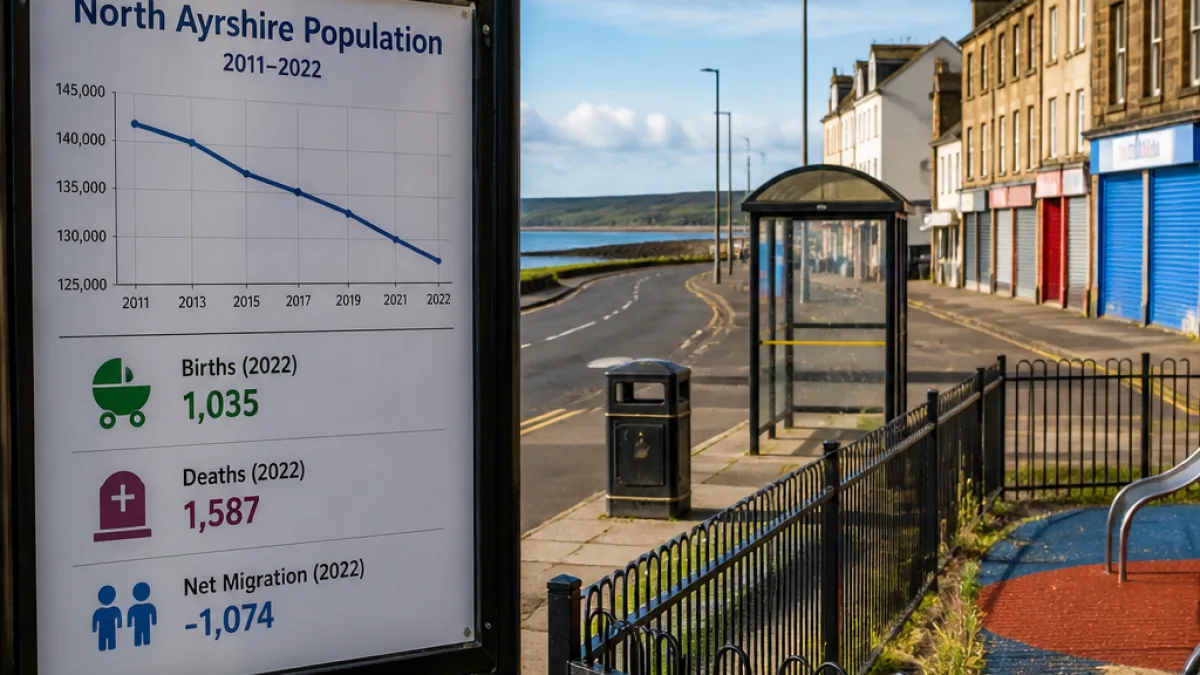
The council area recorded a population of 133,660 in June 2025 — a fall of 170 people compared with the previous year. The change reflects two opposing forces: a substantial natural decrease and a smaller net gain from migration.
| Measure | Number (year to June 2025) |
|---|---|
| Total population | 133,660 |
| Year-on-year change | -170 |
| Births | 1,048 |
| Deaths | 1,913 |
| Natural change (births minus deaths) | -865 |
| Net migration | +680 |
| International migration (arrivals minus departures) | -70 (480 arrivals, 550 departures) |
What the figures show
The small fall in population masks sharper movements within the numbers. There were 1,048 births recorded across North Ayrshire in the 12 months to June 2025, but 1,913 deaths — a natural fall of 865. That decline was partially offset by a net migration gain of 680 people.
Migration gains were driven by people relocating from other parts of Scotland and elsewhere in the UK. By contrast, international migration produced a small net loss of 70, with 480 people arriving from overseas and 550 leaving the area.
Context across Scotland
These local trends follow a national pattern in which migration has been the main driver of population growth. Scotland's population rose by roughly 2,200 people over the same period to reach about 5.545 million, despite a national natural decrease of more than 16,000.
- Natural change in North Ayrshire remains negative, which will affect long-term planning for health and social care.
- Migration is providing a partial buffer but is not large enough to offset the excess of deaths over births.
- International migration is weaker locally than internal movement within the UK and Scotland.
For residents and planners, the figures underline pressures on services that cater to an ageing population, and the continuing importance of migration in maintaining local population levels. Further breakdowns — for example by age group, council ward or longer-term trends — will be published in extended data releases from the National Records of Scotland and will provide more detail about where demographic pressures are strongest within North Ayrshire.