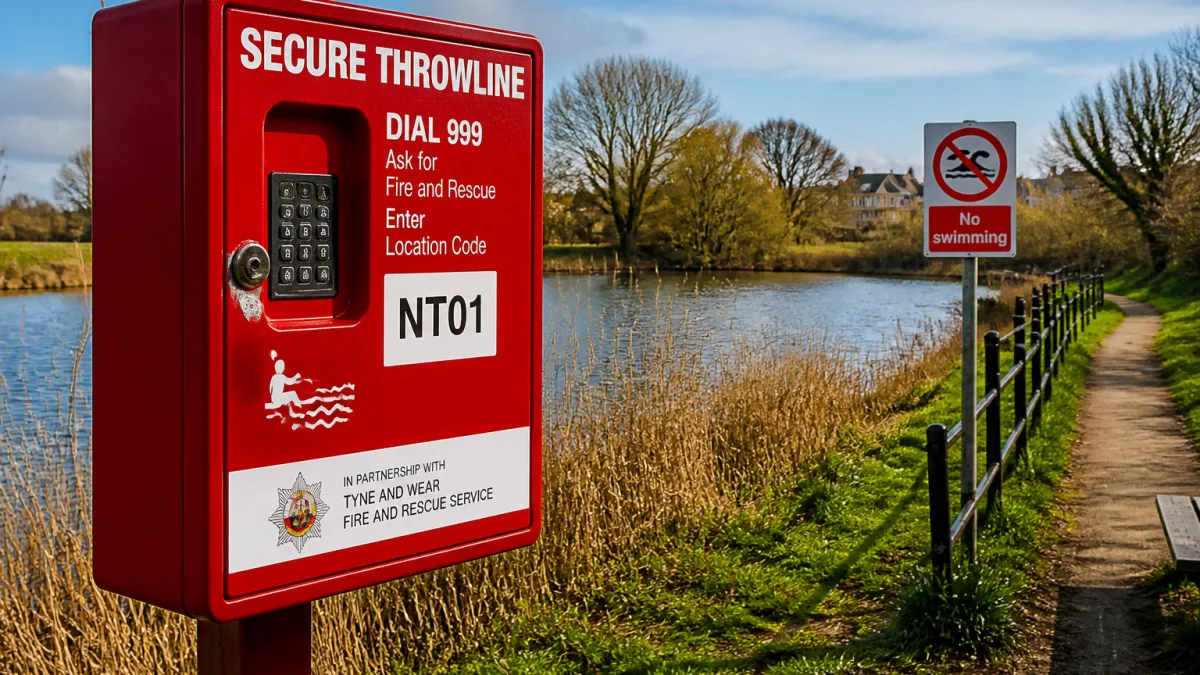
New life-saving kit for inland waters
North Tyneside Council has completed the installation of 12 emergency throwlines at priority inland water locations, giving the public access to life-saving equipment in an emergency. The move reinforces the area’s approach to water safety at lakes, ponds and other open-water sites, complementing the existing provision along the coast.
The new throwlines are housed in secure cabinets with clear instructions. In an emergency, members of the public should dial 999, request the fire service, and quote the location number shown on the display. The operator will then provide an access code so the throwline can be opened and deployed quickly.
Partnership with fire service and coastal cover retained
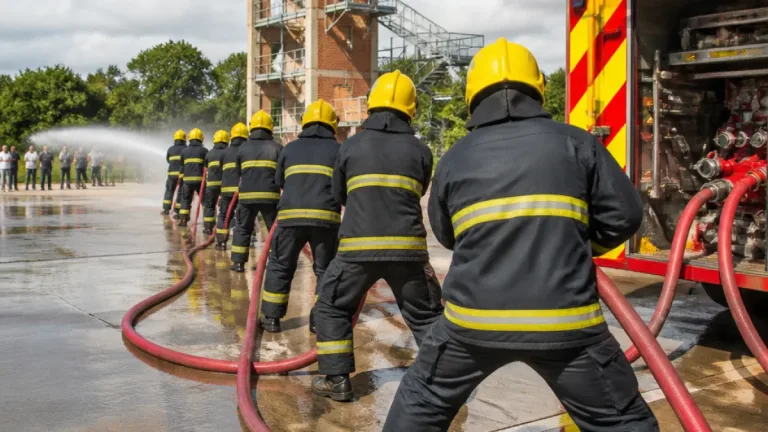
The scheme is being delivered in partnership with Tyne and Wear Fire and Rescue Service to ensure equipment can be accessed and used rapidly when every second counts. The council stressed that while throwlines are designed for use on inland waters where a controlled reach rescue can be more effective, lifebuoys remain essential at the coast due to tides, swells and offshore winds. The authority’s Public Rescue Equipment plan includes keeping 42 coastal lifebuoys in place around the borough.
“This installation is a simple but potentially lifesaving measure that will help improve water safety for residents and visitors alike,” said Councillor Hannah Johnson. “We are committed to doing everything we can to reduce the risk of water-related incidents, and these new throwlines provide a safe way for members of the public to assist someone in difficulty without putting themselves at risk.”
How the emergency access works
- Call 999 and ask for the fire service.
- Read out the location number printed on the throwline board.
- Use the unlock code given by the operator to open the cabinet.
- Follow the on-site guidance to deploy the line from a safe, stable position.
Each installation includes water safety information boards to reinforce safe behaviour near inland waters and to guide bystanders on how to assist without entering the water themselves. The council emphasises that the throwlines are designed to extend reach to a person in difficulty, reducing the need for would-be rescuers to enter the water and risk their own safety.
Complementing coastal safety and community use
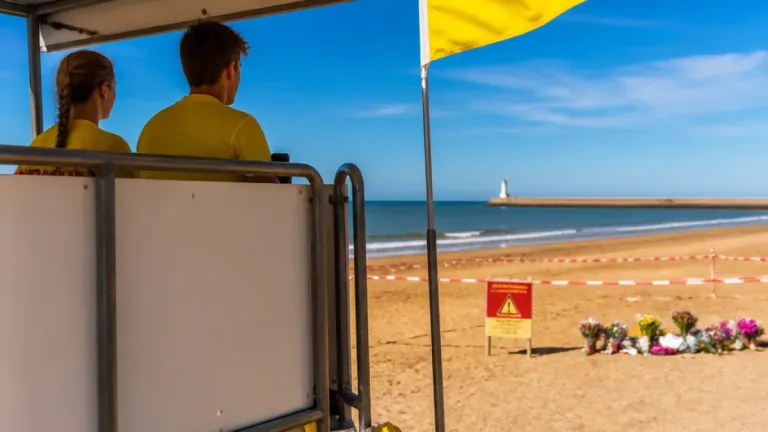
North Tyneside’s coastline continues to be supported by a network of 42 lifebuoys, which the council says remain the preferred option where surf conditions, currents and wind can complicate a rope rescue. By tailoring equipment to different environments, the authority aims to make it easier for the public to act decisively while awaiting emergency responders.
The council’s message is straightforward: know where you are, use the equipment as directed and involve the emergency services immediately. The partnership approach with Tyne and Wear Fire and Rescue Service is designed to reduce delays and help bystanders provide early assistance without compromising their own safety.
What’s in place
| Equipment | Number | Primary use |
|---|---|---|
| Inland emergency throwlines | 12 | Reach rescue at lakes, ponds and other inland waters |
| Coastal lifebuoys | 42 | Floatation support in beach and foreshore environments |
With summer activity increasing around water, the council’s investment seeks to strengthen first-response capability across the borough. The addition of throwlines does not replace the need to call 999 or the role of trained crews; rather, it gives residents and visitors a practical tool to bridge the gap until specialists arrive. The council’s advice remains consistent: keep a safe distance, follow the on-site instructions and use the kit to aid the person in the water while professional help is on its way.