Production and partnership
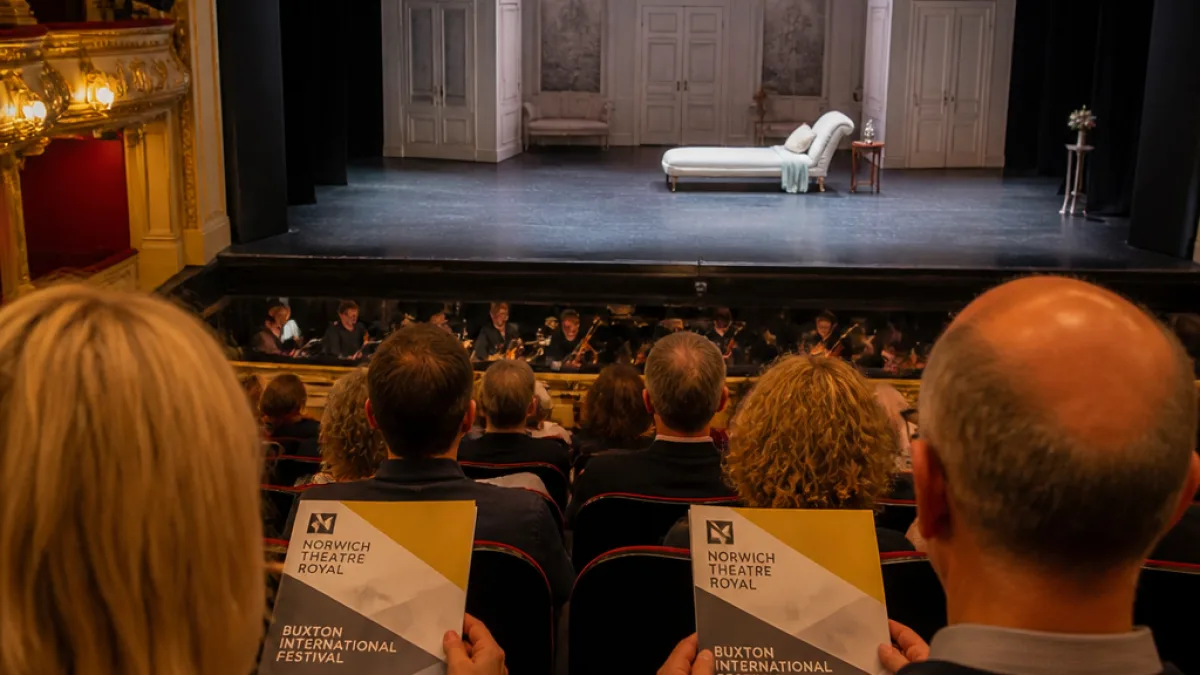
Theatre Royal Norwich’s current staging of Giuseppe Verdi’s La Traviata, mounted in partnership with the Buxton International Festival, presents a familiar telling of the 19th-century tale of Violetta and Alfredo. The production, directed by James Hurley and conducted by Adrian Kelly, opts for clarity and respect for the score over radical reinvention.
Performances and musical picture
The central cast delivers reliably strong singing. Alexandra Nowakowski as Violetta and Tigran Melkonyan as Alfredo provide vocally assured accounts of the lovers. The supporting cast and ensemble fulfil their dramatic parts competently under Elliott Squire’s staging, which tells the story without obscuring it.
Musically, the evening has two distinct halves. The orchestra initially struggles to find the warmth and precision that Verdi’s score requires, meaning the opening scenes feel hesitant. By the second half, the ensemble firmed up, producing a richer, more secure accompaniment that better supported the singers and the drama.
Where the production falls short
What is most noticeable is a persistent restraint. Scenes that should swell with longing or fracture with heartbreak remain polite rather than devastating, so the emotional arc never quite gathers the momentum needed for a truly powerful final act. The staging avoids missteps but also avoids fresh perspectives on characters whom the audience has seen many times before.
"The drama never quite gathers the momentum needed to make its final act devastating."
Audience experience and practical issues
Attendees also reported practical problems with surtitles. The translation display was slow to appear at times and contained inaccuracies, which interrupted engagement with the unfolding drama and occasionally caused confusion about the singers’ intentions.
- Conductor: Adrian Kelly
- Director: James Hurley
- Staging: Elliott Squire
- Violetta: Alexandra Nowakowski
- Alfredo: Tigran Melkonyan
Summary and local context
This production will be of interest to Norwich audiences who favour traditional presentations of canonical opera delivered with technical fluency. It is a welcome collaboration between two established UK institutions, offering an evening where the music and the story are clearly communicated. However, for those seeking a version of La Traviata that reimagines the material or draws out deeper psychological shocks, this staging may feel disappointingly measured.
| Element | Assessment |
|---|---|
| Vocal performances | Strong and assured |
| Orchestral playing | Uneven: tentative first half, improved second half |
| Staging | Clear but cautious |
| Surtitles | Problematic: slow and occasionally inaccurate |
Norwich’s cultural calendar benefits from such collaborations, and the Theatre Royal remains a place where local audiences can experience large-scale opera without travelling to London. While this production may not enter best-of lists for Verdi interpretations, it provides an accessible and professionally mounted evening of theatre and music for the city’s opera-goers.