What has changed
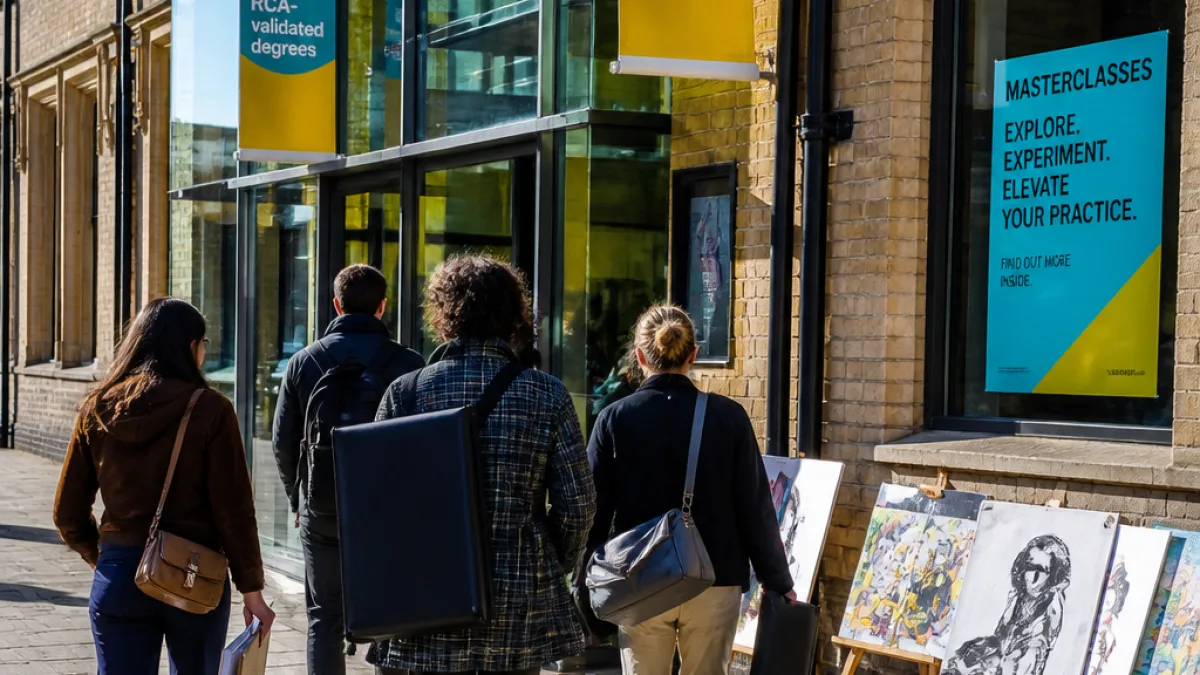
Norwich University of the Arts (NUA) has announced that a selection of its degree courses will be jointly validated by the Royal College of Art (RCA). The move formalises a partnership that embeds RCA-led enrichment into NUA curricula, with the stated aim of strengthening academic standards, widening access and supporting the sustainability of creative education locally.
How students will benefit
Under the agreement, students on the validated courses will receive a programme of additional activity provided by the RCA. That package includes masterclasses, opportunities to work on live briefs, curated show visits and tailored guidance for those considering postgraduate study. NUA and RCA say this combination is intended to reflect contemporary practice in art and design and to create wider national and international opportunities for graduates.
- Masterclasses delivered by RCA staff and visiting practitioners
- Live briefs that connect students with real-world projects
- Show visits to exhibitions and industry events
- Postgraduate guidance aimed at supporting progression to advanced study, including at the RCA
Local and sector context
The RCA, founded in 1837, has an international reputation and a long list of prominent alumni. The institutions pointed to high-profile past students as evidence of the RCA’s influence in art and design. For Norwich, the partnership is an enhancement of the city’s higher education offer: it signals greater national recognition for courses taught in the city centre and could make NUA more attractive to prospective students who want clearer routes to postgraduate study and professional networks.
| Year | Detail |
|---|---|
| 1837 | Year the Royal College of Art was founded |
| — | NUA will host RCA-validated enrichment embedded into select degree courses |
Why leaders say the collaboration matters
NUA and the RCA framed the arrangement as a way of combining institutional strengths. In statements published alongside the announcement, a senior representative from the RCA described the partnership as creating new opportunities and safeguarding quality through collaboration. That message emphasises both academic rigour and practical, practice-led learning.
"By choosing to combine our strengths through a jointly validated framework, we are creating new UK and global opportunities for students to benefit from rigorous academic standards, practice-led learning and collaborative approaches that reflect the realities of contemporary creative practice."
What this could mean for Norwich
For the city, the development could have several effects: it may boost recruitment to NUA, increase the visibility of Norwich on the national creative education map and strengthen links between local students and wider creative industries. It may also influence decisions by prospective undergraduates weighing course and career trajectories. Exactly which courses are included and the timetable for introducing the RCA validation were not detailed in the initial announcement; those operational specifics will determine how quickly students see tangible changes.
Local students, parents and employers in the creative sector should look for further information from NUA about which programmes are affected, how current students will be supported through the transition and what additional costs, if any, may apply. The partnership underlines an ongoing shift towards collaborative arrangements in UK higher education as smaller specialist institutions seek ways to protect course quality and broaden access to postgraduate progression.