
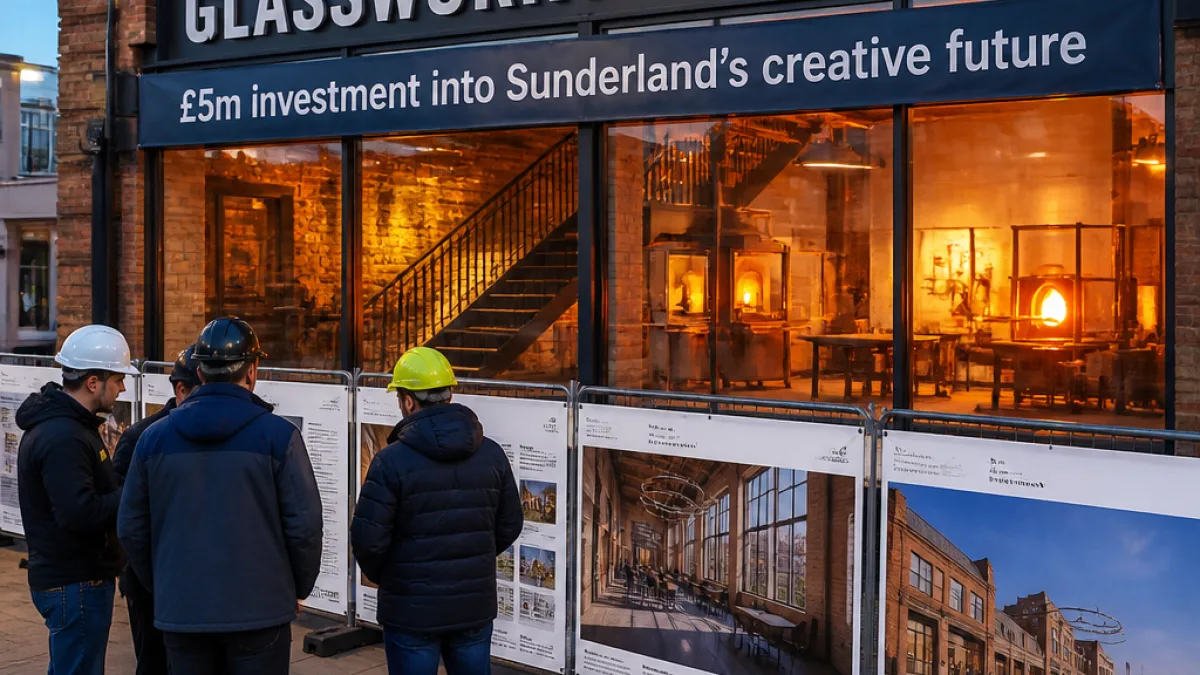
The first detailed visuals have been released showing how a disused Sunniside property could be reborn as Glassworks: Sunderland, a centre dedicated to glassmaking, ceramics and creative manufacture. The scheme — supported by a reported £5 million grant — would convert the former Peter Smith Antiques building into specialist studios and workshops, while retaining many of the structure's historic features.
What the proposals contain
Designs accompanying a planning application show a building adapted to contemporary craft production while preserving exposed brickwork and stone staircases. Key features include:
- Specialist hot shops and glassmaking furnaces capable of reaching high temperatures;
- Shared workspaces and a ceramics studio for professional makers;
- Public-facing ground and first-floor areas for classes and activities, while prioritising production space;
- Energy-efficiency upgrades and a new substation to meet power demand; heat recovery from furnaces to warm public and co-working areas.
The proposals follow months of consultation with local artists, makers and creative businesses, according to the documents released.
Support and aims
"Glassworks is a reimagined, future-facing, community-driven centre of excellence that will safeguard world-class glassmaking in the city,"
said Tom Billington, chair of Sunderland Culture. The project is not presented as a replacement for the National Glass Centre; rather, organisers say it will preserve skills, retain production capacity and complement existing provision.
Nick Malyan, chief executive of Sunderland Culture, said the facility is intended to support makers with access to facilities, shared resources and routes to market. He said Glassworks aims to build a "larger, more resilient maker ecosystem", offering commissions, business support and professional development.
Local impact and practical considerations
Proponents say Glassworks would primarily serve working makers while opening parts of the building to the public for courses and demonstrations. The planning drawings indicate a mix of production and educational spaces designed to be flexible for different creative uses.
| Feature | Purpose |
|---|---|
| Hot shop / furnaces | Primary production for glassmaking |
| Ceramics studio | Workspace for pottery and related crafts |
| Public teaching areas | Classes, demonstrations and community activity |
If approved, the scheme would help anchor glassmaking in Sunderland's creative quarter and aim to protect the city's craft heritage while providing modern facilities for practitioners. The plans indicate careful retention of historic fabric alongside contemporary interventions to meet the technical demands of glass production.
As the planning process advances, residents and local makers will be able to see the detailed proposals and comment through the council's consultation channels. For those working in the sector, the project promises access to power-hungry equipment, shared resources and business support — elements that proponents say are essential to sustaining production at scale in the city.
This development forms part of broader conversations about culture-led regeneration in Sunderland and the long-term future of traditional crafts in the North East.