The Prime Minister announced new technical education routes during a visit to Alstom’s Litchurch Lane Works in Derby, meeting current and former apprentices and underlining plans to align training with industrial demand.
Visit underlines role of apprenticeships in reindustrialisation
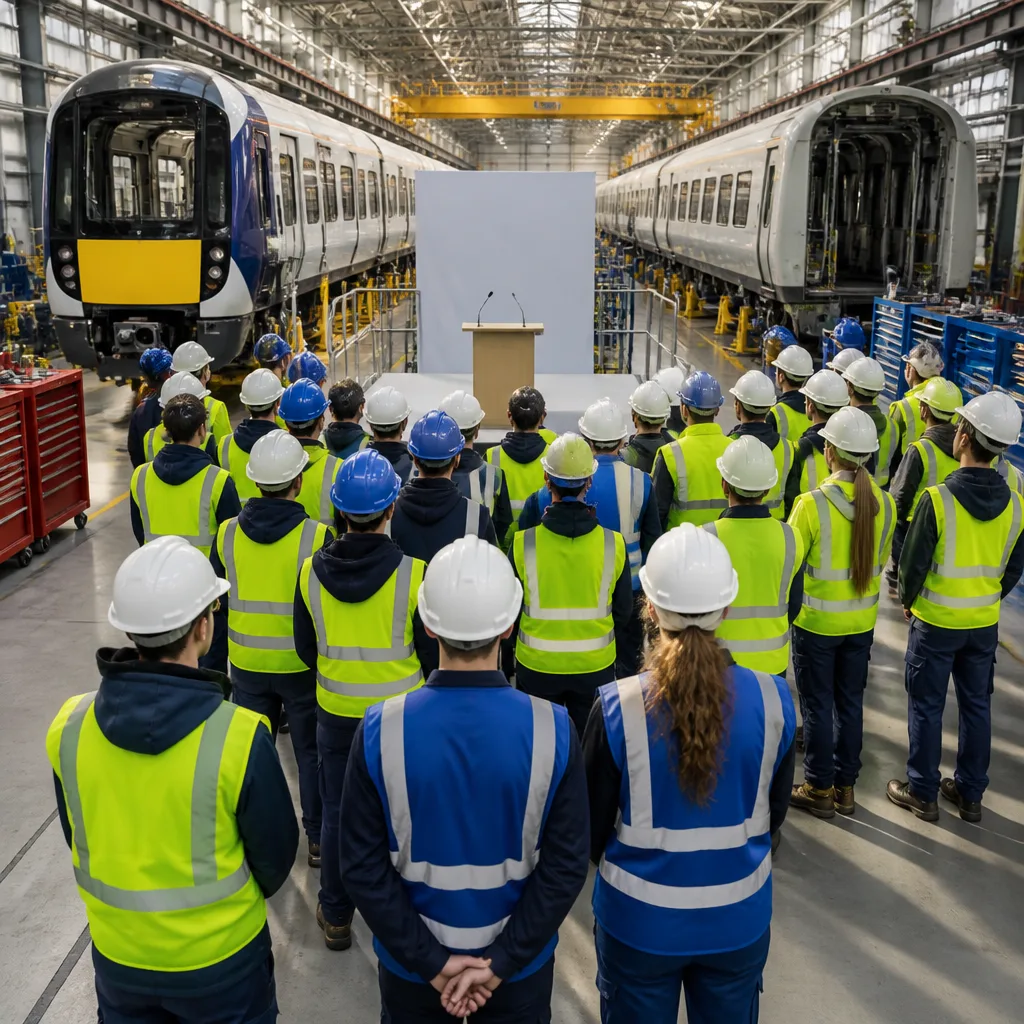
The factory tour brought the Prime Minister face-to-face with around one hundred apprentices, trainees and graduates working across Alstom and its suppliers. The site is the company’s largest global manufacturing facility and the only plant in the UK that both designs and builds trains for domestic and export markets.
Officials highlighted the factory’s recent production record and ongoing projects, including the supply of additional trains for London’s Elizabeth line and work on refurbishing CrossCountry’s Voyager fleet. Derby’s Litchurch Lane is also the hub for Alstom’s new Adessia platform and, according to the company, supports a substantial domestic supply chain.
“We were delighted to welcome the Prime Minister and members of his Cabinet to Derby Litchurch Lane Works to meet apprentices and graduates and showcase the future of UK train building,”
The Prime Minister’s announcement focused on introducing clearer technical education pathways intended to funnel talent into sectors such as rail manufacturing. The proposals seek to strengthen links between classroom and workplace, and to use government purchasing power to support British industry.
What the move means for students and employers
- For students: clearer, vocationally focused routes should make it easier to plan apprenticeships and training that lead directly to employment in manufacturing and engineering.
- For employers: the government intends to leverage procurement to favour UK-based supply chains, potentially increasing demand for skilled apprentices and trainees.
- For local economies: investment and recruitment at major sites can support supply-chain jobs and training opportunities across regions.
Alstom said that between 2017 and 2024 the Derby site produced more than 2,660 Aventra carriages for UK operators, and that it currently supports a cohort of around 120 trainee apprentices and graduates, backed by a company training academy. The company also reported spending more than £720 million with nearly 1,300 British businesses in the previous year, supporting close to 11,000 UK supply‑chain jobs.
| Item | Figure |
|---|---|
| Aventra carriages manufactured (2017–2024) | 2,660+ |
| Current trainees and apprentices | ~120 |
| Supply‑chain businesses supported (last year) | ~1,300 |
| Estimated supply‑chain jobs supported | ~11,000 |
During the visit the Prime Minister met individuals who had moved into rail manufacturing from other sectors. One former pharmacy worker, who joined as an apprentice at 23, now oversees the build of multiple trains — a visible example of the type of career change the new routes are intended to encourage.
Education and training leaders will now assess how the announced technical routes align with existing qualifications, apprenticeship frameworks and employer needs. For parents and students considering vocational study, the announcement signals a continued government emphasis on practical training linked to industrial demand, but details on qualification design, funding and start dates will be important to follow as plans are finalised.
Further announcements are likely to clarify how the new routes will be implemented in colleges and training providers, and how employers of different sizes can engage. Meanwhile, Derby’s Alstom site stands as a practical example of the potential employment pathways the government aims to promote.