Community-backed turbines in Reading draw national attention
The volunteer-led Reading Hydro project on the River Thames is being cited as a model for how towns can generate their own clean electricity. The group behind the twin turbines at Caversham Weir says requests for advice are coming in from organisations keen to replicate the approach. But despite the local success, the team warns that a mix of high upfront costs, seasonal water constraints and tougher development hurdles is making it far harder for others to follow.
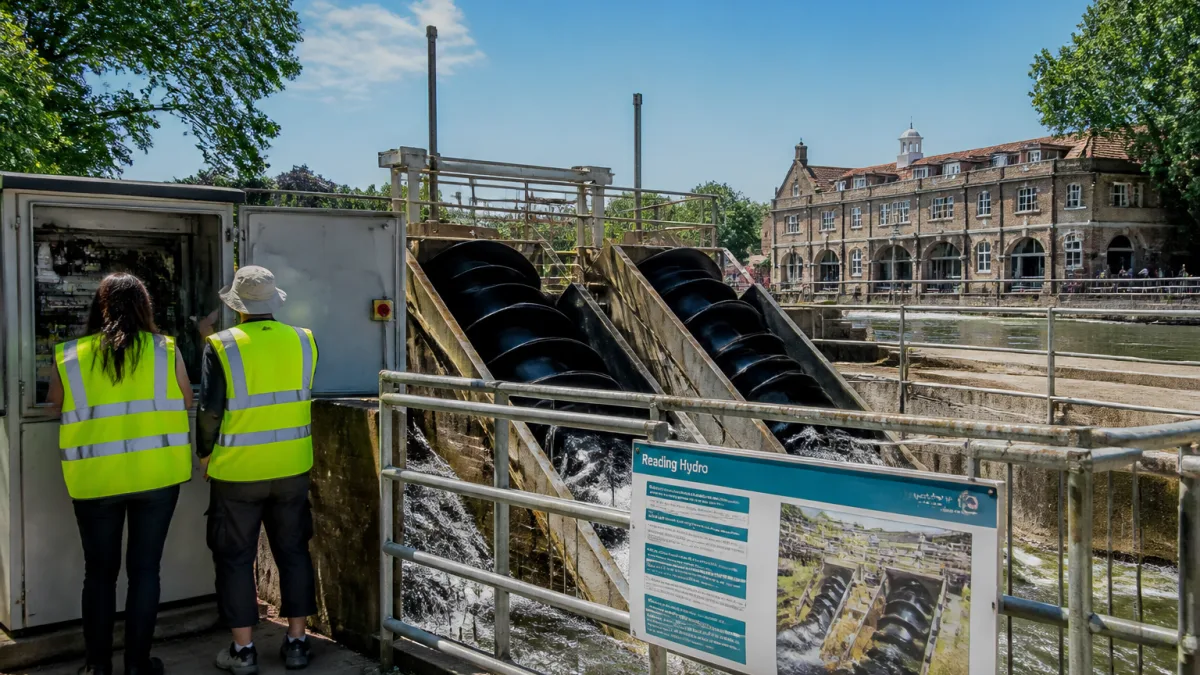
Reading Hydro’s founders assembled community funding to build two turbines beside the weir. The installation, completed for about £1.15m, has been producing power for the past five years. Electricity has been supplied directly to the nearby Thames Lido since 2021, with surplus exported to the national grid.
How much power and when?
When river conditions allow, the station reaches a maximum output of 46 kW, enough on a typical day to supply the equivalent consumption of more than 100 homes, according to the group. However, the project is at the mercy of the Thames’ flow rate. During most summers, operations pause because water levels are too low to run the turbines efficiently, a reminder that micro-hydro can be highly seasonal.
| Reading Hydro at a glance | Detail |
|---|---|
| Location | Caversham Weir, Reading |
| Capital cost | £1.15m |
| Number of turbines | Two |
| Max output | 46 kW |
| Primary off-taker | Thames Lido (since 2021) |
| Commissioned | Operational for five years |
Why this model worked in Reading
Crucially, the project secured accreditation under the government’s now-closed Feed-in Tariff (FIT) scheme, which paid generators for every unit of renewable electricity produced. Reading Hydro told the BBC those payments underpin up to two-thirds of its financial plan. Without that guaranteed income stream, the economics would have been significantly weaker.
The Department for Energy Security and Net Zero said it welcomed the supportive role hydropower plays in our clean power mission as a small-scale technology. Reading Hydro is the most recent hydropower station built on the Thames; the last comparable development before it was Sandford Hydro in Oxford, which launched in 2017.
What’s stopping others?
Founding member Tony Cowling said community groups from around the country — including some near London — have approached Reading Hydro for guidance. Yet many are running into steep early-stage costs and drawn-out permissions.
"The problem with building a hydro power station is that there are high costs to develop the scheme before you can get it in a fundable stage,"
Mr Cowling added that without the legacy support of FIT, similar ventures struggle to close the gap. The group said that without those payments, the project would be dead in the water.
Planning, rivers and risk
Unlike rooftop solar, riverside hydro needs civil engineering on or near existing weirs, fish passes and flood-sensitive zones. That means extensive environmental assessment and multiple consents. Even when planning permission is secured, assets must be built to withstand variable flows, with production falling away in dry spells. Reading Hydro has had to halt operations in most summers because of low water, which reduces annual output and revenue.
These realities make finance hard to raise. Early-stage surveys, design work and legal processes often require significant capital before a project can even be offered to investors. In Reading’s case, most of the money came from local individuals, demonstrating strong community buy-in. Replicating that civic commitment elsewhere is possible, but tougher when the revenue outlook is less certain.
What it means for Reading — and beyond
For Reading residents, the scheme has become a visible example of how local people can underwrite part of the town’s energy transition, with electricity delivered to a familiar local business and any surplus sent to the grid. As energy prices and climate pressures sharpen the focus on home-grown renewables, small hydro can still carry symbolic and practical value — though it is likely to remain a niche, small-scale contributor.
The government’s acknowledgement of hydropower’s role signals that the technology has a place in the UK’s wider power mix. But without a replacement for FIT-type support or a streamlined route through early-stage costs and consents, Reading Hydro’s story may remain the exception rather than the rule.
The road ahead: interest grows, barriers remain
Reading Hydro says it will continue to field enquiries and share lessons from its journey, from turbine selection to community engagement. For would-be developers, the project underlines the essentials:
- Identify a suitable weir or river site with adequate year-round flow.
- Plan for seasonal variability, including potential summer shut-downs.
- Build a realistic business case that does not depend on incentives no longer available, and factor in high pre-construction costs.
As more local groups explore their options, the question is whether policy and planning frameworks will evolve to lower the barriers, allowing more communities to follow Reading’s lead at a scale that fits their rivers and resources.