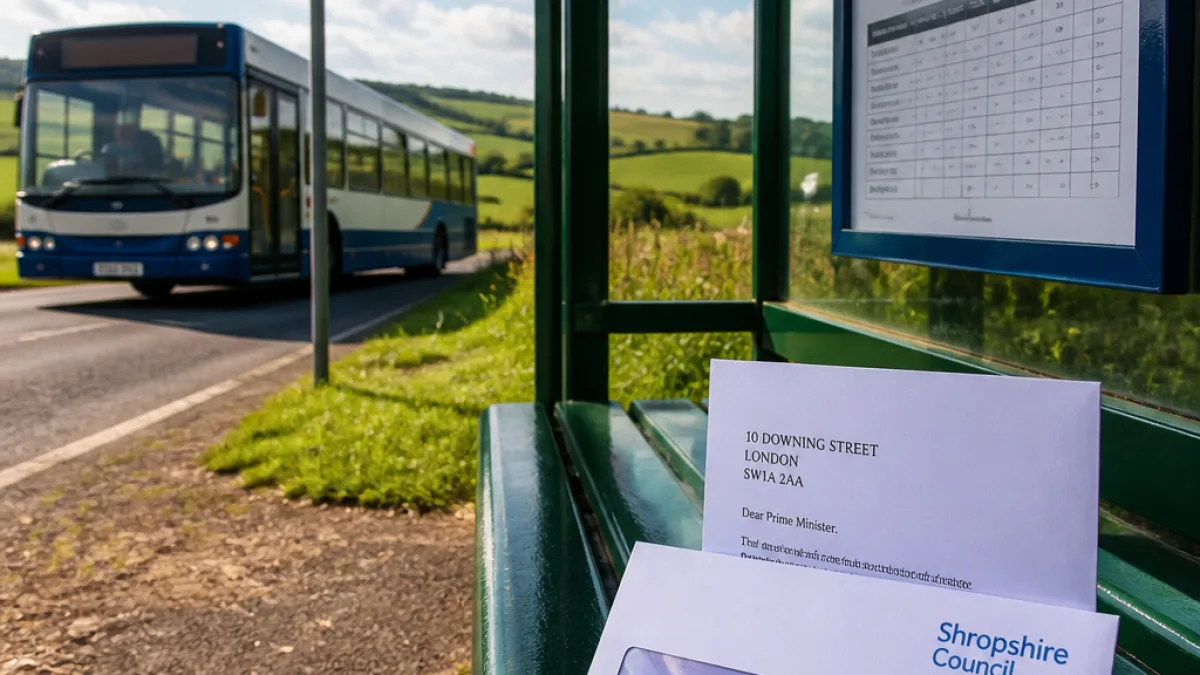
Shropshire Council has urged the new prime minister to review how bus funding is distributed, warning that recent reductions and rising costs have left the county facing a significant shortfall in support for rural services.
Funding squeeze leaves gap in rural services
The council says it has suffered a £200,000 reduction in government funding for public transport this year. Coupled with increased costs from operators, that cut has contributed to what the authority describes as a £1.25m funding gap for local bus services.
In a letter to Number 10, the council's transport portfolio holder, Cllr Wilson, and the authority's leader, Cllr Heather Kidd — both Liberal Democrats — called for the prime minister's backing for "a fairer funding settlement that properly recognises the challenges of delivering essential services across large rural counties." They asked the government to reconsider how local bus revenue support is distributed so that rural areas are not disadvantaged.
"Having public transport available is really important for getting to healthcare, education, work, visiting friends and family so we need to make the point that in rural areas it's probably more expensive but probably even more important,"
The council argues that the extra cost of providing services in a largely rural county is not currently reflected in funding allocations, yet rural services are vital for people who rely on buses to reach essential appointments and maintain social connections.
Local authorities press for more powers and flexibility
The call from Shropshire comes alongside developments in neighbouring boroughs. In Telford and Wrekin, councillors said they hoped the incoming government would allow them greater control over bus services. At a recent cabinet meeting, deputy leader Richard Overton highlighted a council report showing how listening to residents had led to timetable updates and extra journeys.
He added: "I hope the new prime minister will give even more powers to do more." The comment underlines a broader push by local authorities for both increased funding and devolved powers to shape bus networks to local needs.
What this means for residents
For many people in rural Shropshire, buses are the only practical option for reaching GP surgeries, hospitals, schools, workplaces and shops. The council's warning suggests that without additional support or a change in funding allocations, residents could face reduced services, less frequent journeys or higher fares.
- Reduced funding: £200,000 cut in government support this year.
- Funding gap: Shortfall of £1.25m when operator costs are included.
- Local action: Councillors seeking a review of distribution and asking for greater powers to tailor services.
| Item | Figure |
|---|---|
| Reduction in government funding (this year) | £200,000 |
| Overall funding gap (including operator costs) | £1.25m |
The council's plea to the new prime minister frames rural bus funding as both a financial and social issue. Councillors say they want a distribution mechanism that recognises the unique costs and greater dependence on services in sparsely populated counties such as Shropshire.
While talks with central government proceed, local leaders are urging residents to continue using services and to engage with consultations and local representatives to stress how much communities rely on buses.
Further details on any proposed changes to timetables or services will be published by the council as plans are developed.