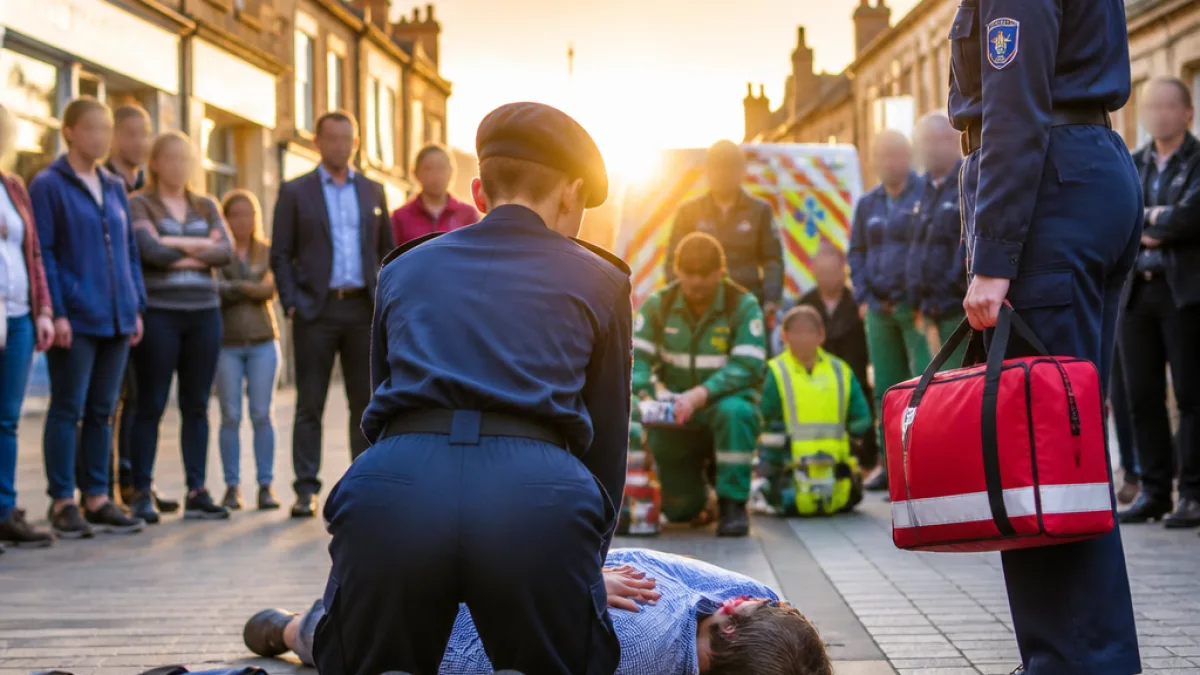
A teenage member of the Army Cadets in South Lanarkshire has been publicly commended after performing cardiopulmonary resuscitation (CPR) on a man who collapsed on Rutherglen Main Street. The immediate intervention gave the man time for family to travel from Ireland and say goodbye before he died days later.
What happened
The casualty collapsed in public on Rutherglen Main Street. The cadet, a Lance Corporal attached to the Cambuslang Detachment, applied CPR and, according to medical staff, restarted the man’s heart despite his known cardiac condition.
- Location: Rutherglen Main Street
- Responder: A teenage Lance Corporal from the Cambuslang Detachment of the Army Cadets
- Outcome: The man was kept alive long enough for family to arrive; he died several days later
“I'm incredibly proud of Hayden. What she did was extraordinary. It just shows the positive impact the Army Cadets can have in developing young people,”
The comment came from Seámus Ferry, the cadet’s Detachment Commander and Battalion First Aid Training Officer, who said the cadet had originally been shy about first aid training but had completed the 2 Star Youth First Aid award.
Local response and implications
Police and medical staff who attended the incident also recognised the cadet’s role. A Constable present described the actions as having saved the man’s life — even if only briefly — by restoring circulation and giving relatives the opportunity to say their final goodbyes.
| Stage | Detail |
|---|---|
| Training | Completed 2 Star Youth First Aid with Army Cadets |
| Incident | CPR delivered on Rutherglen Main Street; emergency services attended |
| Outcome | Man briefly resuscitated; died several days later after family had arrived |
The episode highlights how basic first-aid training can make a decisive difference in a medical emergency. Local youth organisations and emergency responders have repeatedly urged residents to learn CPR and other lifesaving skills, noting that prompt action can affect outcomes in the crucial minutes before ambulance crews arrive.
While the incident ended in the patient’s death, the intervention altered the final hours for his family, allowing them to be present. Cadet leaders said the incident demonstrates both the practical value of training and the confidence it can give young people to act in crisis situations.