A milestone for refugee protection, and a local story
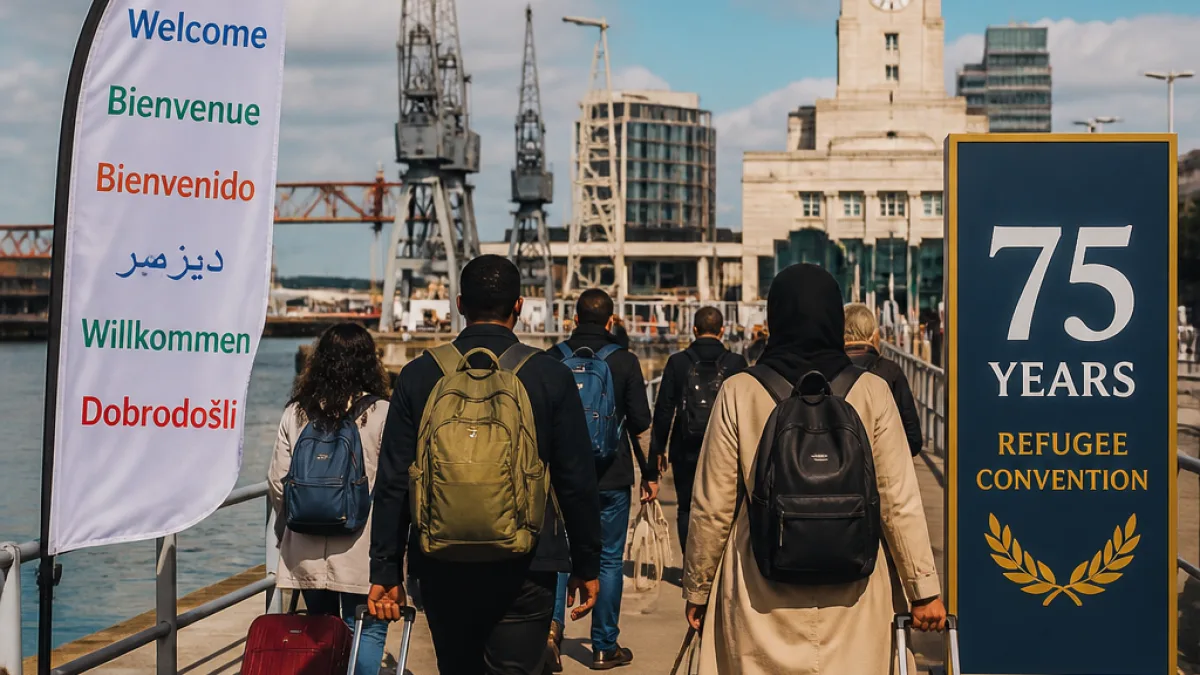
As the world marks the 75th anniversary of the United Nations Refugee Convention, a prominent community voice has set out why Southampton’s tradition of sanctuary remains integral to the city’s identity. In an essay reflecting on the Convention’s legacy, Nikki Walters, chair of Southampton Action, argues that the promise of protection to those fleeing war, persecution and violence is as relevant today as it was in the mid‑20th century, and that Southampton has consistently lived up to that promise.
Walters traces a line through the city’s history, noting that people have sought safety here for centuries. From early arrivals such as the Huguenots and Basque children to more recent families from Syria, Afghanistan, Ukraine and Hong Kong, the city’s port heritage and civic outlook have shaped a culture of welcome. She also points out that Southampton has been an asylum dispersal city since 2001, countering suggestions that this is a recent development.
Sanctuary beyond a roof
The message set out is that sanctuary is not merely about accommodation. Walters describes it as the process of rebuilding a life interrupted by conflict or persecution — finding safety, forming friendships, securing a first home or job, and enabling children to settle at school. These are ordinary milestones that take on profound significance for people arriving with little more than the clothes they are wearing.
She emphasises how those seeking sanctuary here contribute to the community every day, despite the barriers they may encounter. According to her account, people join English classes, volunteer, interpret for one another, and help newcomers navigate unfamiliar systems. Many, she notes, go on to build communities, establish businesses and raise families in the city they now call home.
Belonging in Southampton
Walters' piece is framed as a direct statement of belonging. She writes that whether someone has lived in Southampton all their life or has just arrived, they are part of the community. The sentiment is that this is their home too, reflecting a broad civic ethos that places dignity and safety at the centre of how the city views newcomers.
- Southampton’s culture of welcome spans centuries, from historic arrivals to recent resettlement.
- The city has been an asylum dispersal area since 2001, integrating people seeking safety into local life.
- Contributions from those seeking sanctuary are described as daily and diverse — from volunteering to starting businesses.
Context and challenges
While celebrating the city’s record, Walters also points to the wider climate that can make resettlement harder, citing political language that can be divisive and policies that may introduce obstacles. Set against those headwinds, the everyday acts of learning, working, supporting neighbours and raising families represent, in her account, quiet evidence that inclusion has practical roots in Southampton’s neighbourhoods.
Her reflections are grounded in work with Southampton Action, through which she has met people arriving from around the world, shared food from different cultures and watched new residents take the first steps towards stability. These experiences, she suggests, show how sanctuary becomes real: not only through formal support but through the small, cumulative experiences of making friends, finding a first tenancy and picturing a future again.
Why this matters locally
For Southampton, the 75th anniversary is presented as both a global moment and a local reminder. The city’s standing as a place of arrival brings responsibilities that are lived out in classrooms, workplaces and community venues. Walters’ account reinforces that the benefits are mutual: people seeking safety rebuild their lives, and in doing so they enrich the cultural and civic fabric of the city.
Her message is ultimately one of recognition — of history, of present realities, and of the everyday commitments that turn principles into practice. As the Convention reaches a landmark year, Southampton’s story, as told here, is that of a city continuing to make room for those who need it most, and expecting that — given the chance — they will make their own mark in return.