Councillors have been told that Stoke-on-Trent will keep its city status despite a sweeping local government shake-up that will abolish the existing district and county councils and replace them with two new unitary authorities in 2028.
How the change will protect civic titles
Officers explained to members of Stoke-on-Trent's strategy and resources scrutiny committee that the loss of city or borough status will be avoided by establishing charter trustee bodies for the areas affected. These trustee groups, made up of councillors elected to represent the geographic boundaries of the city or borough, would meet annually to select a mayor or lord mayor, preserving the ceremonial and historic roles attached to the titles.
"City status and borough status are very important to people, for very good reasons,"
The remark came from James Doble, the council's director of governance, who told councillors there are "no plans whatsoever" to remove city or borough status under the reorganisation. Committee member Andy Platt had sought reassurance amid what he described as public confusion about the future of civic honours.
Why the reassurance was necessary
Stoke-on-Trent was granted city status by King George V in 1925, and marked its centenary last year. By contrast, Newcastle-under-Lyme's borough status stretches back many centuries; documents cited in discussion trace it to 1173. There is precedent elsewhere in England for titles being overlooked during reorganisations — most notably Rochester in Kent, which lost its city status during the creation of Medway Council in the 1990s and has not had it restored.
- What will change: All 10 main local authorities covering Stoke-on-Trent and Staffordshire will be abolished and replaced by two unitary councils in 2028.
- What will remain: City and borough statuses, including their mayoral offices, will be retained via charter trustees covering the respective areas.
- Next steps: Elections to the new unitary authorities are scheduled ahead of the transition.
Practical implications for residents
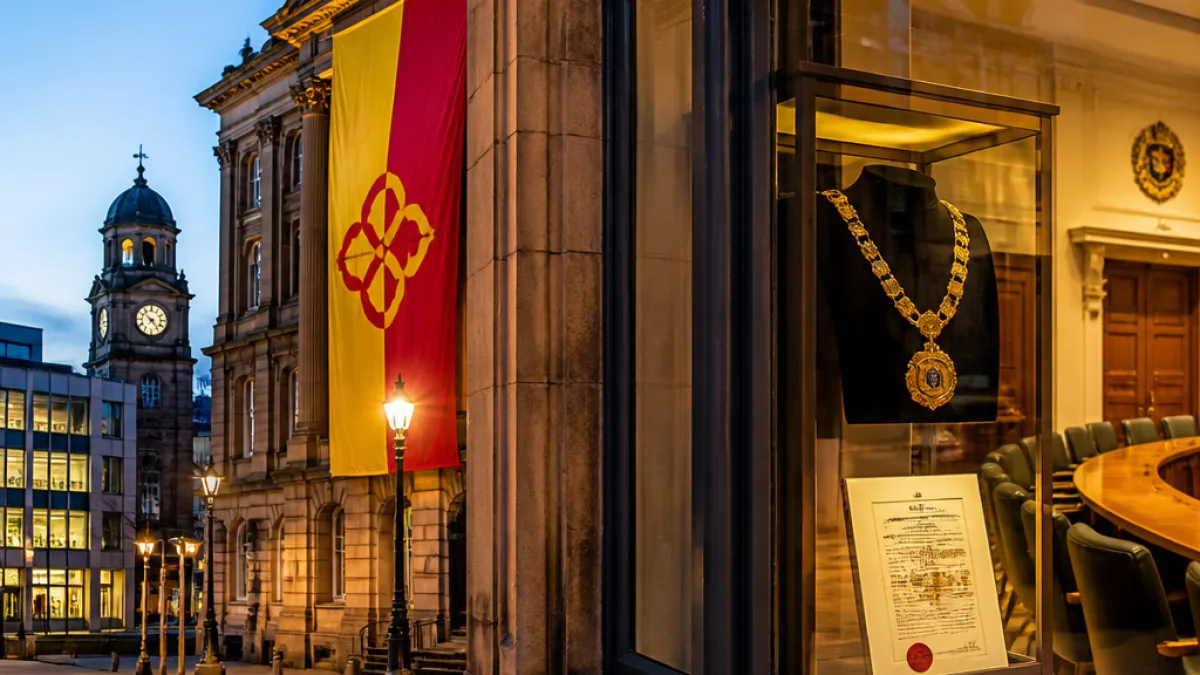
The arrangements are intended to ensure continuity of civic dignity and local ceremonial functions despite structural change. Charter trustees are a recognised mechanism under English local government law for safeguarding the historic identities of towns and cities whose original councils are abolished. Their responsibilities typically cover the election of the civic head and the maintenance of regalia and insignia.
Officers stressed that the government's accepted proposal for north Staffordshire explicitly recognised the importance of both city and borough statuses. The move aims to avoid the administrative oversight that led to Rochester's loss of city status during a past reorganisation.
| Event | Date |
|---|---|
| Stoke-on-Trent granted city status | 1925 |
| Newcastle-under-Lyme borough status noted from | 1173 |
| Unitary authorities to take effect | 2028 |
For residents concerned about how the changes will affect local services or representation, the immediate practical change will be the creation of the two unitary councils, which will assume responsibility for functions previously split between district and county level. Civic titles and the traditions they carry, however, are set to be preserved by the charter trustee proposal until — and unless — different arrangements are approved in future.
The matter will return to public view as preparations continue for elections to the new authorities and as the detailed mechanics of the charter trustees and transitional governance are worked out by officers and ministers.