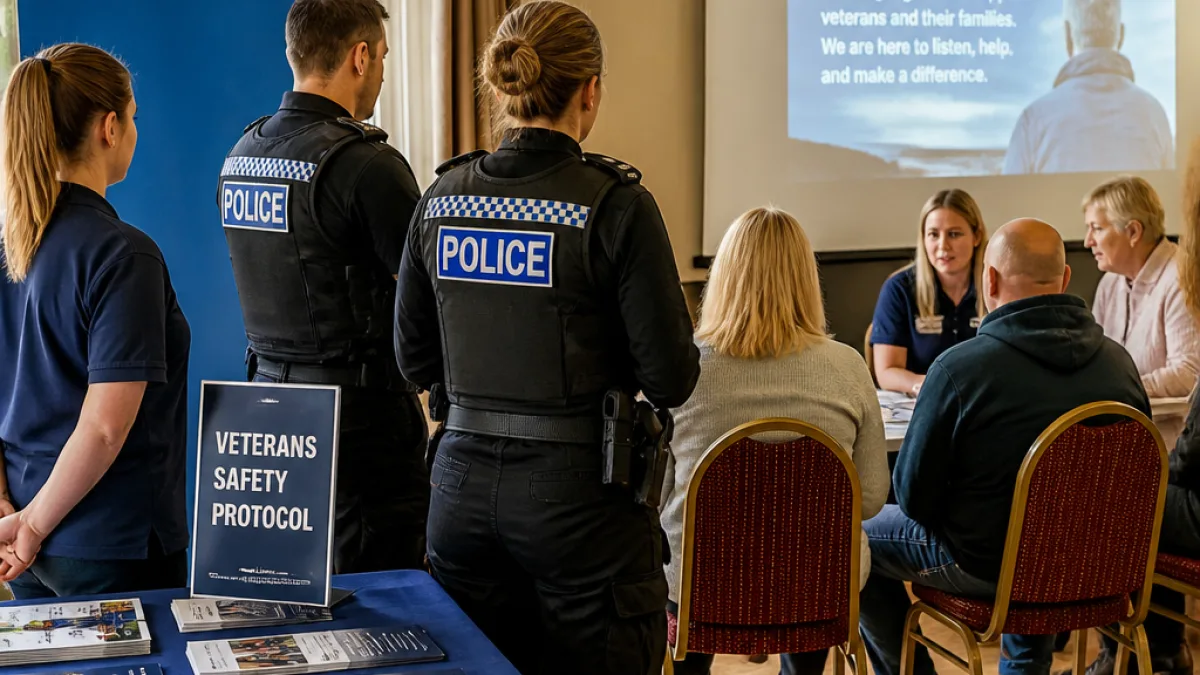
Sussex Police has introduced the Forcer Protocol, a new system designed to help officers identify and safeguard vulnerable armed forces veterans more quickly when they are reported missing or face high-risk situations. The scheme was unveiled at the West Sussex Armed Forces Conference in Horsham and aims to improve the speed and quality of police responses by allowing families and carers to lodge crucial information in advance.
What the protocol does
The protocol gives relatives and support organisations a route to provide details that can assist officers at the outset of an incident — for example, routines, likely locations, health concerns and triggers related to service-related trauma. That information is intended to allow a more targeted search and ensure welfare needs are known to responders.
"The protocol will help officers quickly locate and protect vulnerable veterans who need support," said Detective Chief Superintendent Matt Barcraft-Barnes, the force's Armed Forces lead for Surrey and Sussex.
Sussex's Police and Crime Commissioner, Katy Bourne, welcomed the development, describing it as strengthening local links between the police and the armed forces community.
Why the scheme was created
The Forcer Protocol was developed by Claire Lilly after the death of her former husband, Lance Corporal Alan James Forcer, who took his own life in 2020 having gone missing while struggling with post-traumatic stress disorder. The family campaign influenced the creation of a formal process that colleagues say could prevent similar tragedies by ensuring timely, informed interventions.
- Advance information: Families can share relevant personal and health details before an incident.
- Faster response: Officers receive focused guidance at first contact.
- Partnership working: The scheme formalises links between police, families and veteran support groups.
How it will affect local communities
For West Sussex — home to a substantial armed forces community — the protocol offers a practical tool for families who worry about relatives living with service-related mental health problems. Police say it should reduce time spent on searches and improve welfare outcomes by equipping frontline teams with relevant background information from the outset.
| Element | Purpose |
|---|---|
| Pre-incident information | Guide search priorities and welfare checks |
| Single point of contact | Streamline family engagement with police |
| Partnership links | Coordinate support from veteran services |
Officers and local support groups are expected to work closely to promote the scheme among veterans and carers. The protocol does not replace existing safeguarding or mental health services but complements them by improving the initial policing response.
Those wishing to learn more about the Forcer Protocol or how to submit information should contact Sussex Police or local veteran support organisations for guidance on next steps.