Donald Trump has welcomed reports that incoming prime minister Andy Burnham could support further oil and gas extraction in the North Sea, prompting renewed scrutiny of how Labour will balance energy security with its climate promises. Labour has not confirmed any shift in policy, but has signalled a more pragmatic tone.
Trump’s intervention and what’s actually confirmed
Writing on his Truth Social platform on Sunday, the former US president claimed Mr Burnham would fully reopen North Sea oil fields, singling out Aberdeen as a winner. In his post, he asserted that increased drilling would transform the UK’s fortunes and again criticised onshore wind power.
“The People of Aberdeen, in Scotland, are dancing in the streets because the new Prime Minister, Andy Burnham, has stated that he will be opening up, all the way, the invaluable North Sea Oil!”
Mr Burnham has not confirmed any such decision. Reports suggest his team is weighing options around projects in the Rosebank and Jackdaw fields, whose licences have already been issued, while maintaining the party’s headline pledge of no new licences. That distinction — between approving activity on existing licences and authorising entirely new ones — is central to the debate.
Labour’s manifesto and a ‘pragmatic approach’
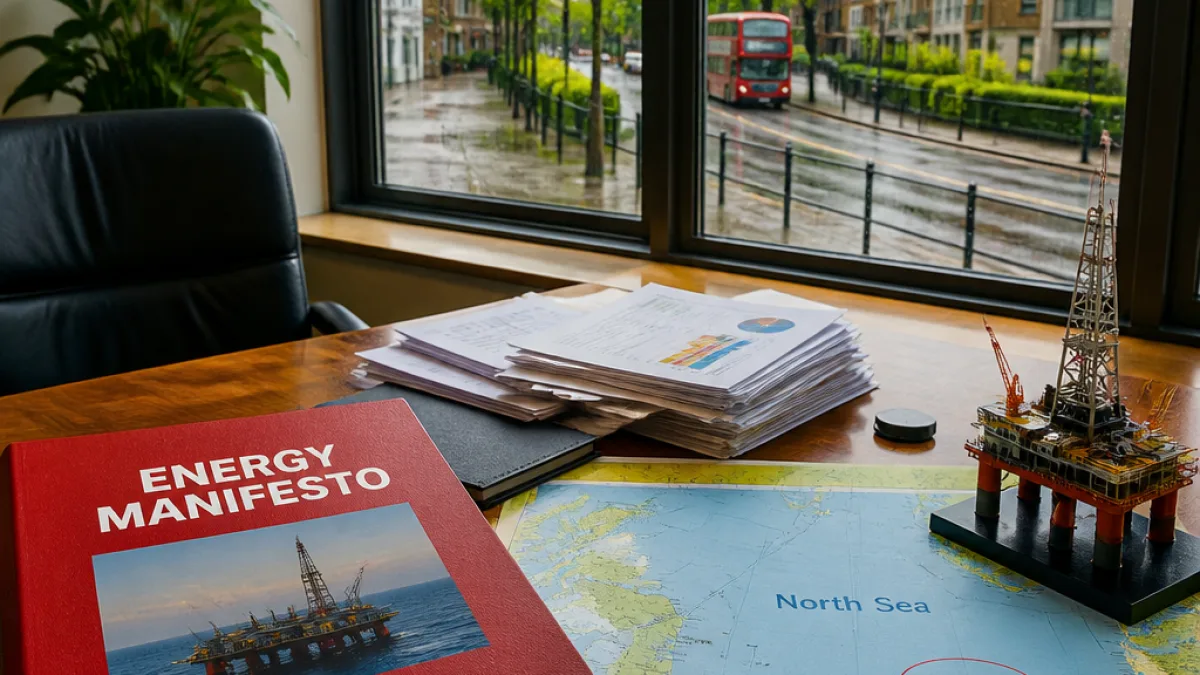
Labour’s 2024 manifesto promised not to issue new North Sea licences, arguing they would not reduce consumer bills or strengthen energy security while risking faster climate change. On Sunday, deputy leader Lucy Powell said Mr Burnham would stick to those commitments while taking a more pragmatic stance in government. She did not confirm whether the incoming administration would support further drilling at licensed fields, adding she expected “more a change of emphasis” than a change of policy.
| Policy area | Manifesto position | What’s being discussed |
|---|---|---|
| New licences | No new North Sea licences | No indication of change |
| Existing licences | Not explicitly ruled out | Possible approvals at Rosebank and Jackdaw |
Why this matters to households and industry
For residents in Barking and Dagenham and across London, the conversation is ultimately about energy affordability, reliability and the pace of the transition to low‑carbon power. Labour’s stance suggests it views fresh drilling licences as offering little immediate relief on bills, while any movement on already‑licensed fields may be framed as managing existing assets during the transition. Businesses up and down the supply chain — from engineering firms to services companies — will be watching for clarity as the new government takes office on Monday.
- Energy bills: The manifesto argues new licences would not cut prices; any impact from existing fields would depend on market conditions and timelines.
- Jobs and investment: North Sea activity supports employment, particularly in Aberdeen; policy certainty influences investment decisions.
- Climate goals: The balance between short‑term supply and long‑term decarbonisation remains the key test for the new government.
Aberdeen in focus — and the wind power flashpoint
Mr Trump’s post again targeted wind turbines, describing them as “old and horrible looking” and claiming they blight Aberdeen’s skyline. His criticism comes as the UK continues to expand renewable capacity alongside managing legacy oil and gas infrastructure. While he portrayed further drilling as a route to national prosperity, the incoming government faces a more intricate set of trade‑offs: safeguarding energy security, protecting jobs in traditional sectors, and accelerating clean power without breaching its electoral promises.
What happens next
Mr Burnham is due to take office on Monday. Any early decisions on North Sea projects are likely to be scrutinised for consistency with Labour’s election commitments. Ms Powell’s remarks indicate ministers will be careful to distinguish between licensing new fields and progressing projects already licensed. Until formal announcements are made, speculation will continue — amplified by high‑profile interventions from abroad — but the hard test will come with the first decisions taken at the Department for Energy.
For now, the facts remain these: Labour has pledged no new licences; the Rosebank and Jackdaw fields already hold licences; and senior figures signal a pragmatic tone rather than an overt policy reversal. How that is translated into action will shape the UK’s path through the energy transition — and will be felt on high streets and in homes well beyond the North Sea coast.