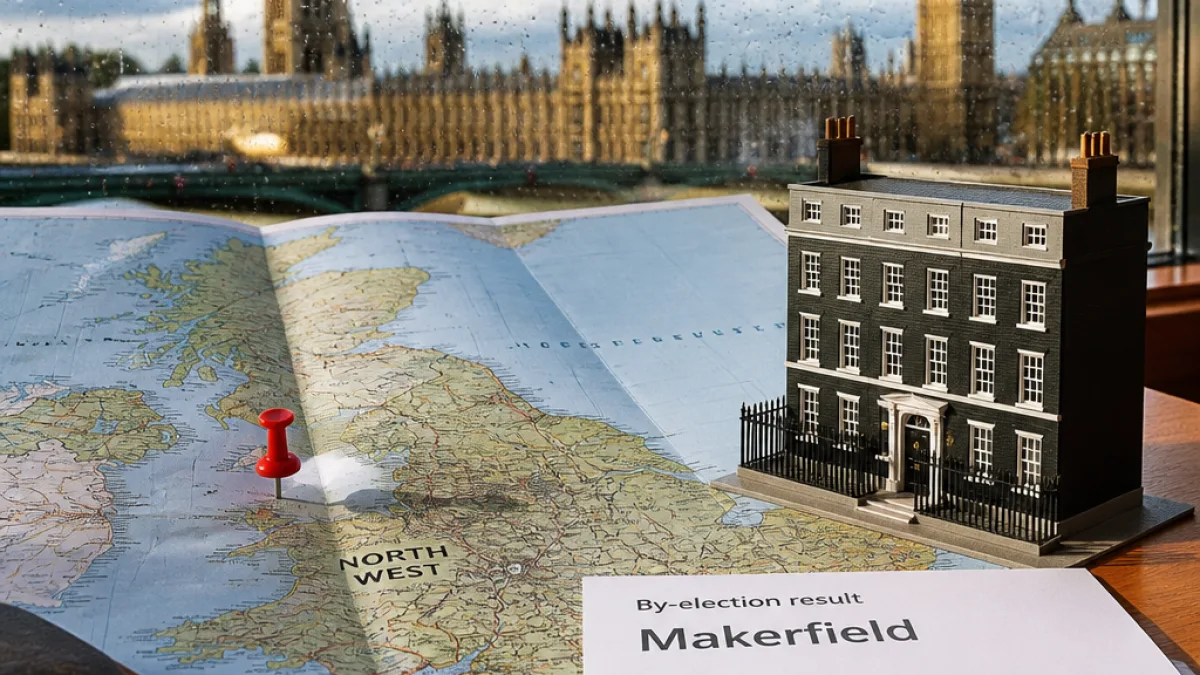
Andy Burnham's elevation to prime minister has an uncommon parliamentary footnote: he is the first occupant of Downing Street in 50 years to represent a constituency in the North West of England. Mr Burnham won the Makerfield by‑election on 18 June and will now lead the country while sitting for a seat outside the capital.
How rare is a North West prime minister?
The last prime minister to hold a North West seat was Labour’s Harold Wilson, who represented Huyton in Merseyside during his terms in office in the 1960s and 1970s. Since Wilson left Downing Street in 1976, 11 people have served as prime minister; none of them represented a North West constituency while in office.
Across the 20th and 21st centuries, only two other premiers have done so: Mr Wilson and Arthur Balfour, who was MP for Manchester East during his premiership from 1902–05. Mr Burnham therefore becomes only the third prime minister since 1900 to hold a seat in the region.
Where recent prime ministers have represented
| Prime minister | Constituency | Region |
|---|---|---|
| Margaret Thatcher | Finchley | London |
| Boris Johnson | Uxbridge & South Ruislip | London |
| Keir Starmer | Holborn & St Pancras | London |
| David Cameron | Witney | South East |
| Theresa May | Maidenhead | South East |
| John Major | Huntingdon | East of England |
| Liz Truss | South West Norfolk | East of England |
| Jim Callaghan | Cardiff South & Penarth (formerly Cardiff South East) | Wales |
| Tony Blair | Sedgefield | North East |
| Gordon Brown | Kirkcaldy & Cowdenbeath | Scotland |
| Rishi Sunak | Richmond (Yorks) | Yorkshire |
What this means politically
Mr Burnham’s premiership highlights how the geography of parliamentary representation can differ from the expectation that modern prime ministers sit for London or the Home Counties. Recent decades have seen leaders whose seats were distributed across regions — from the South East to Scotland — but the North West has been absent until now.
- Historical significance: first North West MP as PM since Harold Wilson.
- Rarity: only the third PM since 1900 to represent the region.
- Political signal: underlines regional diversity in contemporary British politics.
For residents in Barking and Dagenham and across London, the change is primarily symbolic rather than administrative: the prime minister’s responsibilities remain national. Nonetheless, the historic nature of Mr Burnham’s seat will be noted by political observers and local parties as they consider how regional representation shapes policy priorities and electoral strategy.
As Mr Burnham settles into office, attention will turn to his government’s programme and how he balances national duties with representing Makerfield in Greater Manchester — a reminder that the prime minister’s link to a local constituency continues to matter in British political life.