
Jail term and ban after series of garden frauds across three counties
A landscape gardener who took advance payments for work he did not complete across Dorset, Hampshire and Wiltshire has been jailed for five years and eight months. James Knight, 34, of Verne Road, Verwood, admitted multiple offences after initially pleading not guilty and was sentenced at Bournemouth Crown Court on Friday.
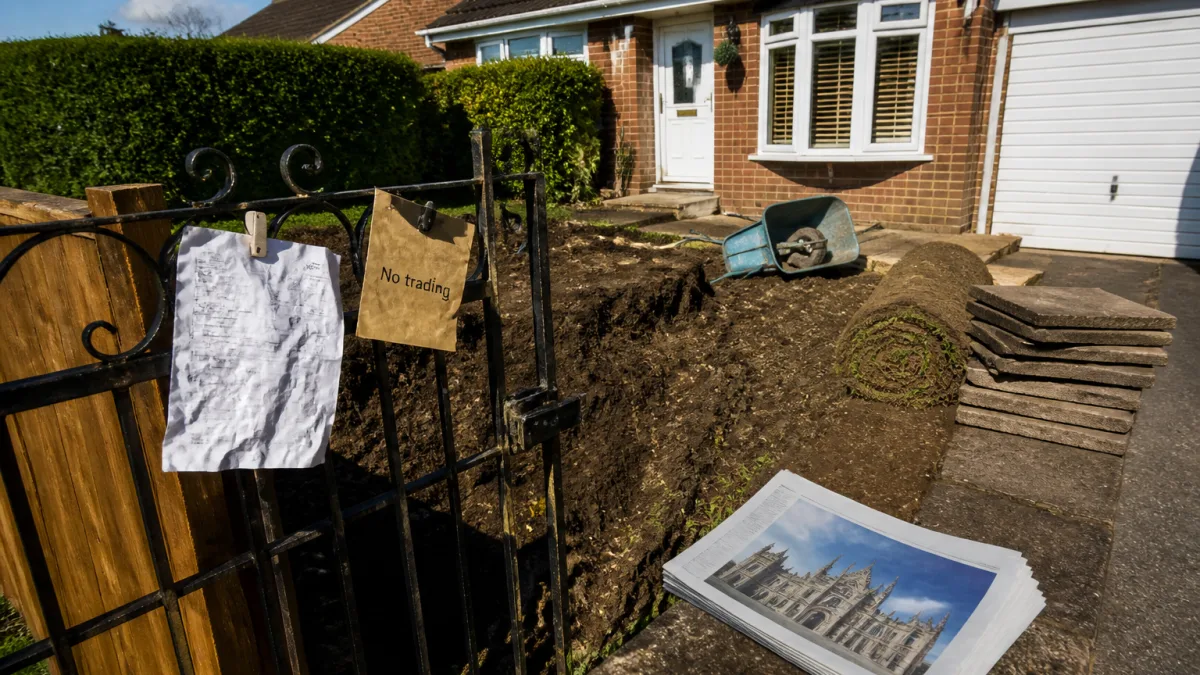
The court was told Knight, who also uses the name Jimmy, secured substantial deposits from 18 customers before delivering only a fraction of the agreed materials or labour — or, in some instances, nothing at all. Victims included residents in Wiltshire, where households were left out of pocket and with gardens in disarray. One customer who sought to have a lawn re-turfed was left with bare soil; another was left with what a witness described as a “bomb site”.
Sentencing, Judge Mousley said Knight had “an appalling criminal record” and had “no hesitation in extracting as much money from them as possible” from people who trusted him.
In addition to the custodial term, Knight was made subject to an eight-year Criminal Behaviour Order prohibiting him from offering trade services at any UK address or advertising for work. The order is designed to prevent further offending and protect residents across the region, including here in Wiltshire.
Pattern of dishonesty laid bare in court
Following a two-week hearing, the judge concluded Knight had acted dishonestly from the outset when approaching customers. The court heard he would ask for further payments, claiming to have under-quoted, before halting work and putting forward a range of excuses. These included repeated claims of family bereavements and childcare difficulties; on more than one occasion he said his grandfather had died.
Knight’s offending came despite an extensive prior history. The court was told he had 77 previous fraud convictions between 2012 and 2020, a record the judge referenced as part of the reasoning for the sentence and the strict behavioural order now in place. The total loss to customers across the three counties was put at about £42,000.
Impact on Wiltshire residents and consumer confidence
Cases of this kind can have a lasting impact on householders and neighbourhoods. Beyond the financial loss, unfinished or abandoned garden and driveway projects create disruption and safety hazards, and erode trust in legitimate local tradespeople. With residents in places across Wiltshire among those affected, the sentencing provides a measure of closure while also highlighting the importance of caution when commissioning home and garden work.
Cllr Matt Bell, Dorset Council’s cabinet member for public health, prevention and communities, said the case demonstrated the real impact rogue traders have on local people. The court-imposed ban is intended to curtail any repeat targeting of householders, including in Wiltshire communities.
What the court found and what it means
- Knight took deposits for landscaping jobs across Dorset, Hampshire and Wiltshire then failed to deliver the agreed work.
- He changed his pleas to guilty on all but seven counts at the start of his trial.
- The judge determined he acted dishonestly from the beginning and cited his extensive fraud record.
- An eight-year Criminal Behaviour Order now bars him from offering or advertising trade services anywhere in the UK.
Key figures at a glance
| Measure | Detail |
|---|---|
| Victims | 18 customers across three counties |
| Total losses | About £42,000 |
| Prison sentence | 5 years 8 months |
| Criminal Behaviour Order | 8 years, UK-wide trade ban |
Local context: protecting yourself when hiring
While this case has concluded, the issues it raises are familiar to many households planning improvements. Residents often seek to schedule work during summer months, when demand for landscaping and driveway services typically rises. The sums involved can be significant, making clear paperwork and staged payments important safeguards for customers and reputable traders alike.
Practical steps when commissioning work can include:
- Requesting a written quotation that details scope, materials, timescales and a payment schedule.
- Retaining proof of any payments and avoiding large deposits where possible.
- Asking for references for recent, similar jobs and viewing completed work.
- Ensuring there is an address and verifiable contact information for the contractor.
The court’s decision sends a strong message about the consequences of defrauding householders. For Wiltshire residents who were among those affected, the sentence and the trading ban mark an end to a protracted ordeal, and a reminder that due diligence remains vital when engaging services for the home.