
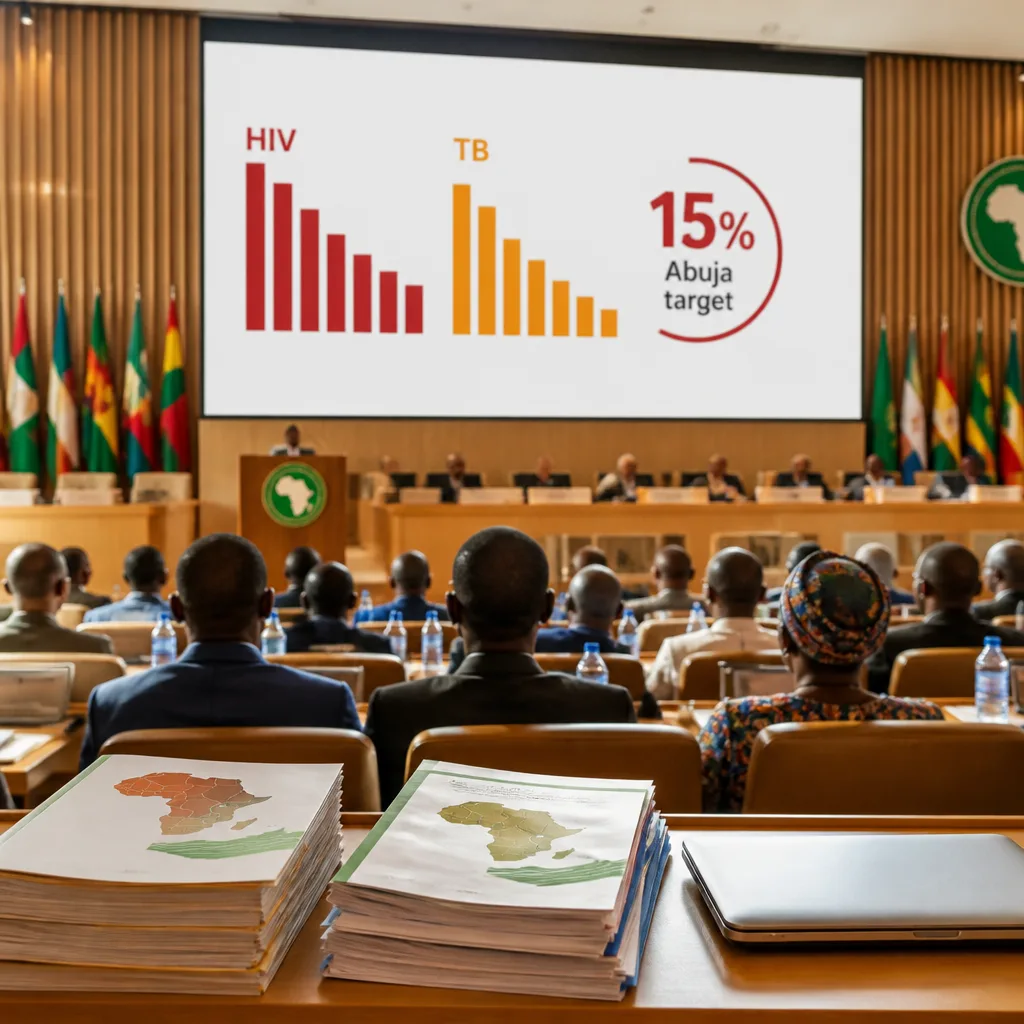
The African Union (AU) convened a special health summit on 21–22 July to press member states to strengthen domestic financing for health, with a particular focus on HIV, tuberculosis (TB) and maternal health. Delegates underlined the urgency after the simultaneous publication of studies documenting substantial global disruptions to HIV and TB treatment linked to recent changes in the US President’s Emergency Plan for AIDS Relief (PEPFAR).
Calling for action on budget commitments
Speakers at the summit urged African governments to honour the Abuja Declaration, adopted 25 years earlier, which recommends allocating at least 15% of national budgets to health. The meeting aimed to mobilise political will for sustained domestic spending so countries can better manage HIV, TB, malaria, maternal and newborn health, viral hepatitis, neglected tropical diseases and non-communicable diseases.
Programme priorities and the AU Roadmap
Deliberations centred on how to accelerate implementation of the AU Roadmap to 2030 and Beyond, which sets out continental ambitions to end HIV as a public health threat and to control TB, malaria, NTDs and NCDs. Summit discussions highlighted the need for predictable financing and resilient systems to prevent service interruptions.
- Priority areas discussed: HIV, TB, malaria, maternal and newborn health, viral hepatitis, neglected tropical diseases and NCDs.
- Financial target: Recommending at least 15% of national budgets be allocated to health (Abuja Declaration).
- Timeframe: The AU Roadmap aims through to 2030 and beyond to end HIV as a public health threat and control other major diseases.
Evidence of impact
The summit coincided with the release of two studies reporting widespread interruptions to HIV and TB treatment globally following policy changes in PEPFAR. Delegates and health experts used this evidence to argue for strengthened domestic investment so national health systems can sustain treatment programmes independently of external funding volatility.
| Issue | Focus at summit |
|---|---|
| HIV and TB | Response to reported treatment disruptions; reinforce domestic funding |
| Maternal and newborn health | Mobilise resources and political commitment |
| AU Roadmap | Implementation through to 2030 and beyond |
Leaders at the summit emphasised that domestic budgetary commitments are central to health sovereignty and resilience. By urging compliance with the Abuja target and aligning national plans with the AU Roadmap, member states seek to reduce reliance on external donors and to protect essential services against future funding shifts.
This meeting represents a concerted push by African heads of state and health ministers to translate political declarations into concrete budgetary decisions, using the newly released evidence on service disruptions to underpin calls for urgent action.