Preliminary monitoring reduces airborne concern but sand contamination remains
Plymouth City Council has confirmed that recent air quality monitoring at Mount Batten beach detected no airborne asbestos fibres across the peninsula. Tests were carried out at 24 sites and the early results have been published by the council as it responds to a second series of detections of asbestos in the sand.
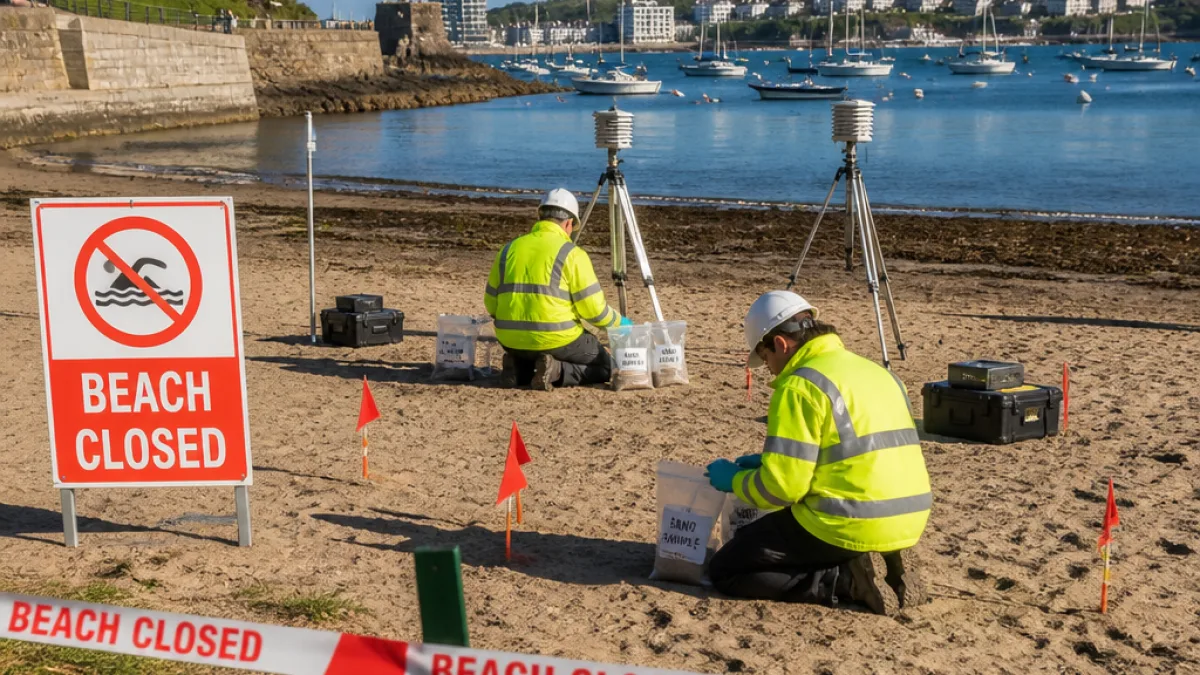
Despite the clear air test results, council sampling of beach sand continues to show asbestos fibres present in most areas of the foreshore. The authority said preliminary sand sampling identified fibres in all but one of the specific sections tested within the part of the beach that has been closed to the public since 10 July.
What has been found so far and where access is limited
- Air monitoring: no airborne asbestos fibres recorded at 24 testing sites along the peninsula.
- Sand sampling: asbestos fibres detected in most areas of the closed beach and on exposed sandy foreshore on the north side at low tide.
- Restricted areas: the closed sandy sections and parts of the foreshore exposed at low tide have been cordoned off as a precaution.
The council stressed there is currently no evidence to suggest contamination of the concrete slipways, the landing stage or the nearby water sports and activities centre.
| Date | Action | Outcome |
|---|---|---|
| 2019 | Initial discovery and clearance | About 500kg of asbestos material recovered; ongoing clean-ups every two months |
| 10 July 2026 | Beach closed | Closure after detection of high levels of asbestos fibres in sand |
| Late July 2026 | Air and sand testing | Air: no fibres detected at 24 sites; Sand: fibres in most sampled areas |
"All forms of asbestos fibres are hazardous as they can induce cancer following inhalation exposure."
The quotation above is from the UK Health Security Agency, which has been working with Plymouth City Council and other local partners. The council said further detail, including a full survey of the affected foreshore, will provide a clearer picture of levels and potential risks to the public.
Professor Steve Maddern, Plymouth's director of public health, said the air monitoring findings should offer some reassurance while the full investigation proceeds, but he reiterated the need for caution and for restrictions to remain in place until all results are known.
What this means for residents and visitors
People using the Mount Batten area should note the following:
- Do not enter taped-off or signposted sections of the beach or exposed foreshore.
- Normal use of the slipways and water sports centre is not believed to be at risk, according to the council.
- Further updates will follow when the full survey results are available and agencies have had the opportunity to assess longer-term management options.
The presence of asbestos on the beach is not new. Councillors and officers have been dealing with deposits since 2019, when a substantial quantity of material was removed and regular monitoring and clearances were put in place. This latest episode has prompted renewed sampling and a wider survey to determine the extent of contamination and to plan any necessary remediation measures.
Plymouth City Council said it is coordinating with the UK Health Security Agency and other partners to ensure decisions are based on evidence and to safeguard residents, visitors and local businesses while work continues.
Further information and updates from the council should be consulted before visiting Mount Batten.