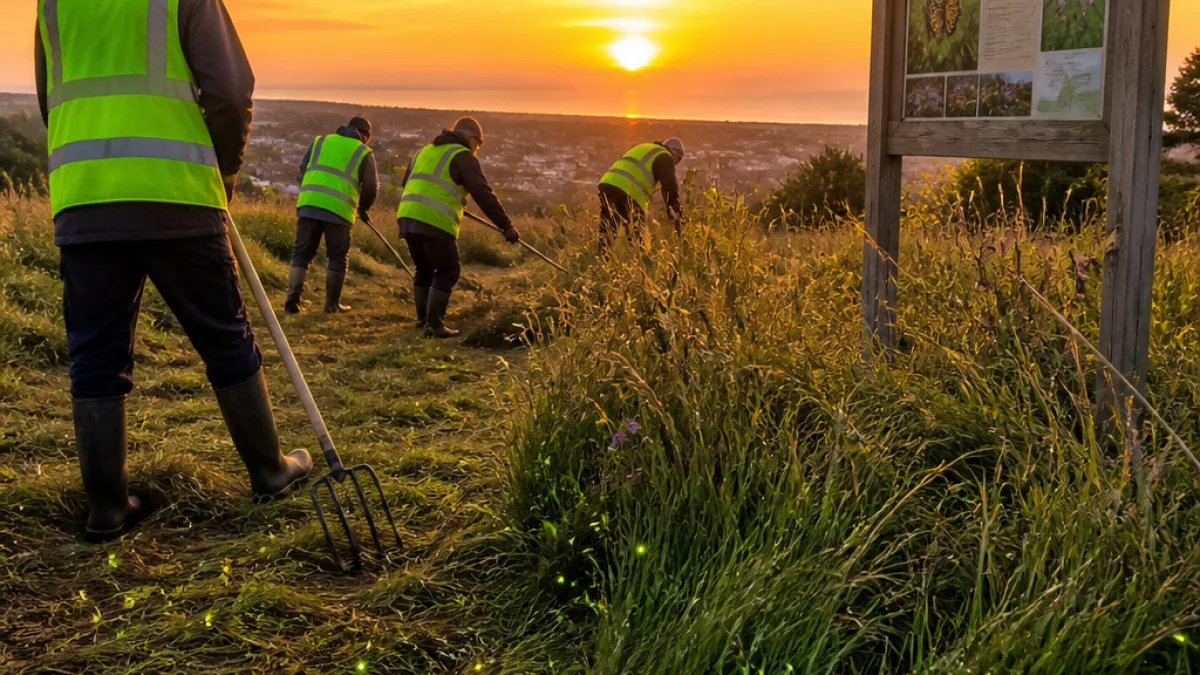
At the Benfield Hill Nature Reserve, on the edge of Hove, a small but significant conservation effort is helping a scarce insect put on its summer display. The reserve — Brighton and Hove's oldest local nature reserve — has established itself as a local stronghold for glow worms, with volunteers reporting up to 60 glowing females on some evenings during the breeding season.
Why Benfield Hill matters
Glow worms are not flies but beetles. The adult females emit a green bioluminescent light for a short period in June and July to attract flying males. Their visibility to visitors makes them an attractive feature of chalk grassland sites, but their populations are vulnerable to several pressures.
At Benfield Hill, volunteer work to manage the grassland has focused on creating the right structure for the insects to complete their life cycle. Some areas are deliberately left with longer grass so that the wingless females can climb plant stems and display their glow more effectively.
"We're trying different techniques and I think it is working because we've got such a good population here,"
— Sally Wadsworth, chair of Benfield Wildlife and Conservation Group, on the reserve's management approach.
Threats and practical conservation steps
Conservationists warn that glow worms face risks from habitat loss, climate change and light pollution. Because the females rarely move far from where they hatch, local populations are slow to recolonise if lost.
- Targeted grassland management: leaving some areas longer to aid females in displaying.
- Reducing light pollution locally so males can spot females at night.
- Maintaining chalk grassland habitat through ongoing volunteer work.
These measures are practical and locally driven; the Benfield Wildlife and Conservation Group relies on volunteers to maintain suitable conditions across the reserve.
| Item | Detail |
|---|---|
| Noted glowing females | Up to 60 on one evening |
| Peak display period | June and July |
| Main local threats | Habitat loss, climate change, light pollution |
For residents and visitors who wish to see the display, the best conditions are warm, calm evenings during the peak months. Observers should be careful to avoid trampling vegetation and follow any guidance issued by the reserve's volunteer team to protect the fragile habitat.
Benfield Hill's example underscores how modest, low‑cost management can sustain species that are nationally vulnerable. Because glow worms do not disperse widely, protecting existing colonies is essential to preserving these local populations for future summers.