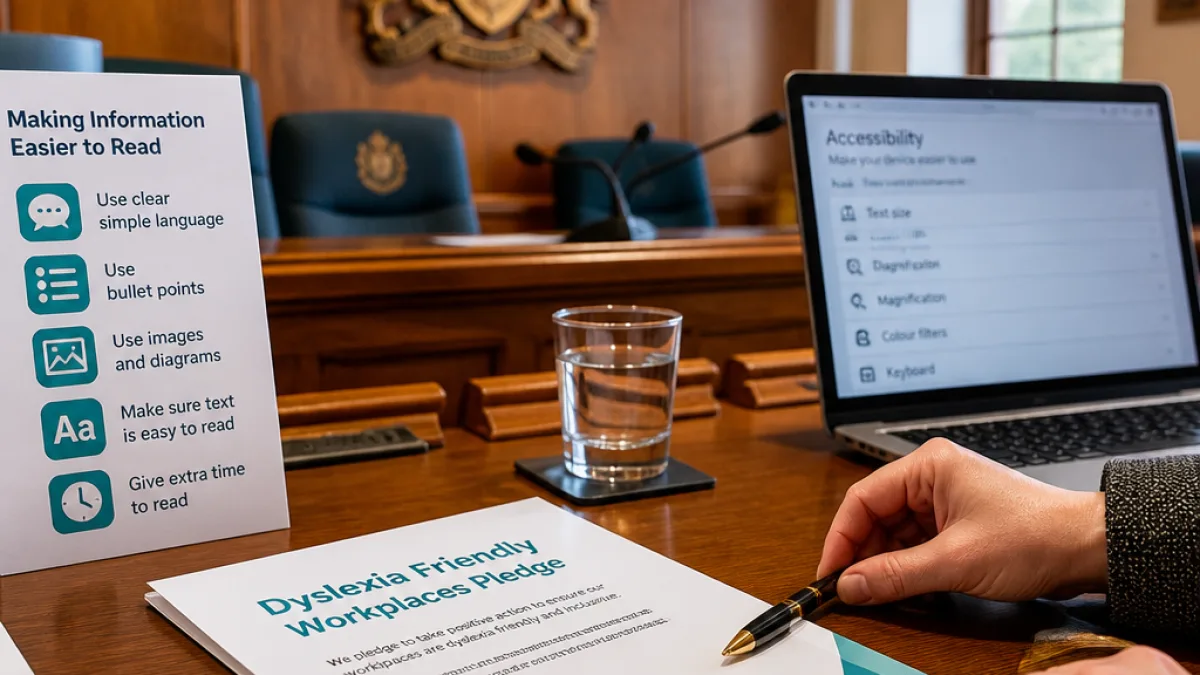
Westmorland and Furness Council has formally committed to becoming a Dyslexia Friendly Workplace by signing the Dyslexia Friendly Workplaces Pledge, the authority confirmed on Tuesday.
What the pledge means
The pledge is designed to improve inclusion for people with dyslexia and related specific learning differences. The council says this will affect staff, residents, customers, suppliers and partner organisations by increasing awareness, adapting processes and strengthening inclusive working practices across the authority.
"By signing the Dyslexia Friendly Workplaces Pledge, we're making a clear commitment to creating an environment where people feel understood, supported and valued," said Cllr Helen Chaffey, Cabinet Member for Communities, Customer Services, Culture and Communications.
The council highlighted that around 15% of the population have dyslexia and/or another specific learning difference, and said the pledge builds on measures already in place.
Existing and planned support
Westmorland and Furness Council said it already provides a range of support for colleagues with dyslexia and similar conditions, including:
- workplace adjustment support;
- access to assistive technology and digital tools;
- targeted learning and development opportunities;
- staff networks that promote awareness and inclusion.
Signing the pledge commits the authority to review internal procedures and identify where services and processes can be made more accessible. The move aims to enable people to participate fully and to reach their potential within the council and when using its services.
Local impact and practical implications
For employees, the pledge could result in clearer guidance on reasonable adjustments, improved digital accessibility and wider promotion of assistive software. For residents, it may mean simpler forms, clearer communications and more accessible customer service interactions.
| Area | Examples of measures |
|---|---|
| Workplace adjustments | Adapted equipment, flexible processes |
| Technology | Assistive software and digital aids |
| Awareness | Training, staff networks |
Council leaders say the pledge represents a step in ongoing efforts to create an inclusive culture. Implementation will depend on reviews of policies and potential further investments in staff training and technology. Those who need help with council services or require workplace adjustments are advised to contact their line manager or the council’s HR and customer services teams for guidance on available support.
As local authorities nationwide grapple with accessibility and equality, Westmorland and Furness’s pledge places the council among those taking formal steps to recognise and accommodate specific learning differences within local government operations.