Fleet leader lifts lid on reorganisation reality
Bringing Westmorland and Furness Council into being in 2023 meant fusing together vehicles, depots, information systems and working cultures drawn from several different public bodies. Senior Manager for Fleet Services Austin Shields has set out what that looked like from the inside, describing a compressed timetable, complex asset splits and the need for clear ownership as the new authority took shape.
When the Government confirmed local government reform in the summer of 2021, the clock started on less than two years to vesting day on 1 April 2023. Shields says he moved early to convene operational leads across the councils that would be affected. In his words:
“Somebody needed to take ownership of it. I decided to do that.”Those initial meetings brought together contacts from the six districts involved in the wider Cumbria reorganisation which produced both Westmorland and Furness Council and its neighbour Cumberland Council.
Dividing a county; joining up services
The new Westmorland and Furness authority was drawn from three legacy districts: Barrow Borough Council, South Lakeland District Council and Eden District Council. The more intricate task, Shields explains, came with dismantling the former Cumbria County Council operations, which had run services in practical geographic clusters. Those informal groupings—Carlisle & Eden, Barrow & South Lakeland, and Allerdale & Copeland—had to be unpicked, with careful thought given to both day-to-day practices and the allocation of vehicles that underpin waste, highways and other frontline work.
| Element | Pre-LGR arrangement | Impact on Westmorland and Furness |
|---|---|---|
| Districts forming W&F | Barrow, South Lakeland, Eden | Assets and staff integrated into a single unitary |
| County operational clusters | Carlisle & Eden; Barrow & South Lakeland; Allerdale & Copeland | Vehicle allocation and practices re-mapped to new boundaries |
| Vesting day | 1 April 2023 | Transition completed under tight timetable |
Ageing vehicles and mixed ownership
On top of structural change, the team inherited an ageing fleet and a patchwork of owned, leased and hired vehicles. Shields is candid that there was
“no formally approved strategy really in place at that stage.”That left Fleet Services to reconcile different procurement approaches and maintenance regimes while keeping essential services on the road. The situation demanded immediate, practical decisions about which vehicles should move where, which contracts could transfer, and what to retire or retain to maintain resilience.
Waste, recycling and fire service transitions
Specific local factors added further pressure. In Barrow, the waste and recycling function had only recently been brought back in-house—around six months before the new council formally launched. That meant bedding in a service return at the same time as migrating assets and data into a single authority. In parallel, Cumbria Fire and Rescue Service, previously within the county council, moved to new governance on the same day, requiring its own fleet transition to be handled separately. Each strand pulled on the same limited pool of operational expertise, workshop capacity and supplier relationships.
Why early coordination mattered
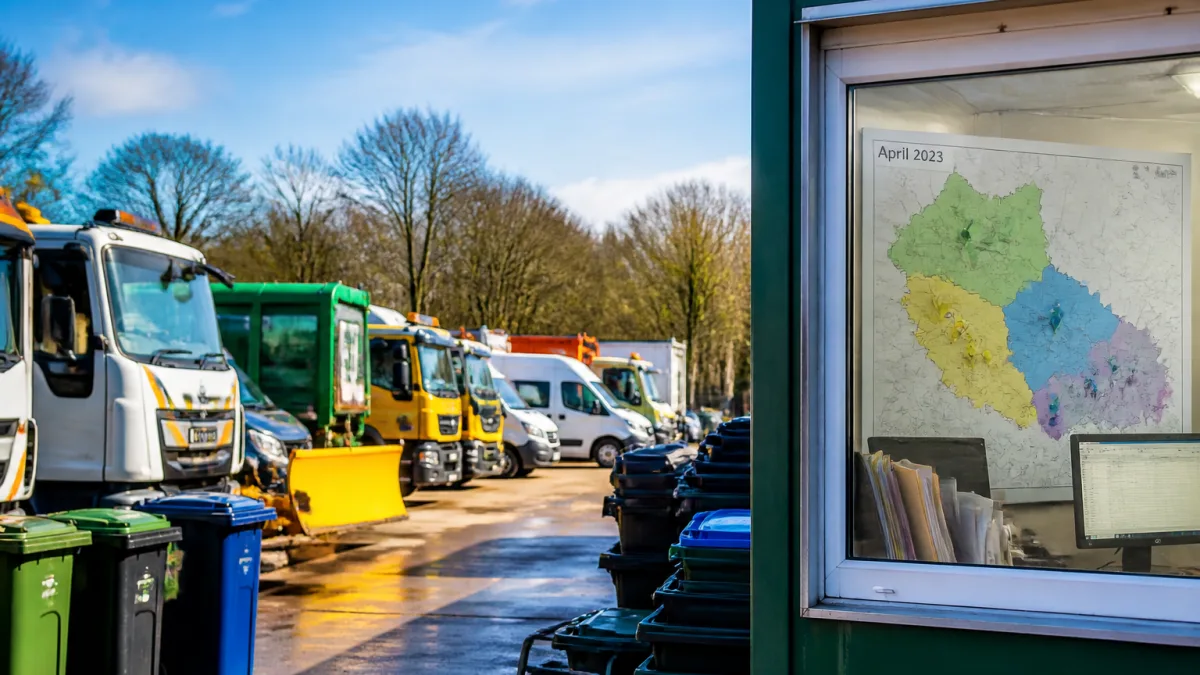
Shields’ decision to call the right people together quickly appears to have set the tone. With just months to plan, Fleet Services had to establish what was held where, identify overlaps and gaps, and agree a pragmatic route to day one. In practice, that meant aligning depot usage, drawing data from different systems, and mapping vehicle cover against the new geography. Residents will recognise that reliable refuse rounds, winter gritting and streetscene work depend on those behind-the-scenes choices—decisions which can only be made effectively when officers have a shared picture of assets and risks.
- Cross-council coordination began within months of reform being announced, creating a single forum for fleet leads.
- Operational clusters from the former county structure had to be disentangled and reconfigured to fit the new unitary boundaries.
- Mixed-age, mixed-ownership fleets complicated transfer and renewal planning at pace.
Lessons for the next phase
The experience underlines the importance of early ownership, clear lines of responsibility and honest appraisal of what can and cannot be achieved before vesting day. It also shows how decisions about fleet composition and depot location ripple through to everyday services. While the new council continues to stabilise and standardise, the account offered by Shields sets a practical benchmark for how complex service machinery can be reassembled in a short window—and why the groundwork matters when residents expect collections, repairs and responses to arrive on time.