
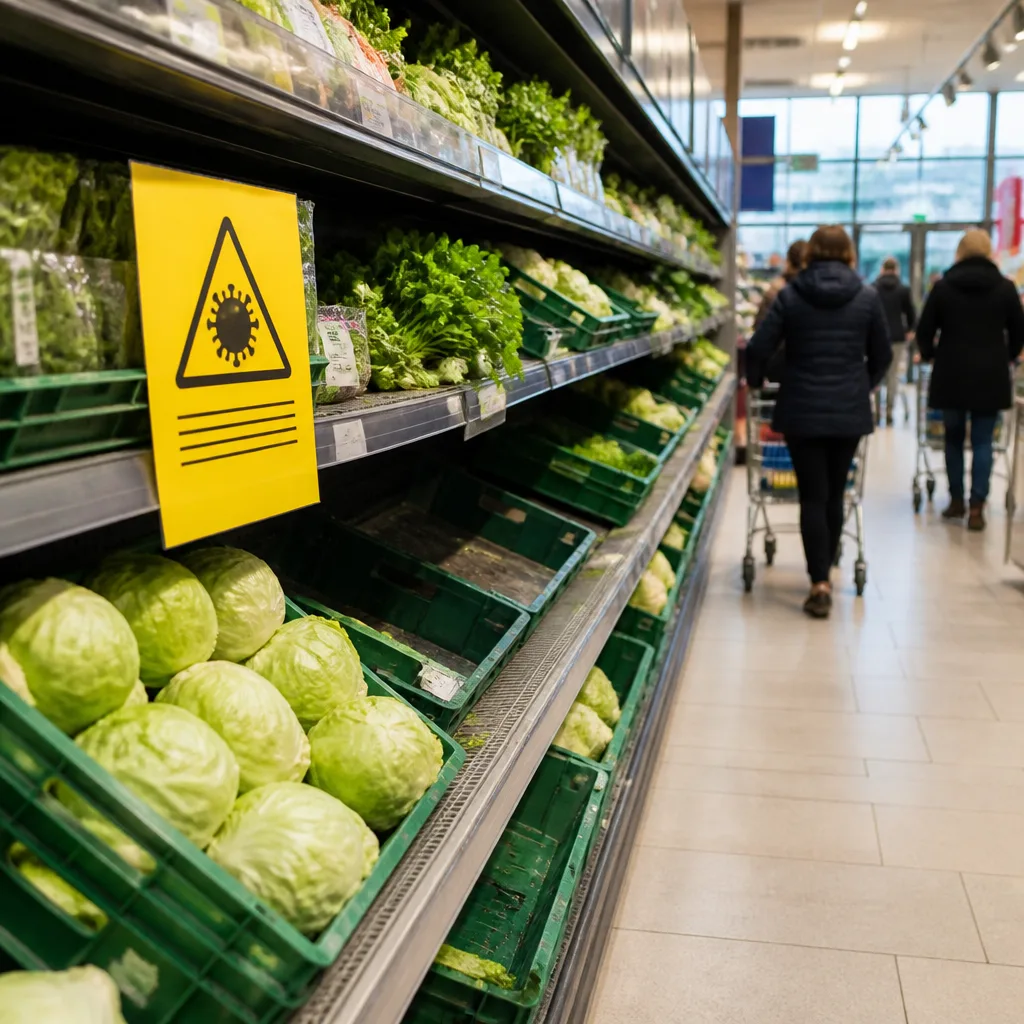
The United States is confronting a series of cyclospora outbreaks that have so far sickened roughly 16,000 people across in excess of 40 states, with at least 300 hospital admissions reported and no confirmed fatalities, according to published surveys and health agency reports.
Scale, symptoms and suspected food vehicles
Health authorities have linked multiple clusters of cyclosporiasis to fresh produce, including iceberg lettuce, parsley and cilantro, though investigations remain under way to establish definitive sources for all outbreaks. The parasitic infection typically produces symptoms such as profuse diarrhoea, fever, marked fatigue and dehydration.
One state has reported a particularly large burden: Michigan accounts for more than 9,200 cases within the overall total.
Public response and dietary consequences
Public reaction has been significant. A recent national survey conducted by CBS News of a sample of more than 2,000 adults found that about 40% of respondents say they are now buying or eating fewer fresh fruits and vegetables because of the outbreaks. At the same time, roughly 43% said they were following the developments “somewhat closely”.
“The last thing they need is for sensational headlines to make it even harder for them to choose fresh produce,” said emergency physician Dr Leana Wen in an opinion piece addressing the wider health consequences of avoiding fruit and vegetables.
Public-health specialists warn that abandoning fresh produce entirely in response to outbreak news may have unintended consequences. Fruits and vegetables provide essential vitamins and minerals, and long‑term reductions in their intake are associated with a range of poor health outcomes, including higher risks of cardiovascular disease, poorer gut health and other chronic conditions.
Prevention and practical guidance
Where food has been specifically linked to an outbreak, health authorities advise discarding the implicated items. For foods not associated with confirmed contamination, experts have highlighted cooking as a method to inactivate the parasite: heating to 158°F (≈70°C) will kill cyclospora. However, many raw fruits and salad vegetables are typically eaten uncooked, complicating simple risk mitigation.
- Cases: ~16,000 across >40 states
- Hospitalisations: at least 300
- Notable concentration: Michigan >9,200 cases
| Metric | Reported figure |
|---|---|
| Estimated cases | ~16,000 |
| States affected | Over 40 |
| Hospital admissions | At least 300 |
Investigations by federal and state agencies continue to identify the specific contaminated products and supply chains responsible for each cluster. In the interim, public-health messaging seeks to balance immediate outbreak control with maintaining adequate consumption of fruit and vegetables for general health.
For the public, the immediate priorities are to follow official recalls and guidance from health agencies, dispose of implicated produce, and seek medical advice if experiencing symptoms consistent with cyclospora infection. Health authorities are also monitoring for further spread and will update guidance as new links are confirmed.